
Private parking charges appeal: a broken ticket machine will get a charge scrapped, once the new code starts
Honest mistakes, breakdowns and broken ticket machines will get a private parking charge scrapped on appeal. The new code isn't in force yet, and the government hasn't said how company vans fit.

Under a new code for England, Scotland and Wales, a private parking charges appeal will get a charge cancelled if your driver broke down, had a medical emergency or found the ticket machine broken. You’ll still have to appeal and show which case applies. The code isn’t in force yet, and the release gives no start date.
The Ministry of Housing, Communities and Local Government (MHCLG) announced the new Private Parking Code of Practice on 19 October 2026. Parliament now gets time to look at it, and the release says ministers will bring it into force “as soon as possible” after that. It covers private parking charges; the release doesn’t deal with council parking fines.
If your vans use private car parks between jobs, these charges are a small, steady cost of running the business. They land on top of a diesel price rise that’s hit van running costs, and a detour to the cheaper pump that petrol prices on Google Maps point to often ends in a supermarket car park. The new grounds only count once the code is in force, and the release doesn’t say whether charges issued before then will be covered.
A private parking appeal will need evidence
The code gives drivers 5 minutes to decide whether to park and 10 minutes to leave after their parking session ends.
To get a charge cancelled, you’ll have to appeal and show that one of the cases in the new Appeals Charter fits. The examples are stopping briefly to check directions, a medical emergency, a breakdown or a broken ticket machine.
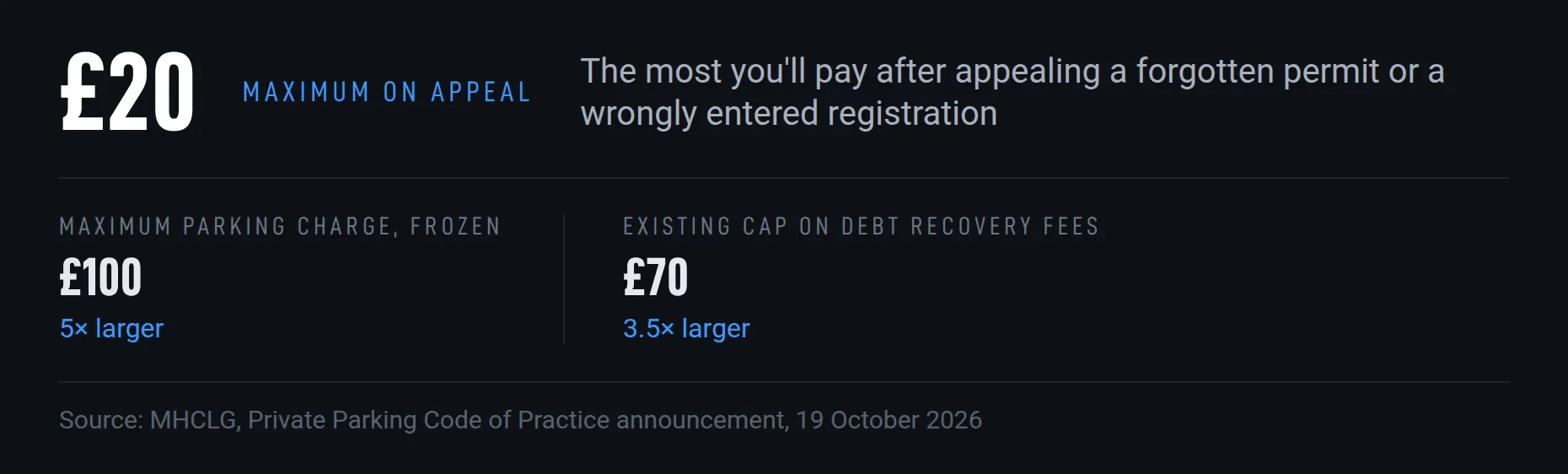
For smaller slip-ups, drivers will face a maximum charge of £20 on appeal. That covers forgetting a parking permit, entering the wrong vehicle’s registration or forgetting to confirm it at the machine.
The release gives examples, not the full list. It doesn’t say what evidence you’ll need or how long you’ll have to appeal.
Company vans and staff drivers: what the release leaves out
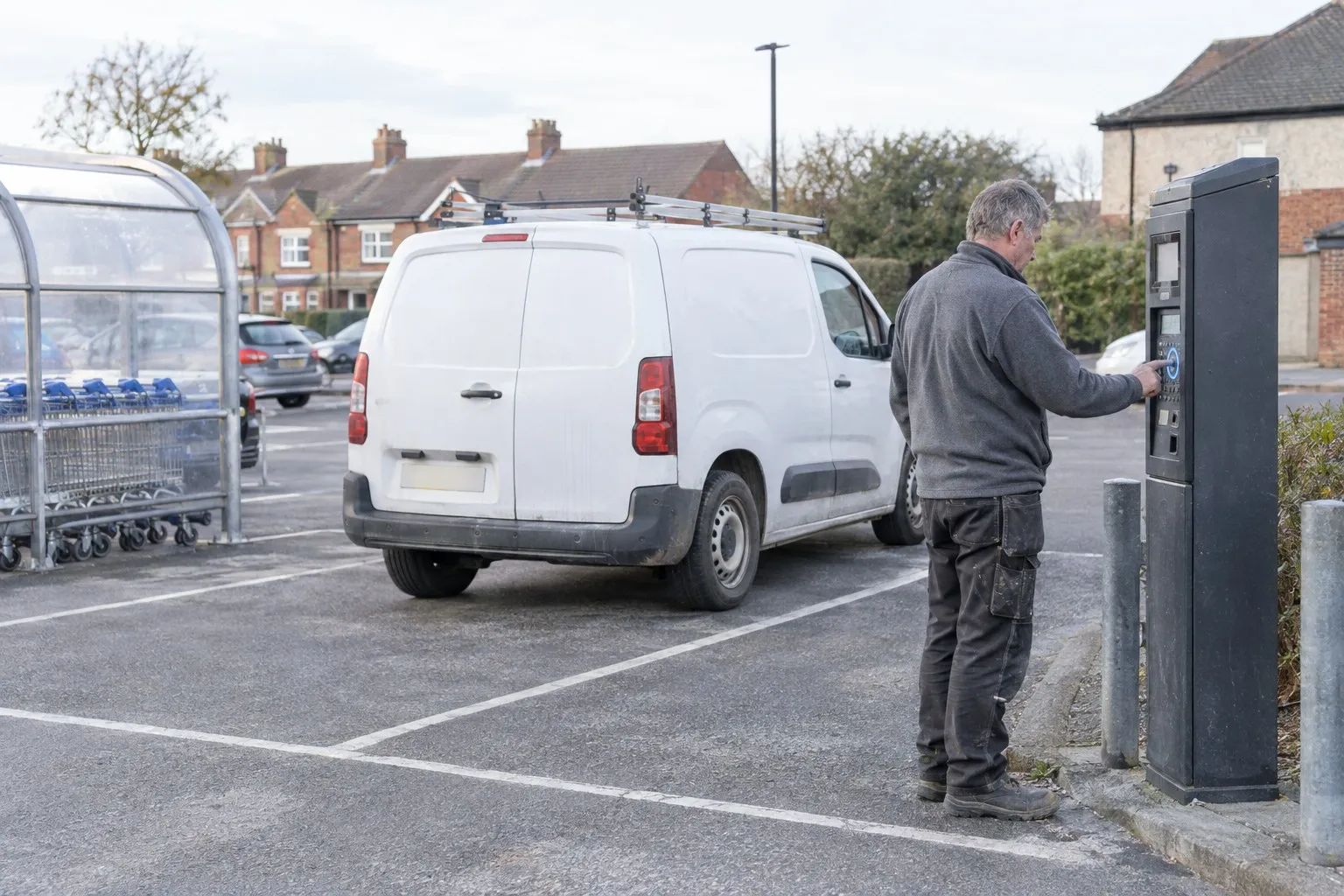
What the announcement doesn’t cover is the case most likely to land on your desk: a charge on a company van or a hire van, appealed by the business that holds it while an employee was driving. The full code may answer that. The press release doesn’t.
The code also freezes the maximum parking charge at £100. The release doesn’t say whether debt recovery fees count towards that £100.
Operators that break the code risk losing access to DVLA data, which is how they find the registered owner to chase payment. They’ll also have to report the charges they issue and how they handle appeals to government, with a new independent Scrutiny and Oversight Board watching. Work to set up the board starts once the code is in force.
Private parking recovery fees wait for a consultation
The government has promised to consult as soon as possible next year on debt recovery fees, including whether to cut the existing £70 cap or scrap the fees altogether. For now, the existing £70 cap still applies.
Trade resources for tradespeople, straight to your inbox.
Occasionally we will send you a newsletter. Free, unsubscribe in one click.
Keep reading
Bennett administration notice: glazing suppliers should check what's owed, Construction Enquirer reports
Construction Enquirer says the 66-year-old Staffordshire glazing and facade business filed at the Manchester court on 20 November, and that administrators haven't been formally appointed. If you supply Bennett or have paid ahead for glazing, count what's out.
Retrofit framework: NEPO's £500m deal has up to 12 places per specialist lot, Construction Enquirer reports
NEPO's four-year deal replaces its existing retrofit framework, Construction Enquirer reports. Bids close at noon on 18 January 2027, and Construction Enquirer says winners pay NEPO a 1% rebate on the work they get through it.
Self Assessment scam warning: HMRC logs 1,704 reports, and its refund advice doesn't agree
HMRC logged 1,704 Self Assessment scam reports in 12 months, around 900 of them from one fake refund email. Its own pages disagree on refund messages, so check on GOV.UK before you click.