Sexual harassment law: Acas warns you could be liable for customer harassment
Acas says prepare now for a stronger sexual harassment prevention duty and a separate change covering harassment by customers and other third parties. Both changes are announced for 30 October 2026.

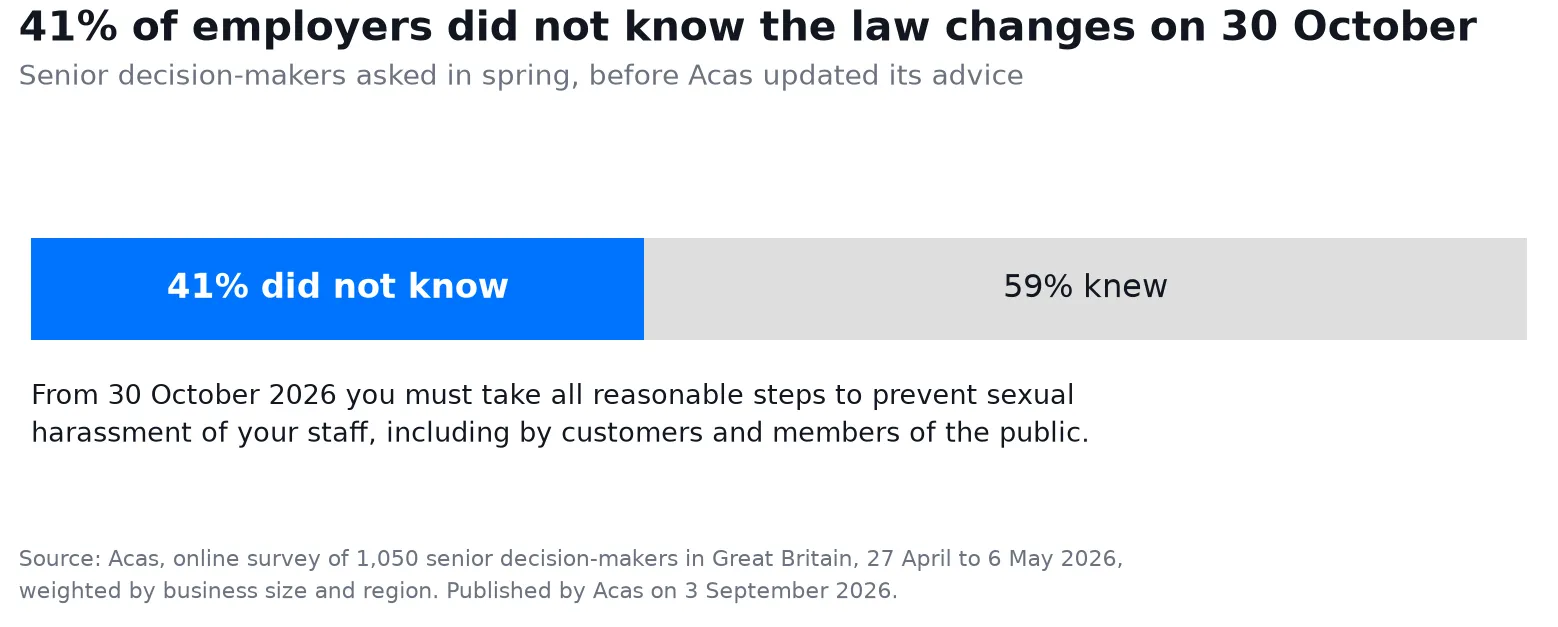
From 30 October 2026, you could be liable if a customer or contractor harasses one of your workers, unless you have taken all reasonable steps to prevent it. Acas is telling employers to get ready now, not to wait for the date.
In a notice dated 3 September 2026, Acas said the Employment Rights Act 2025 will also require employers to take “all reasonable steps” to prevent sexual harassment in their organisation from that same date.
The sexual harassment law change and the wider duty covering third parties are both still ahead. Acas recommends reviewing policies, assessing and managing risks, and providing meaningful training now. Fit that review in alongside the other staffing calls involved in running the business.
Sexual harassment law changes come with wider liability
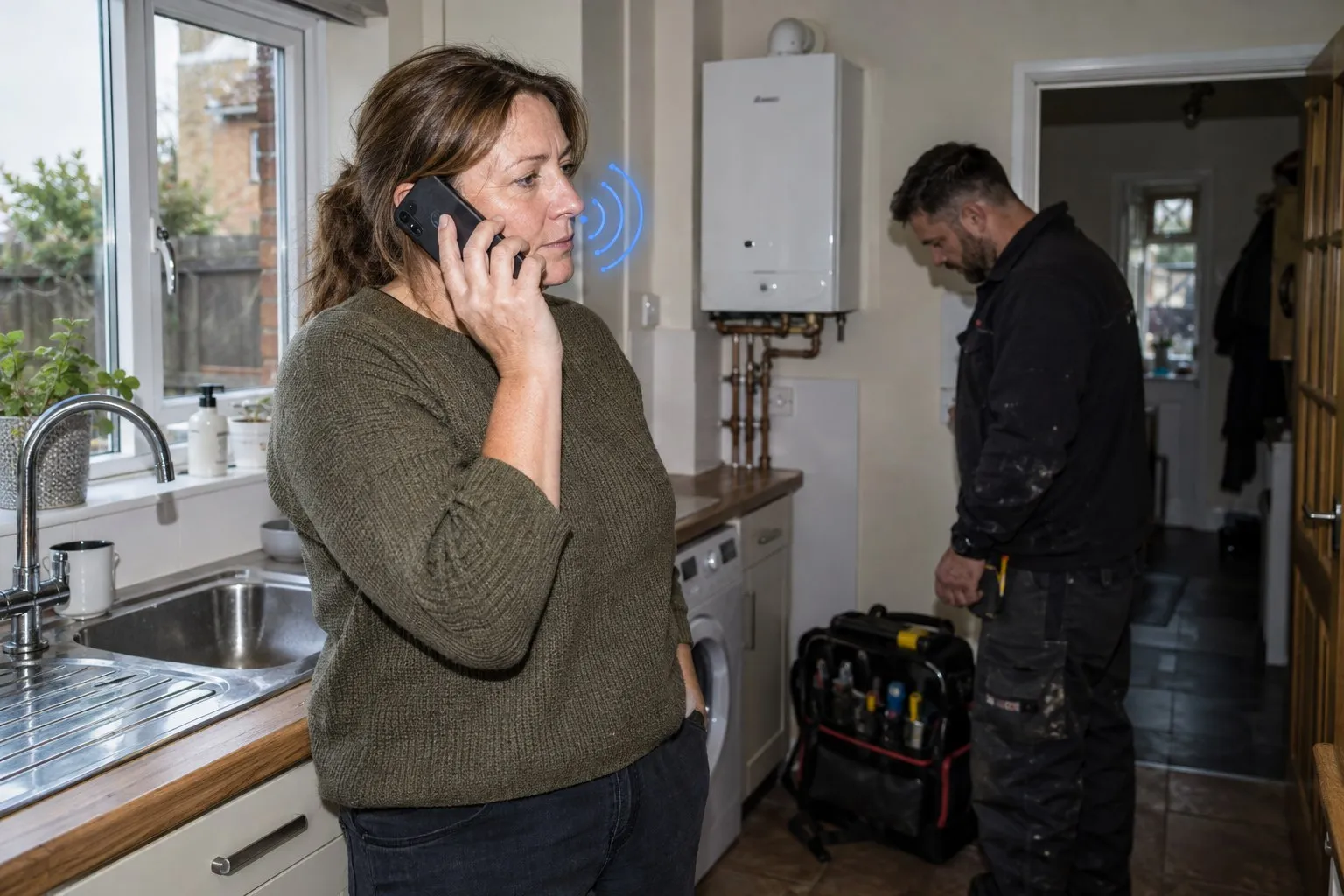
The third-party change covers harassment generally, including sexual harassment. Acas lists customers, clients, members of the public, self-employed consultants, contractors and tradespeople among the people outside your business who could be involved. Harassment can happen online or face to face.
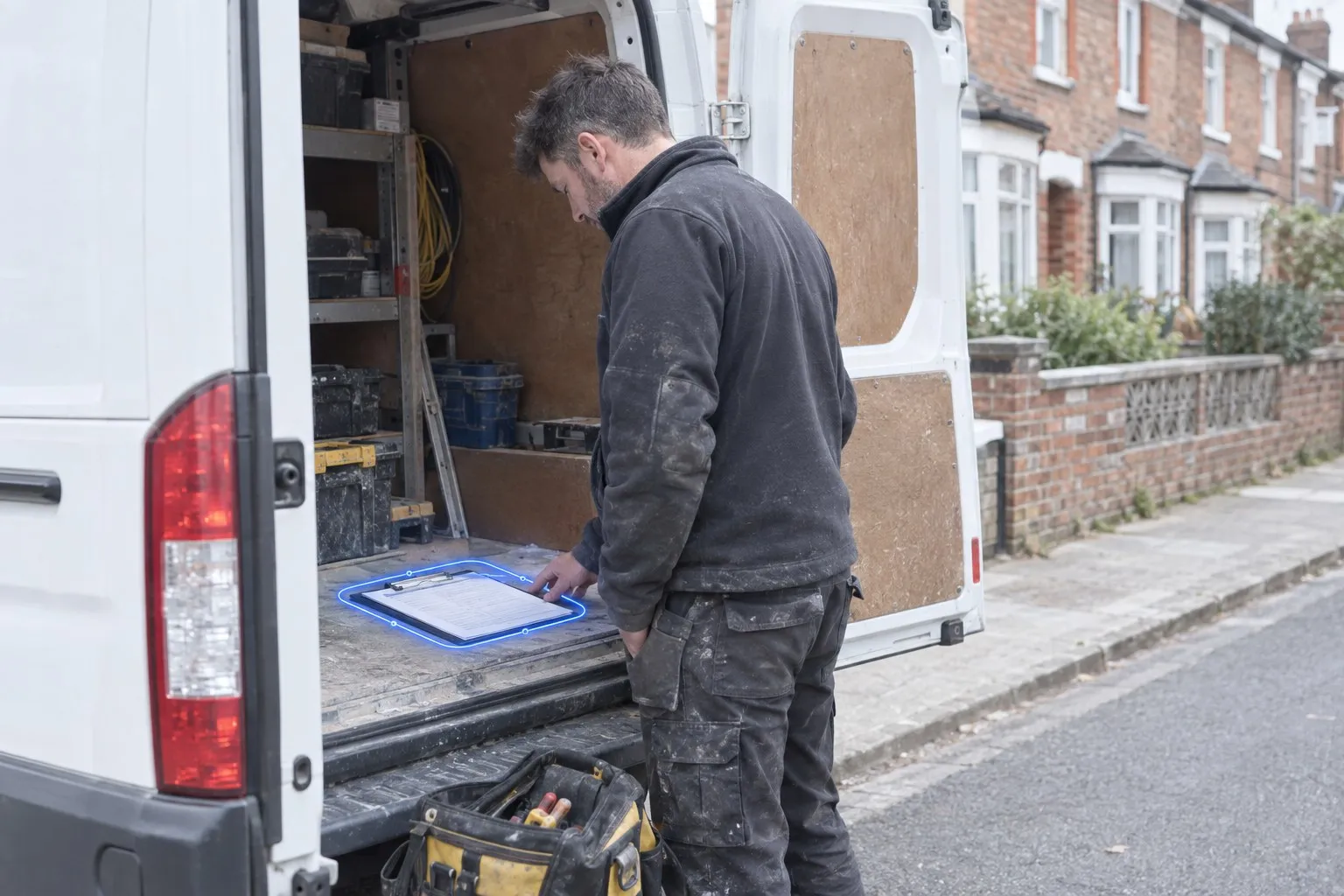
If your staff visit clients or work alongside outside contractors, bring those contacts into your risk review. The issue reaches past how your own employees treat each other.
Acas says you could already be liable when one worker harasses another, unless you have taken all reasonable steps to prevent it. Its notice sets out how to prepare and does not spell out what penalty an employer faces for failing to act.
Acas wants you to review prevention now
Acas explains all reasonable steps as doing what is possible with the resources available, and says some measures will not be possible for every organisation. Treat its list as a starting point to adapt, not a fixed checklist.
Start with the policies you already use. Acas suggests reviewing and updating them, including lone-working policies. It also suggests writing the relevant parts of your harassment policy into the terms you agree with customers and suppliers.
Acas suggests monitoring and recording incidents and the action taken. Look at the two together: what was reported, and what your business did about it.
Acas has updated its sexual harassment advice to help employers prepare. Use it alongside its guidance on third-party harassment when you weigh risks and decide what training your team needs.
Before 30 October, settle one thing: who on your team takes a harassment complaint, and whether they know what to do with it. If you have no HR department, that person is where your training should start. Put a real scenario in front of them, a worker reporting that a customer has been harassing them, and work through how they would respond and how the incident and the action taken would be recorded.

Trade resources for tradespeople, straight to your inbox.
Occasionally we will send you a newsletter. Free, unsubscribe in one click.
Keep reading
Gas Safe Register check: HSE warns after business sent an unregistered installer
HSE's cases include a fake Gas Safe logo and an unregistered installer sent by a contracted business. If you subcontract gas work, check the person, not just the advertising.

Employment tribunal delays hit 70,000 open cases: what that can't tell you
Individual claims are arriving faster than the tribunals can finish them, and the open caseload is the highest the Ministry of Justice has recorded. If your business has a claim open, budget for a wait. The count cannot tell you how long yours will take.
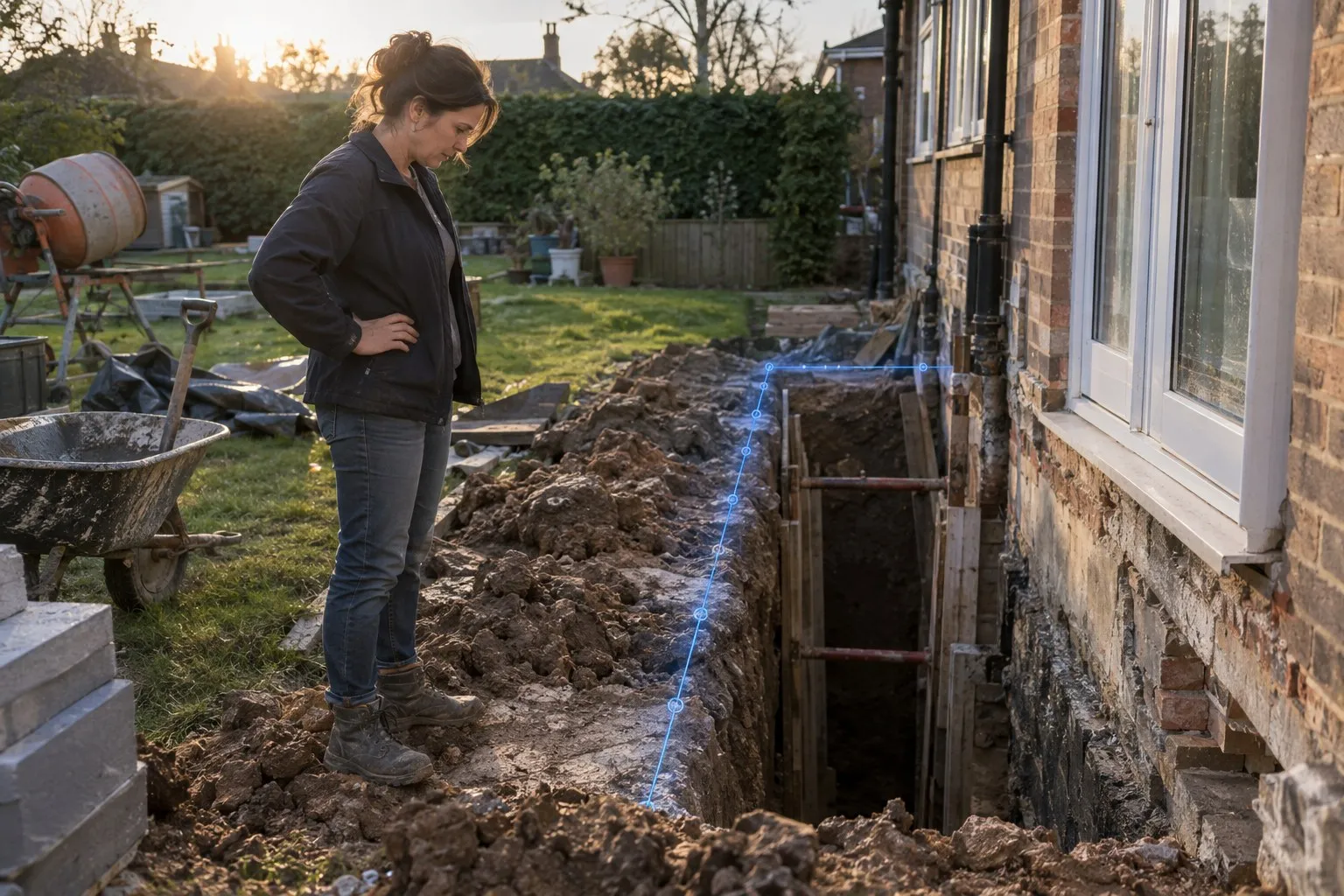
Trench collapse prosecution: director jailed after house extension death
Peter Clifford was jailed for eight years, Construction Management reports. The excavation ran beside a conservatory on a house extension, with inadequate trench support and the home's foundations close by.