
Flexible working requests: Acas drafts new guidance on saying no
Acas is consulting until 17 December 2026 on a draft code for the legal changes expected in autumn 2027. Saying no will also need an explanation of why refusing is reasonable. Until then, keep using the current code.

Your plasterer can ask to start at six and finish at two, and the job being on site doesn’t stop that being a flexible working request. Employees can ask to change their hours, their times or their place of work. How you’re allowed to say no is about to change.
Acas opened a consultation on 1 October 2026 on an updated Code of Practice on flexible working requests. The draft prepares for new rules on consulting employees and explaining refusals, which Acas expects in autumn 2027. Until the updated code replaces it, the one that took effect in 2024 stays in force.

If you’re running the business with staff, you can have your say through the online form on the Acas consultation page until 11:59pm on 17 December 2026.
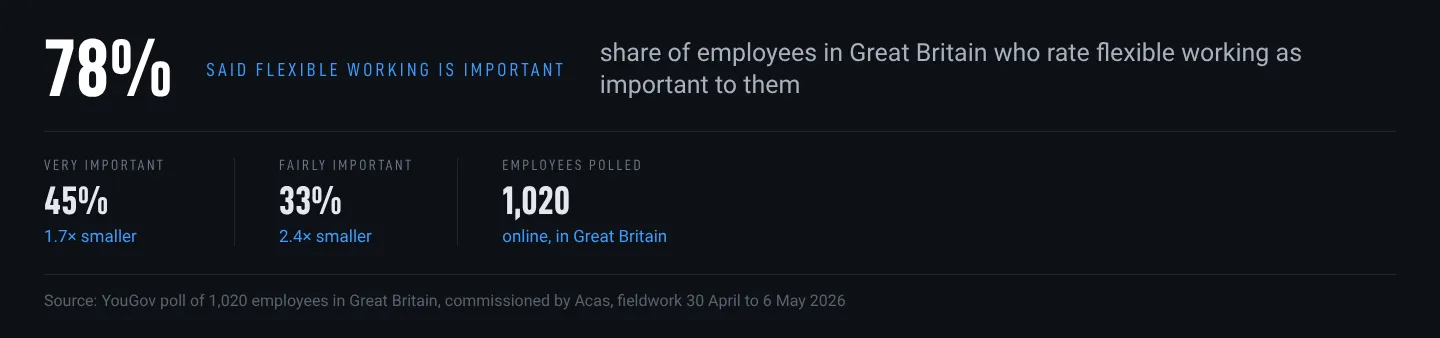
Acas also published a YouGov poll it commissioned of 1,020 employees in Great Britain, carried out online between 30 April and 6 May 2026. 78% said flexible working was important to them: 45% very important and 33% fairly important. It measures what employees want, not how many of them ask or how many get a yes.
Saying no to flexible working will need a reason you can defend
You can already refuse only for one of the business reasons set out in law. From autumn 2027, if the changes go ahead as planned, you’ll also have to explain why refusing was reasonable for the reason you gave.
Unless you say yes to the whole request, you’ll also have to go through set steps to consult the employee first. What those steps are hasn’t been written yet. The government will set them out in regulations, and Acas will review the draft code once they’re final.
Acas wants decisions based on evidence and sized to your business
Acas builds the draft on four principles: decide on evidence, adapt where you can, work on solutions with the person asking, and be open and consistent about it. It says they apply to organisations of every size and sector. How they apply depends on your size, your resources and your operational needs.
The draft also covers requests linked to a disability, where your duty to make reasonable adjustments may apply as well. And it covers several requests landing at once. If two of your five want to finish early on Fridays, that’s the section to read.
When you read it, the wording matters. The code uses “must” where something is a legal requirement and “should” for a step Acas strongly recommends.
If a refusal ends up as an employment tribunal claim, the tribunal has to take the code into account where it’s relevant. So it matters, even though it creates no new legal rights of its own.
Until autumn 2027, the 2024 code still applies
The revised code is expected to come in at the same time as the legal changes, subject to Parliament. Until then, the 2024 code is the one that counts.
Every employee can ask from their first day of employment. That includes a young apprentice you’ve just taken on with the apprenticeship hiring payment from DWP. They can ask, and you still decide. You have two months to decide and tell them the outcome, appeal included.

Trade resources for tradespeople, straight to your inbox.
Occasionally we will send you a newsletter. Free, unsubscribe in one click.
Keep reading

Right to work subcontractors: the self-employed you bring in can now count as your hire
The Home Office guide now covers individual subcontractors you bring in for a customer's job, and can make you liable for labour another business supplies. What protects you depends on who holds which contract.

Working at height near power lines: painter sentenced after his stepson was electrocuted moving a ladder
Daniel Watton approved ladders throughout an exterior painting job. His trainee stepson died moving a fully extended ladder near an overhead power line, and HSE found the original plan unsafe too.

Fast track electrician courses: a few weeks in a classroom isn't enough, SELECT and SJIB warn
SELECT and the SJIB have renewed their warning about short courses sold as a quick way into the trade, Professional Electrician reports. If you're hiring, the certificate is only half of what you need to know.