
Lifting operations planning: a £230,000 fine after a business took over unloading
Smith & Nephew took over unloading from Nippon Express to cut numbers on site during COVID-19. A delivery worker suffered life-changing injuries. HSE found the lift was not properly assessed, planned or supervised.
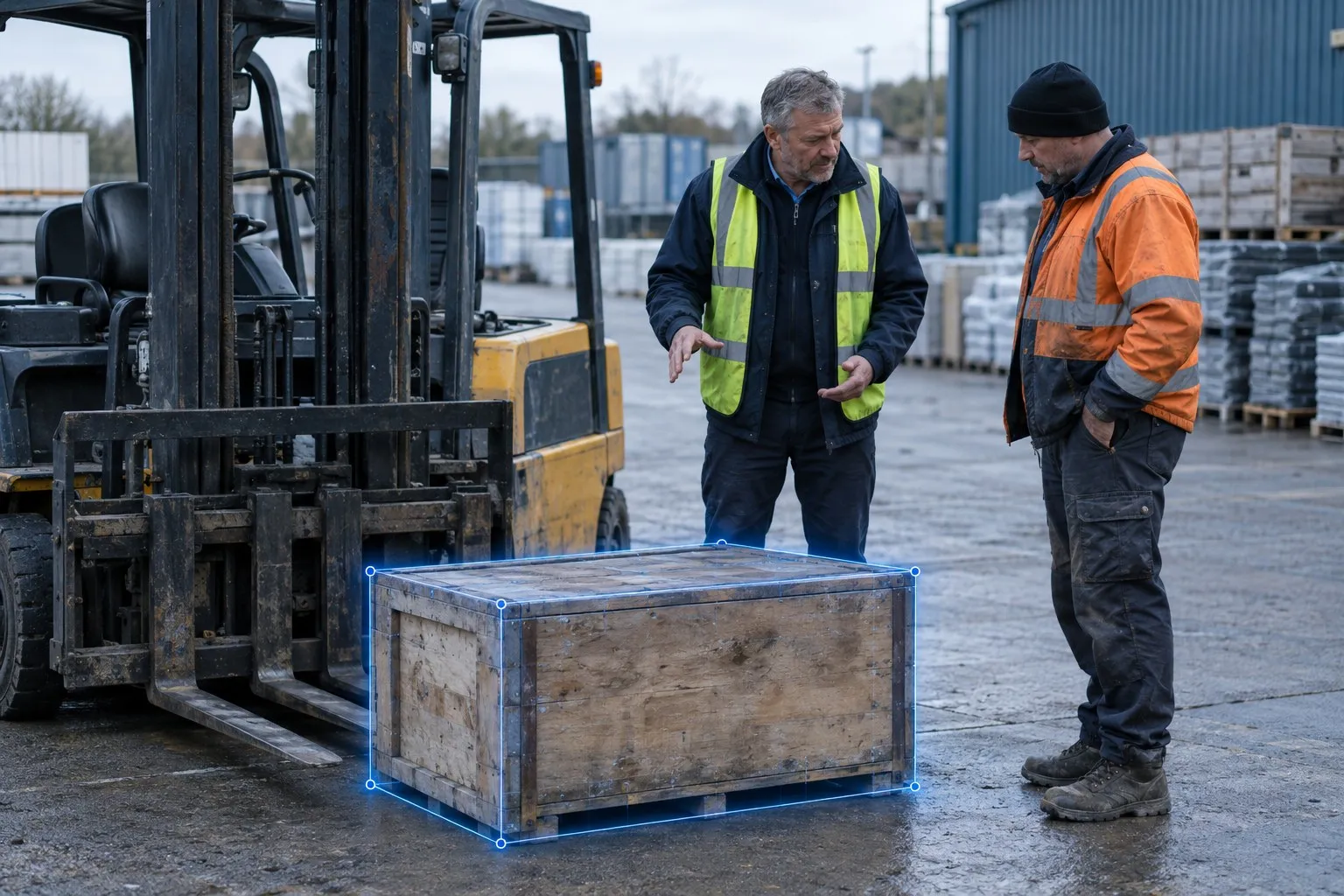
A business has been fined £230,000 after it took over unloading a lorry and left a delivery worker with life-changing injuries. The Health and Safety Executive (HSE) reported the sentence on 15 September 2026. If your crew ever takes the unloading off a haulier, lifting operations planning becomes your job too.
When your people move heavy kit with a forklift, that lift plan is part of running the business, and it covers deliveries you take over from someone else. The duty is not new: it applies whenever your crew uses lifting equipment, from a routine forklift move on site to a one-off unload. HSE is pointing businesses to guidance that already exists, rather than setting a new rule.
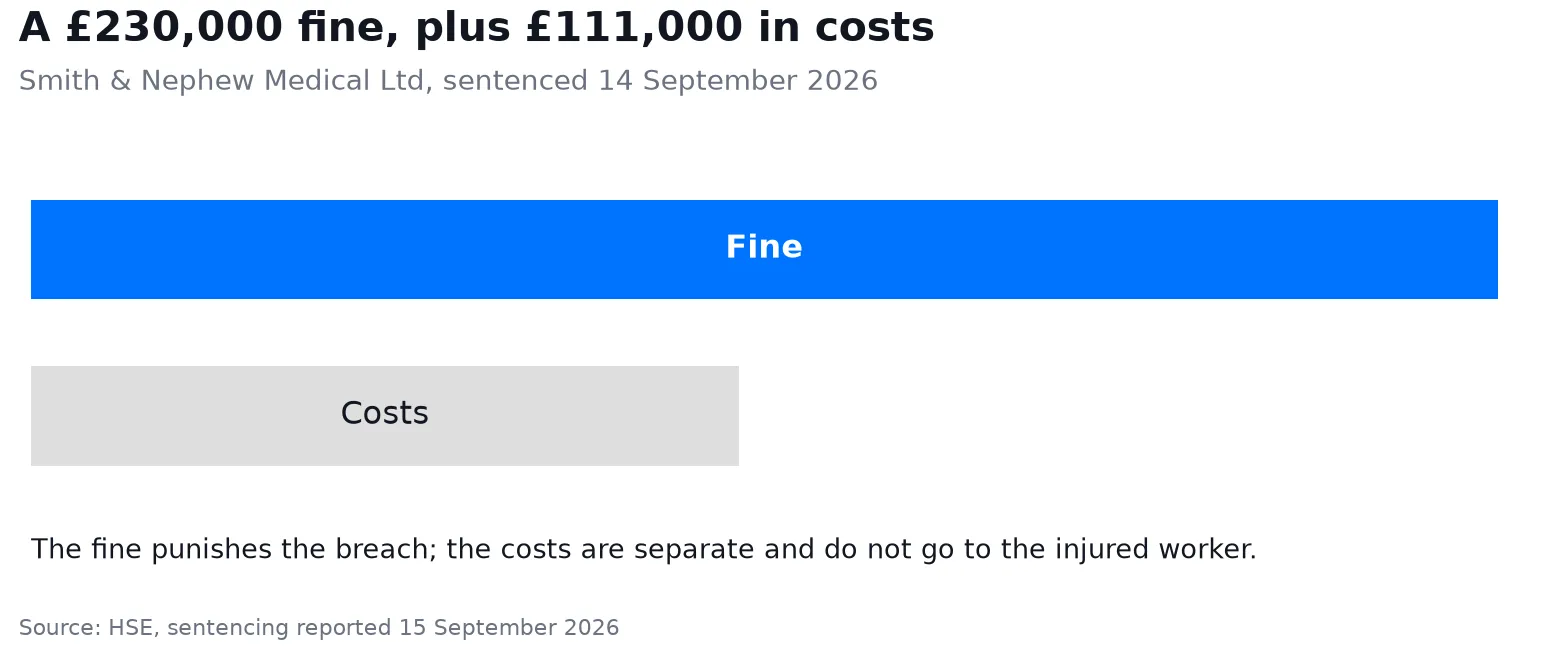
Smith & Nephew Medical Ltd, of Hull, was found guilty of breaching section 3(1) of the Health and Safety at Work etc. Act 1974. It was sentenced on 14 September 2026, fined £230,000 and ordered to pay £111,000 in costs.
Hull Crown Court heard that on 22 December 2020, Mr Dubey, an employee of Nippon Express (UK) Ltd, was delivering a crate holding an electron microscope to the company’s site. The crate weighed roughly 1.2 tonnes. Nippon Express had meant to provide the forklift and driver, but Smith & Nephew took on the unloading to keep the number of people on site down during COVID-19 restrictions.
HSE found no assessment of whether the company’s two-tonne forklift suited the load. The business had not worked out how to carry out the lift, who should be involved or what precautions were needed, and the unloading was not meaningfully controlled or supervised. Mr Dubey was positioned unsafely, the load was lifted unsafely, and the crate fell from the forklift and landed on him.
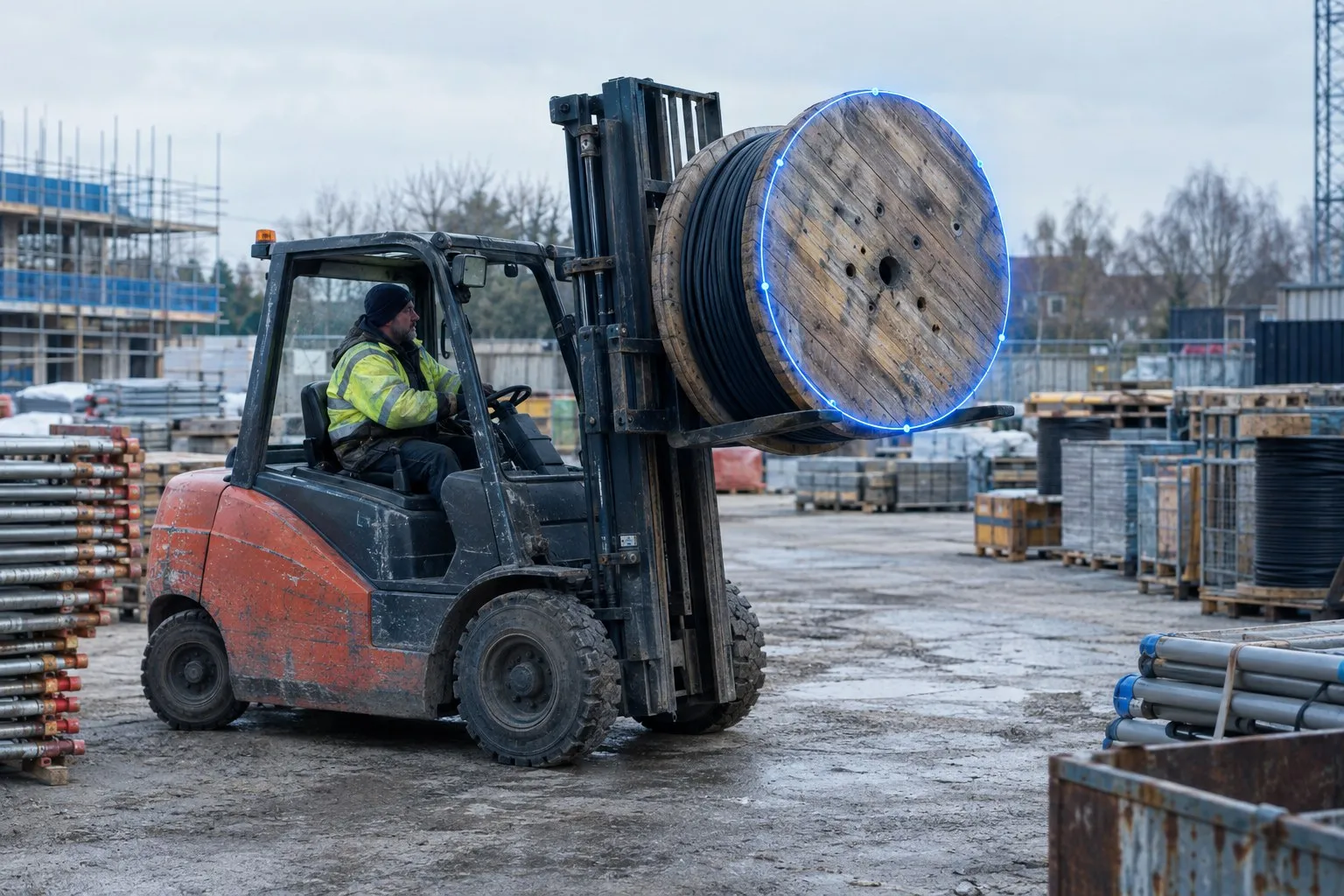
Lifting operations planning must settle who does what
HSE inspector David Stewart said the business should have had clear procedures for managing deliveries and safety measures for third parties attending site, and that changing the delivery arrangements did not change those requirements. He called for a risk assessment proportionate to the hazards, covering the nature of the load, the suitability of the lifting equipment and the arrangements for carrying out and supervising the lift.
It is one of several recent HSE cases where the duty lands on the business that lets the work happen, alongside a gas safe register check that caught an unregistered installer on the job.
HSE’s guidance on planning lifting operations asks for three things you can check on any job: name the risks, name who does each part, and keep people out from under the load. That makes it a project management job as much as a safety one, so settle who prepares the lift and who runs each stage before your crew takes it on.
When a generic lift plan is enough
None of this means a bespoke plan and a banksman for every pallet. HSE says a generic plan can cover straightforward, routine lifts by experienced forklift operators, as part of your usual risk assessment, though it is worth reviewing to check nothing has changed and it still holds. The question to ask is whether the lift in front of you is the routine one, or the one you have just taken off someone else.

Trade resources for tradespeople, straight to your inbox.
Occasionally we will send you a newsletter. Free, unsubscribe in one click.
Keep reading
Cherry picker tariffs hit Chinese boom lifts: has your hire bill moved?
The Trade Remedies Authority has put provisional anti-dumping duties on boom lifts imported from China. If you buy a Chinese machine, the duty lands on your import bill. If you hire from a UK yard, nothing so far shows your rate has moved.
Trench collapse prosecution: director jailed after house extension death
Peter Clifford was jailed for eight years, Construction Management reports. The excavation ran beside a conservatory on a house extension, with inadequate trench support and the home's foundations close by.
Water treatment guide: HPM reports an ICOM update for commercial hot water work
The reported ICOM update runs from initial water analysis to ongoing maintenance on commercial hot water work. HPM says it is free to download, but does not say what changed.