
Project Management Excellence: Training for Construction Success
Master construction project management with comprehensive training covering planning, scheduling, cost control, and digital tools for project success.

In construction, project management excellence is the backbone of performance. It governs not just delivery speed and cost, but reputation, safety, and sustainability. Yet, despite billions spent annually on technology and labour, the Construction Industry Training Board (CITB) estimates that 40% of project overruns still trace back to weak project governance, inconsistent leadership, or skill gaps in planning and controls.
Training for excellence isn’t about learning to use software, it’s about building an ecosystem of foresight, collaboration, and continuous improvement. This article explores how to elevate project management in construction through structured, skills-based training and cultural transformation.
The High Stakes of Project Delivery
Construction projects are inherently complex, large budgets, multiple contractors, volatile supply chains, and immovable deadlines. Research from the UK’s Infrastructure and Projects Authority (IPA) shows that only 25% of major projects in the UK are delivered on time and within budget.
The global construction sector faces similar issues:
- Cost overruns average 28% of original budgets.
- Schedule delays average 22% of planned durations.
- Rework rates can exceed 9% of total project value, wiping millions from profit margins.
These issues aren’t purely technical, they’re managerial. Robust project management systems turn uncertainty into structure and translate plans into predictable outcomes.
Why Training Matters More Than Ever
Today’s construction project manager must navigate not just people and plans, but technology, regulation, and data. The rise of digital tools (BIM, Power BI, Primavera, Procore) means that project leads must bridge technical literacy with leadership.
However, fewer than half of UK firms invest consistently in formal PM training. Many rely on “learning by doing,” which is slow and inconsistent.
Training creates exponential ROI when properly structured. According to the Project Management Institute (PMI), organisations that prioritise training and certification are 2.5 times more likely to deliver projects successfully and achieve business objectives.
In the construction context, training builds:
- A common language across trades, clients, and consultants.
- The capacity to forecast risks and mitigate them early.
- A culture of accountability rooted in data and progress visibility.
Defining Project Management Excellence in Construction
Excellence is not simply delivering on time, it’s predictable performance under pressure. It blends discipline, data, and adaptability.
Core principles of excellence
| Principle | Description | Example |
|---|---|---|
| Integration | Seamless alignment between design, procurement, and execution | Live BIM models linked to cost/schedule data |
| Visibility | Everyone knows real-time project status | Shared dashboards, daily reports |
| Control | Risk, scope, and cost actively governed | Weekly variance reviews, change logs |
| Collaboration | Disciplined communication between stakeholders | Clear RACI roles, joint progress tracking |
| Learning | Continuous feedback and improvement | Post-mortems, lesson libraries |
When embedded into daily routines, these pillars create resilience, the ability to adapt when projects shift without losing control.
The Training Framework for Project Management Excellence
Training for excellence requires balance between technical mastery and behavioural competence. Below is a modern framework used by leading contractors and infrastructure owners.
Technical Foundation
| Focus Area | Core Competencies | Tools & Methods |
|---|---|---|
| Planning & Scheduling | Critical path analysis, float management | Primavera P6, MS Project |
| Cost Control & Forecasting | Earned value, S-curves, cost variance | Power BI dashboards |
| Quality & Safety Governance | QA/QC systems, audits, stage gates | ISO 9001, digital ITPs |
| Risk & Change Management | Risk logs, claims, scenario modelling | NEC 4, JCT frameworks |
| Contract & Procurement | Tender evaluation, value engineering | CIPS principles |
| Digital Project Delivery | BIM 4D/5D, clash detection, mobile field apps | Navisworks, Procore |
Behavioural & Leadership Competencies
- Decision-making under uncertainty, balancing time, cost, and quality.
- Stakeholder negotiation, managing expectations, conflicts, and approvals.
- Team motivation, leading multidisciplinary crews under time pressure.
- Communication discipline, clarity in briefings, meetings, and reports.
- Situational awareness, recognising early warning signs of deviation.
The Training Journey: From Classroom to Construction Site
Successful PM training is experiential. Classroom theory sets foundations, but real transformation happens when teams apply skills on live or simulated projects.
A typical 12-month PM Excellence Programme blends:
| Phase | Duration | Key Outcomes |
|---|---|---|
| Orientation | 2 weeks | Establish PM maturity baseline, align roles, select pilot projects |
| Core Skills Bootcamp | 6 weeks | Learn planning, scheduling, cost and risk tools using real case data |
| Simulation Lab | 4 weeks | Manage a live simulated project (design delays, cost escalation, contractor claims) |
| Live Project Application | 4-6 months | Apply PM tools on active site projects with mentor supervision |
| Coaching & Feedback | Continuous | Peer reviews, executive dashboards, post-project evaluations |
Impact of Structured PM Training
Effect of Structured PM Training (Index, 0-100)
Illustrative synthesis from PMI, IPA, and CITB datasets. Training interventions directly improve reliability and reduce rework.
Practical Training Content Areas
1. Planning & Controls Mastery
Project managers learn network logic, resource levelling, and S-curve forecasting. Simulation tools replicate schedule compression and delay recovery. Teams practice building baseline schedules and managing earned-value metrics.
2. Financial Management & Forecasting
Understanding project cash flow is central to maintaining solvency. Training covers cost coding, variance reporting, and progress-linked invoicing, skills often neglected in site management.
3. Contract Administration
Trainees study JCT and NEC contracts, how to issue early warnings, process change orders, and defend against claims. This competence alone can save projects millions.
4. Risk & Issue Management
Modern training introduces probabilistic risk modelling (Monte Carlo), contingency planning, and real-time tracking using digital dashboards.
5. Communication & Leadership
Scenario-based workshops teach influence, conflict resolution, and cross-cultural communication, essential in multi-contractor environments.
6. Digital Integration
Project managers practice BIM-linked workflows, digital handovers, and cloud-based reporting platforms. This ensures PMs don’t just oversee people, they command data.
The Digital Transformation of Project Management
Construction is moving from paper to pixels. By 2025, over 65% of UK contractors use digital project-management platforms daily. Training ensures that adoption is purposeful, not cosmetic.
Key Technologies Empowering PM Excellence
| Technology | Impact | Example |
|---|---|---|
| BIM 4D/5D | Real-time link between design, schedule, and cost | Integrating Navisworks with P6 |
| Power BI / Tableau | Live dashboards for earned-value metrics | Variance alerts and KPIs |
| Field Apps | Mobile reporting and issue tracking | SnagR, PlanGrid |
| Digital Twin Monitoring | Post-handover performance analysis | Sensor-linked FM systems |
| AI Scheduling Assistants | Predictive risk detection | Microsoft CoPilot, Oracle AI Planner |
Digital fluency isn’t about software, it’s about insight. Project managers who can interpret live data can anticipate failure points weeks earlier than traditional teams.
Case Study Snapshot: The Heathrow Terminal Extension
When a UK contractor adopted a structured PM training programme for the Heathrow T2 extension, schedule reliability improved by 28%, and rework incidents fell by 35%.
Key changes included:
- Introducing weekly earned-value reviews across all packages.
- Embedding risk heat-maps in progress meetings.
- Mandating digital reporting through tablets and Power BI.
- Assigning certified PM mentors to junior engineers.
This combination of training, process, and tech created one of the best-performing delivery teams in Heathrow’s capital programme.
Building an Internal PM Academy
Leading firms are no longer outsourcing all training, they’re institutionalising it through Project Management Academies.
Core features of an internal PM academy
- Modular curriculum aligned with APM, PRINCE2, and NEC competencies.
- Blended learning: e-learning, workshops, and live simulations.
- Project onboarding pathway: every new manager completes baseline training before deployment.
- Digital resource library: templates, dashboards, lessons learned, and checklists.
- Assessment & certification: internal Level 1-3 PM certification aligned with promotion criteria.
The return is measurable: faster project mobilisation, fewer disputes, and higher client confidence.
Organisational Culture: Where Training Becomes Habit
Training is only effective when reinforced by culture. The most successful construction organisations embed PM discipline in everyday operations.
| Cultural Enabler | Example Practice |
|---|---|
| Leadership role-modelling | Executives review KPIs publicly, reward transparency |
| Open progress reporting | Weekly dashboards visible to all teams |
| Post-project retrospectives | Structured learning within 10 days of completion |
| Mentoring & peer learning | Senior PMs coach site engineers through reporting cycles |
| Recognition loops | PM excellence awards, leaderboard dashboards |
When continuous learning becomes a cultural reflex, excellence sustains itself.
Measurable Business Benefits
Before vs After Training Comparison
Compiled from benchmarking across UK tier-one contractors and government infrastructure delivery teams.
The Virtuous Cycle of PM Training
Structured PM Training↓
Improved Planning & Controls↓
Better Risk & Cost Visibility↓
Reduced Rework & Delay↓
Higher Profit & Reputation
Challenges and Solutions in Training Rollout
Challenge: Limited budget or time for extended training. Solution: Modular learning, micro-modules and blended e-learning.
Challenge: Resistance from seasoned managers. Solution: Make training peer-led, focused on outcomes not theory.
Challenge: Knowledge decay post-training. Solution: Continuous mentorship and real-time application cycles.
Challenge: Fragmented tool adoption. Solution: Standardise on one platform suite per organisation (e.g., P6 + Procore + Power BI).
Government and Industry Momentum
The UK government has made training central to construction modernisation, with initiatives including:
- £600 million skills fund (2025) to tackle shortages in technical and managerial roles.
- CITB’s Project Leadership Programme, launched 2024, offering blended training for 5,000 construction PMs.
- Build UK & ICE collaboration creating shared competency standards for digital project delivery.
Industry bodies increasingly view PM training as part of net-zero readiness, linking efficient project management with carbon reduction, waste control, and resource planning.
The Future: AI-Augmented Project Management
As artificial intelligence and predictive analytics mature, tomorrow’s project managers will work alongside digital copilots that flag risks, generate schedules, and summarise reports automatically.
However, these tools magnify the importance of training: without a strong human understanding of PM principles, AI outputs risk being misinterpreted or ignored. The human project manager remains the conductor, AI merely extends their reach.
The Bottom Line
Project management excellence isn’t achieved by accident, it’s built through systematic training, consistent culture, and digital fluency. For construction firms facing tighter margins and rising expectations, it’s the one investment that multiplies returns across every metric.
- Projects delivered on time rise by up to 25 percentage points.
- Cost variance halves on average.
- Rework, claims, and disputes drop by a third.
- Teams report higher satisfaction and retention.
The message is clear: train your people, transform your projects.

Trade resources for tradespeople, straight to your inbox.
Occasionally we will send you a newsletter. Free, unsubscribe in one click.
Keep reading
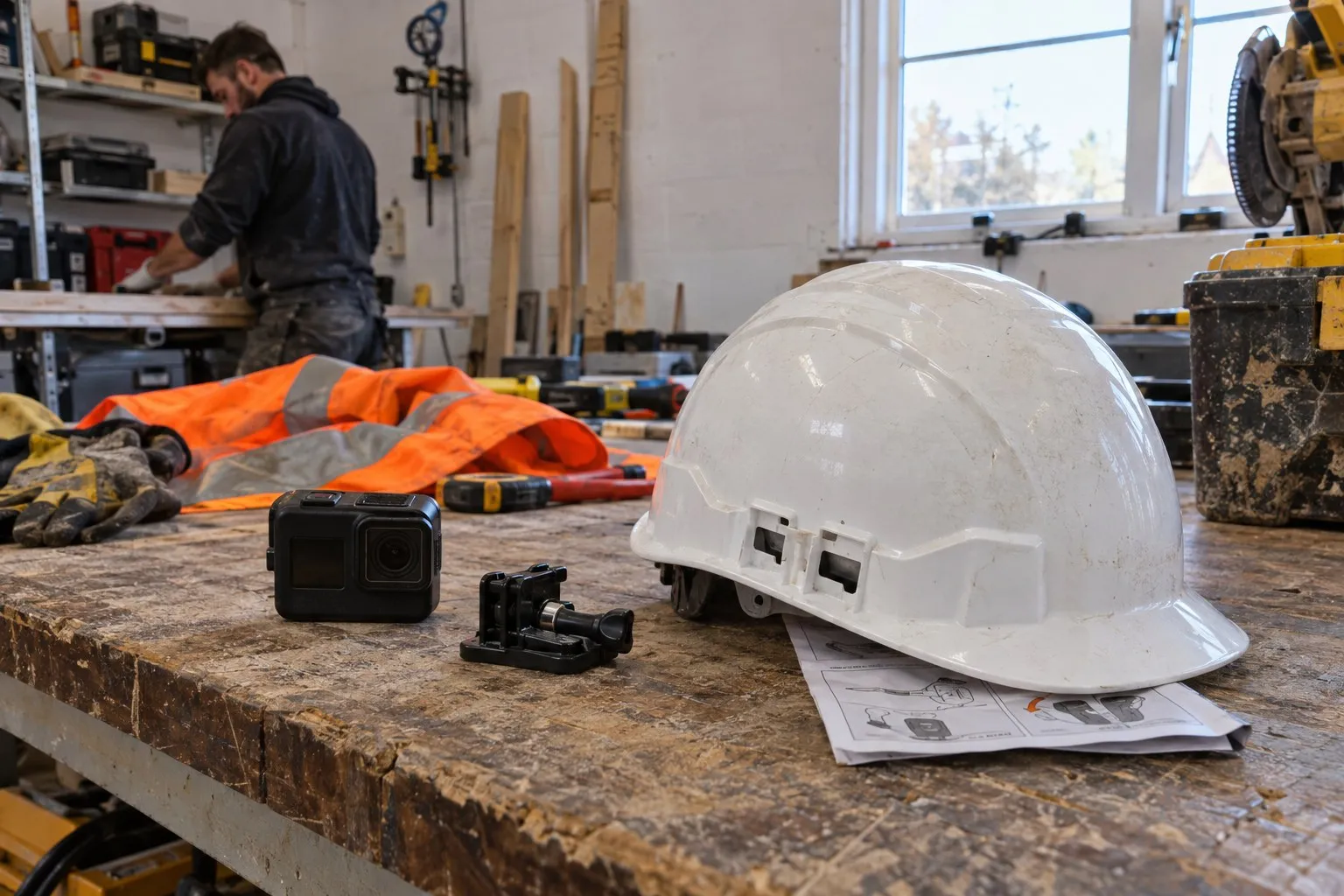
Smart helmet for construction workers: why a camera mount isn't enough
A construction safety helmet with camera needs more than a mount that fits. A separate camera comes with separate paperwork, and some helmets sold as smart only store wearer information on a contactless chip.

AI receptionist for tradesmen: what it costs and what your contract must cover
An AI receptionist for a small UK trades business can answer without booking. The price needs to cover a working connection to your diary; emergency cover needs someone who actually picks up.

AI for tradesmen: a UK owner's guide, trade by trade
AI can turn a house scan into a heat pump design and help code sewer footage. Further down the trades, the offering gets thin. The price often tells you less than the allowance beside it.