
Lifting operation plan: £4m fine after staff steadied a forklift load
City Electrical Factors had no risk assessment or lift plan for a loading job its staff did regularly. HSE found the load had unused anchor points, and the delivery lorry had a crane that offered a safer way to lift it.
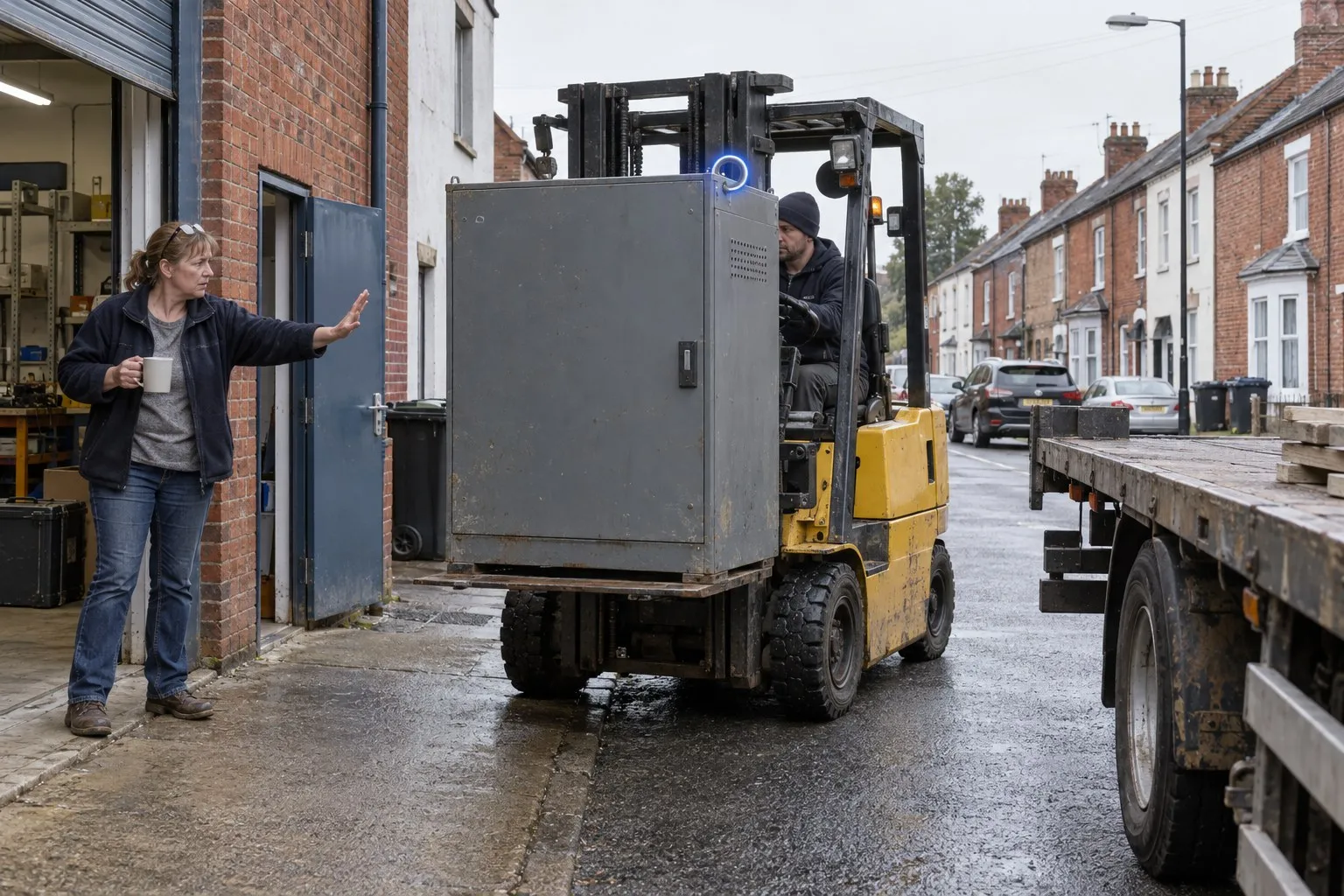
A worker acting as a “spotter” was expected to steady a 231 kg load of switchboard equipment while a forklift moved and lifted it onto a lorry. The load wasn’t secured to the forks. It fell on him, and he now needs 24/7 care.
Getting a boiler or a heat pump off a lorry is the same kind of lift, and planning it is part of running the business with staff. Guidance from the Health and Safety Executive (HSE) says any lift needs a lifting operation plan, routine jobs included. That is an existing employer duty, not a new one.
Birmingham Magistrates Court fined City Electrical Factors Limited, a Telford electrical wholesaler and manufacturer, £4m on 16 October 2026, HSE announced that day. The court also ordered £6,304 in costs, separate from the fine. The company had pleaded guilty to breaching section 2(1) of the Health and Safety at Work etc. Act 1974. The same court heard last month’s steam pipe isolation case at a factory, also brought under section 2 of that Act.
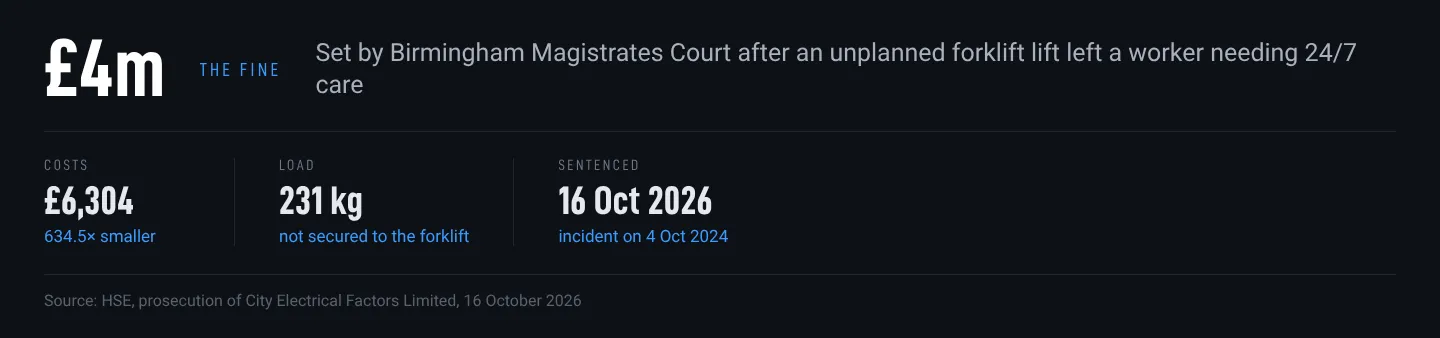
The £4m is this company’s fine, set by the court for this case. HSE’s release doesn’t say how the court arrived at it, and it isn’t a price list for a smaller business.
The incident happened on 4 October 2024 at the company’s Proteus Switchgear Industrial Division. The forklift was loading the equipment onto a flatbed lorry.
The worker suffered brain and spinal injuries and underwent lifesaving surgery. He can no longer do anything for himself and is unable to communicate with others. He now lives in a care home.
Nobody competent had planned the lift, nobody was supervising it properly, and nobody had told the staff how it should be done, though they did it regularly. There was no risk assessment and no lift plan.
HSE inspector Keeley Eves said the incident was “completely avoidable and caused by a failure to properly plan for the job taking place”.
Your lifting operation plan includes the people beside the load
A routine lift can sit under a generic plan, as the earlier lifting operations planning case over a forklift unload explains. HSE’s guidance adds that routine lifts which are a little more complex may need planning each time.
For much more complex lifts, HSE says a written plan should be developed by someone with specific competence suited to the task. Competence means enough theoretical and practical knowledge of the work and the equipment, and of the law.
HSE’s guidance lists securing loads and working under suspended loads among the factors a plan may cover. The plan should also set out the responsibilities of everyone involved. For your crew, that includes what anyone standing beside the load is expected to do.
At City Electrical Factors, staff were expected to steady loads while they were being moved and lifted. HSE found two ways nobody needed to steady them.
The load had anchor points, so it could have been secured to the forklift. It also had welded lifting eyes, so the crane on the delivery lorry could have lifted it instead. HSE identified that crane as the safer alternative for this job.
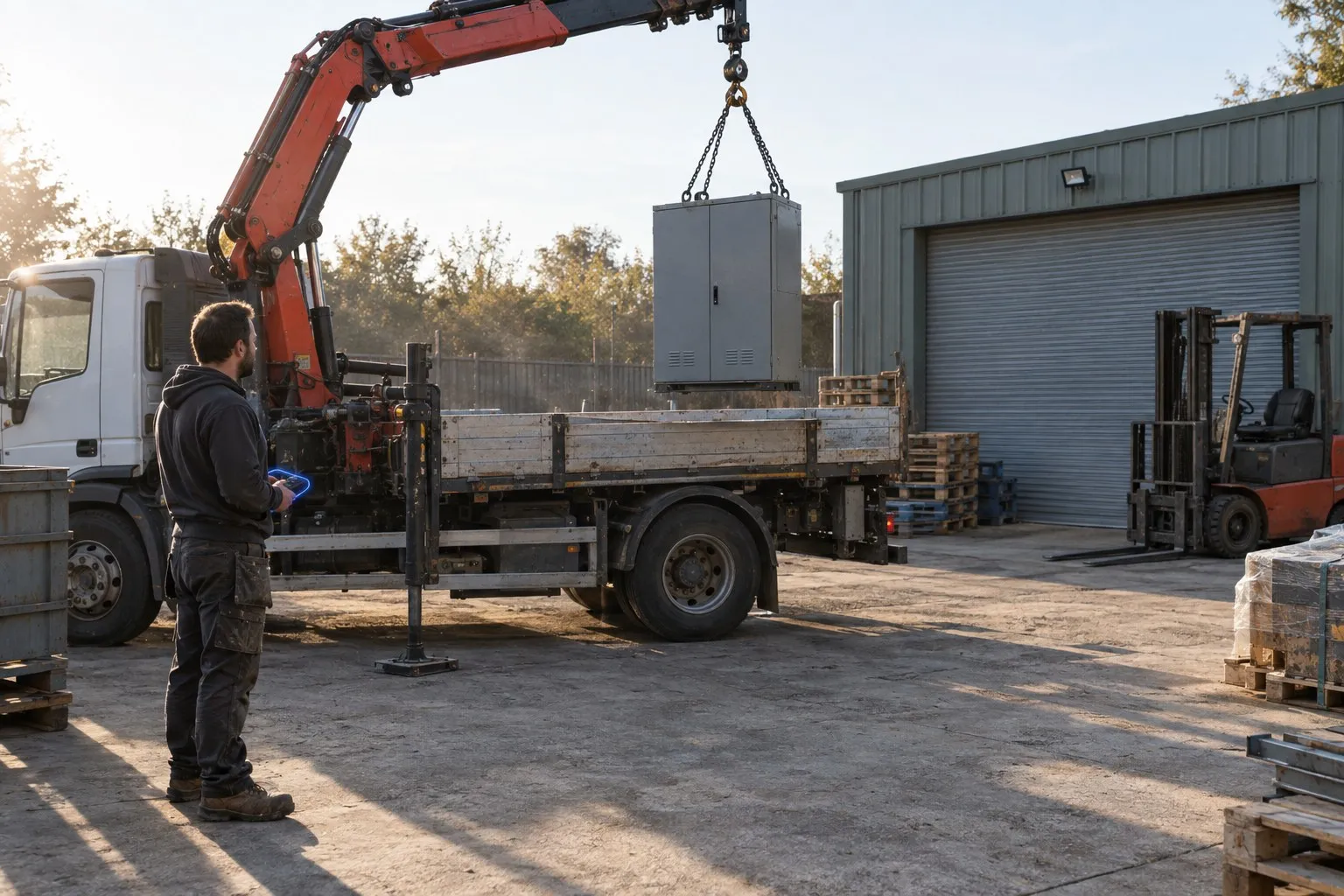
HSE called expecting spotters to steady the moving loads “an unsafe and unnecessary system of work”. The inspector’s last word was for every employer: “Loading and unloading operations remain one of the most hazardous transport activities in the workplace.”

Trade resources for tradespeople, straight to your inbox.
Occasionally we will send you a newsletter. Free, unsubscribe in one click.
Keep reading
Molson administration: Bristol plant dealer's stock is being sold, Construction Enquirer reports
Construction Enquirer reports administrators now control five Molson companies and are selling off the remaining stock. If you've got plant on order or a deposit paid, the answer has to come from them.
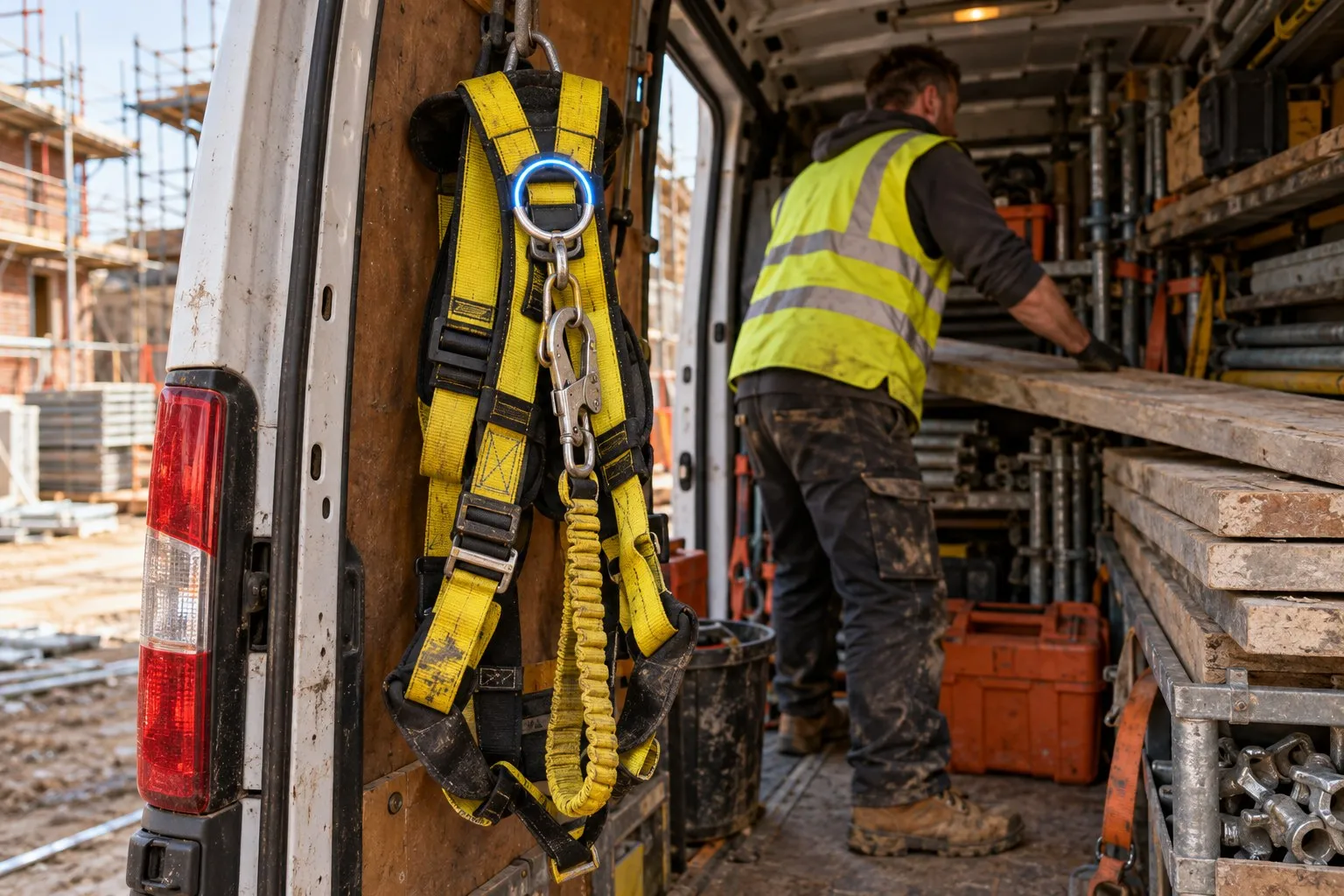
Scaffolding company fined £16,000 after a trainee's fall: neither scaffolder was clipped on
Michael Swales died after falling five metres from a scaffold he was helping to put up. HSE found no safe zones, and neither he nor his colleague was using a harness or lanyard. The guidance it points to covers exactly that stage of the job.
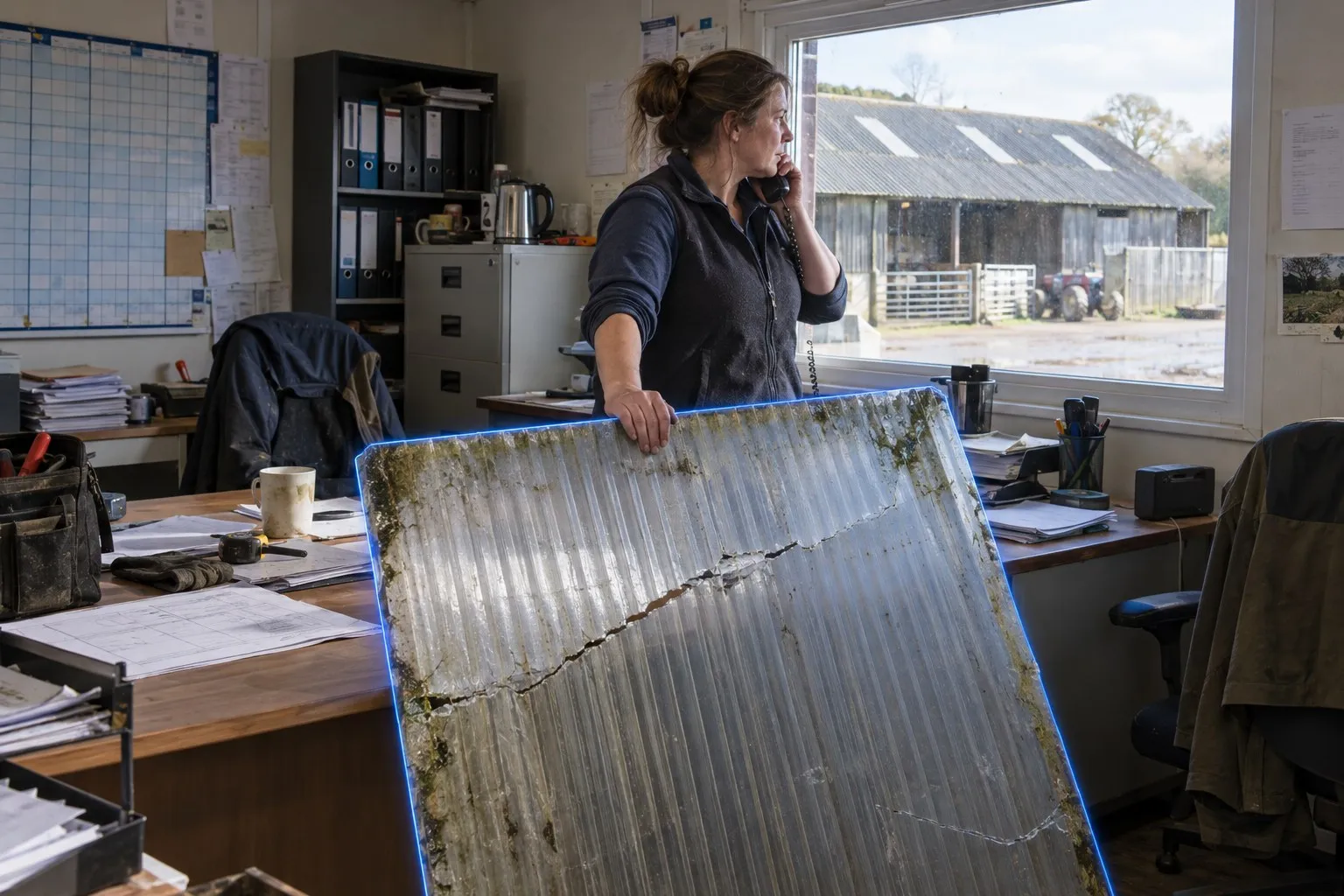
Fragile roof safety: firm with a risk assessment fined £20,000 after a worker fell 10m through a barn roof
AJ Riley Landscapes and Building Limited had a risk assessment, but its workers hadn't been trained well enough to use the controls it named. HSE also found the skylight job was poorly planned and lacked the controls to stop a fall through the fragile roof.