
Smart helmet for construction workers: why a camera mount isn't enough
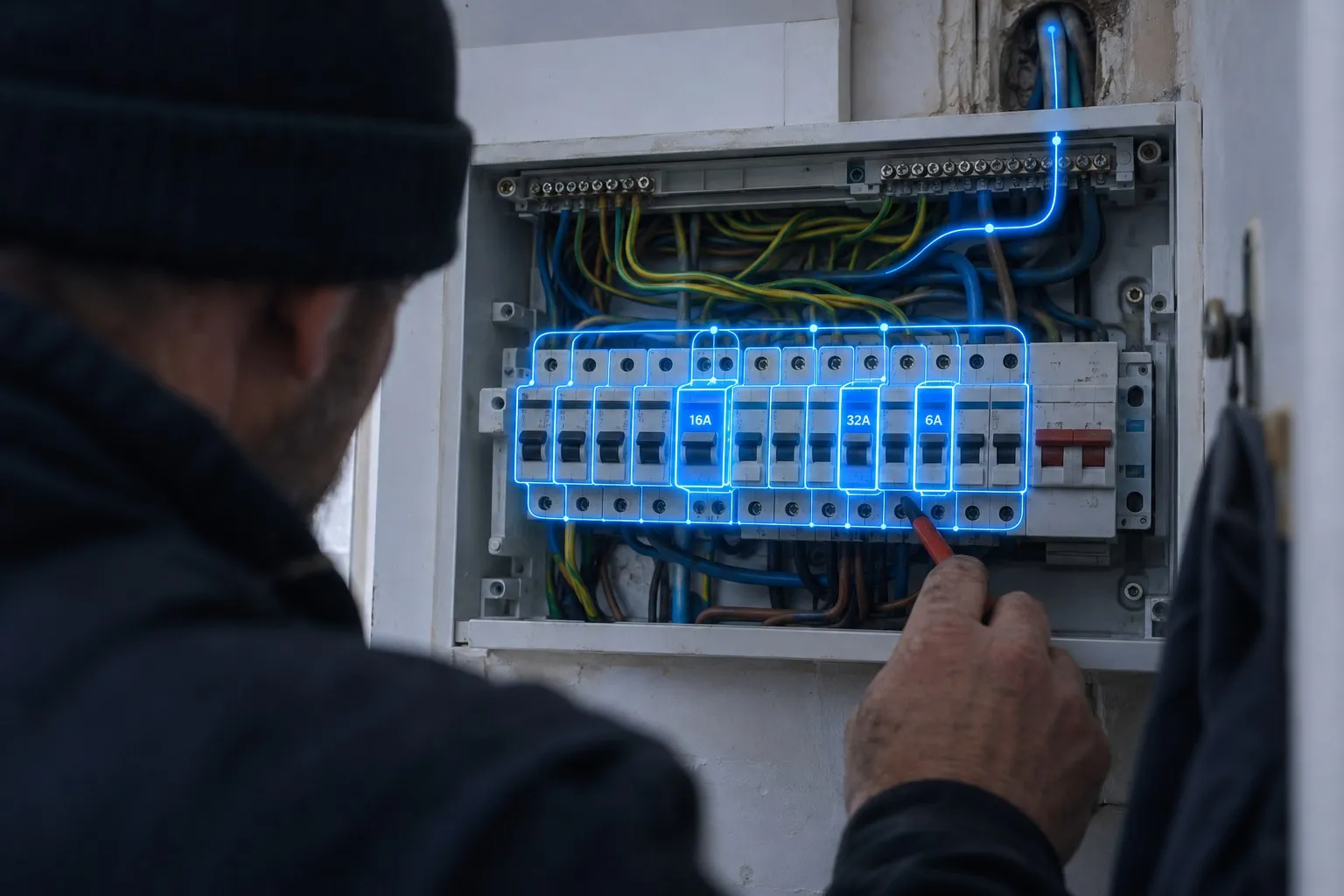
A construction safety helmet with camera needs more than a mount that fits. A separate camera comes with separate paperwork, and some helmets sold as smart only store wearer information on a contactless chip.
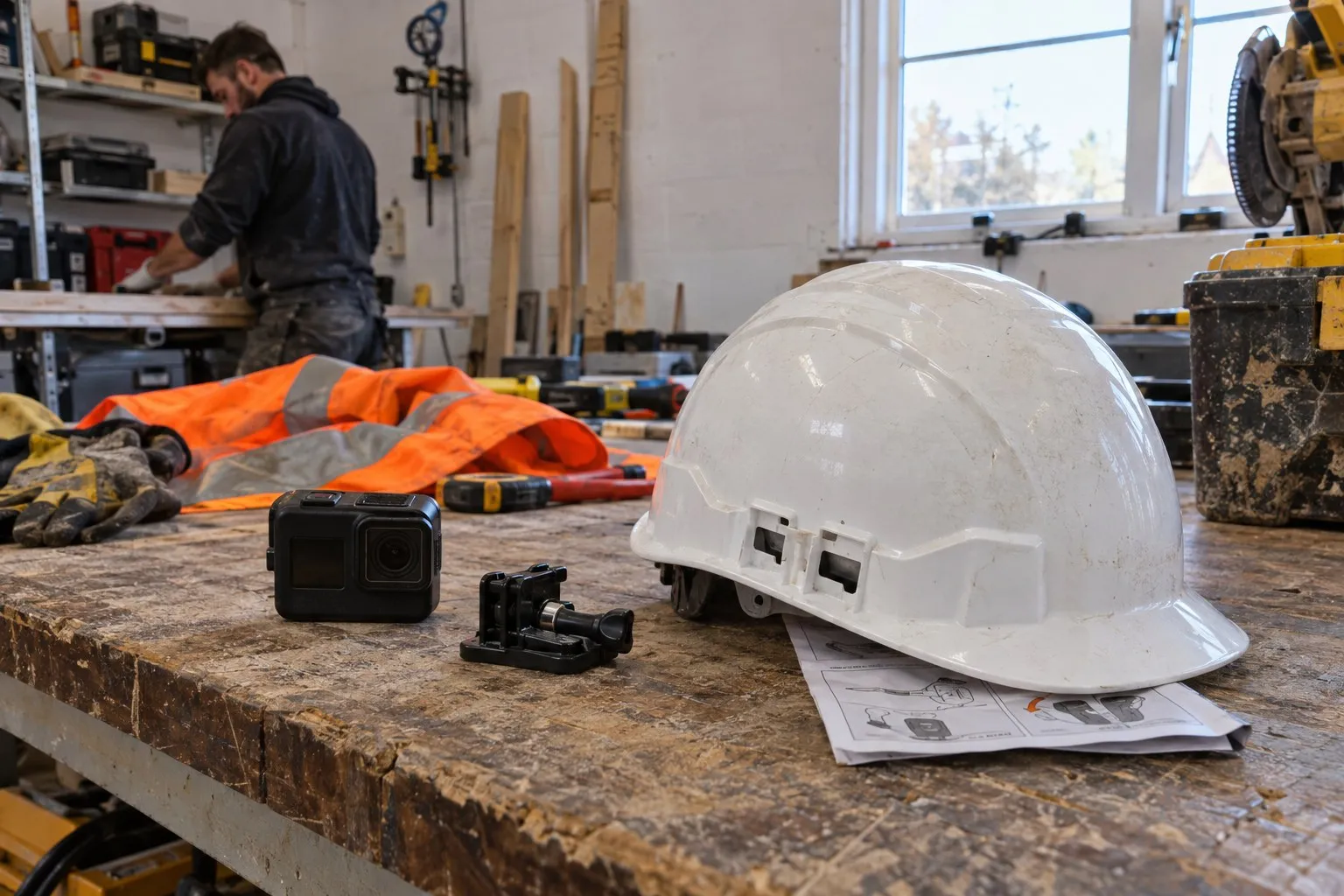
A smart helmet for construction workers needs the helmet maker’s backing for any camera attachment.
A smart helmet for construction workers must match the function you need
RealWear’s Navigator 520 clips onto a hard hat and includes a camera and screen, putting it in the smart glasses at work category. You get a screen as well as the view from your worker’s head, and the manufacturer’s own shop listed it at $3,150 on 21 September 2026, in dollars, with a year of support included.
Atexshop lists the Guardhat IS HC1.1 Communicator, a certified industrial helmet whose listing describes GPS location tracking, proximity detection and “audio/video VOIP telephony with compatible devices”. It does not claim a camera of its own. The reseller says “Call for Price”, excluding VAT, duty and shipping. Stock availability is unconfirmed. The helmet is absent from manufacturer Aatmunn’s homepage, leaving current production uncertain despite the reseller listing.
Some “smart” helmets have no camera. Centurion’s Nexus E:Protect T2 and Nexus HeightMaster use Twiceme, a contactless information chip. A phone app accesses information about the wearer and equipment, according to the manufacturer’s September 2024 announcement.
Studson’s SHK-1 uses Twiceme to store emergency contacts and medical information. You are buying access to a record about the wearer. Pictures require camera equipment.
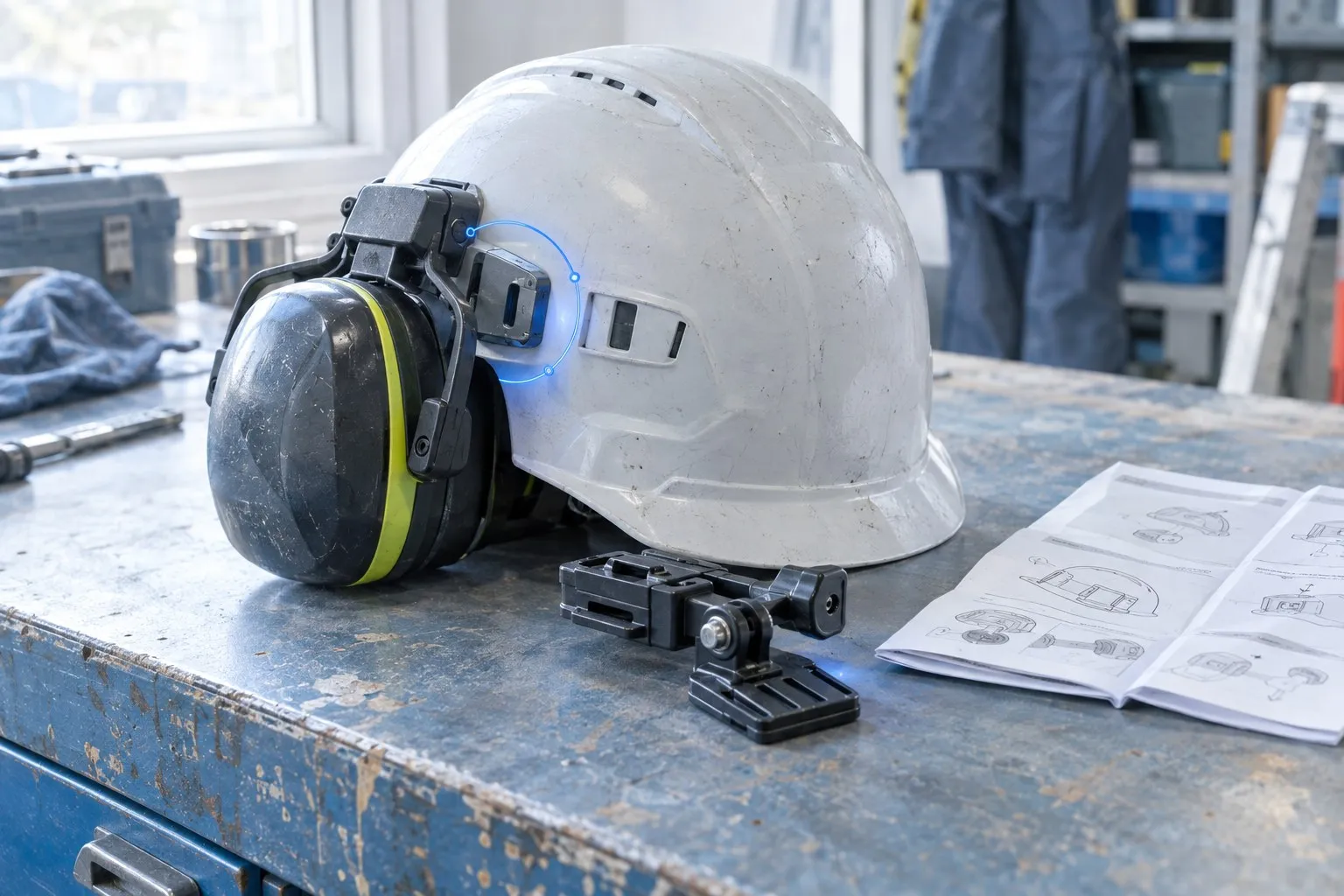
A construction safety helmet with camera needs a mount for your exact model
Your exact helmet model matters, even with an accessory-slot mount. Only one of these options has a published UK price, and it comes in two parts. The others are priced in US dollars or on enquiry. Picatinny is an accessory mounting rail.
| Mount and seller | Price on 21 September 2026 | Fitting description and condition |
|---|---|---|
| Insta360, Scan UK | £29.99 including VAT | Curved base, adjustable quarter-inch screw. Weight unpublished. Awaiting ETA. |
| RealWear Hard Hat Clips, manufacturer | US$75, three pairs | Existing accessory slots; options include Petzl Professional and 3M TA500. Exact model matters. |
| Vuzix M-Series mounts, manufacturer | US$19.99 | Side slots; manufacturer claims “most” US/EU helmets. Model list unspecified. |
| Visual Engineering HD-IP Helmet Cam, manufacturer | On enquiry | Picatinny rail. Marketed for tactical field operations; construction use and helmet standards are outside the page’s claims. |
All four listings leave helmet standards and assembly approval unspecified. Not one of the eight helmet makers lists a camera among its approved accessories in the instructions and catalogues reviewed. The eight are JSP, Centurion, Petzl, MSA, 3M, Milwaukee, uvex and Studson. None says how much weight a side slot can take. EN 397 is an industrial helmet standard. A helmet meeting it and a separate camera do not make a certified assembly.
Scan also lists an Insta360 Mount Base at £14.99 including VAT. Its description covers hands-free inspections and 360-degree capture. The seller describes a screw; the manufacturer’s own mounting page was inaccessible on 21 September 2026, leaving the base-to-shell fixing unverified.
You have a more explicit fitting description for RealWear’s clips: they snap directly into existing accessory slots without extra screws. The “Petzl Professional” option still identifies a helmet family, leaving exact model compatibility open.

The helmet maker has to permit the attachment
Your helmet’s instructions set the limits, alongside the updated EN 397:2025 helmet standard covered in the safety glasses with a camera built in.
JSP’s May 2025 general instructions allow only JSP components. Its separate PPE Compatibility Statement calls same-brand PPE “advisable but not mandatory”. Both remain published with different messages.
MSA’s V-Gard H1 instructions allow only H1 accessories, tested with that helmet. Its March 2014 helmet-care FAQ rejects competing accessories. Yet the European V-Gard family manual says other accessories may be suitable under manufacturer recommendations. The documents differ across helmet families as well as dates.
Your helmet supplier is the first call, with the exact helmet model and proposed camera mount. Ask for the helmet maker’s written approval and the camera seller’s compatibility evidence for that combination.
For an adhesive base, Centurion’s February 2025 instructions restrict adhesives to use in accordance with its instructions. They also limit adaptations for attachments to manufacturer-recommended methods.
Even when the mechanical fit is clear, the attachment still has to be acceptable under the site rules that govern smart glasses on a construction site.
The weight must suit the wearer and the job
You have to account for what your worker carries and where it sits.
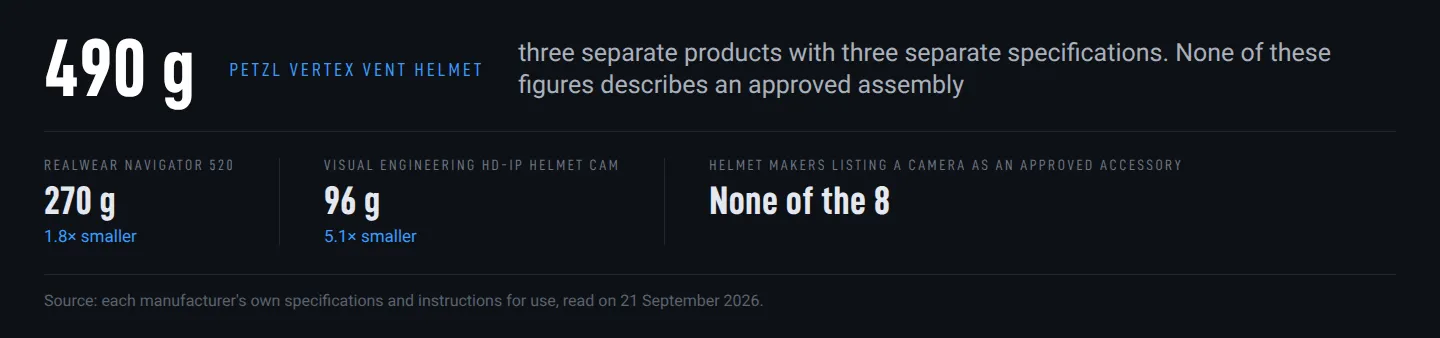
Petzl publishes 490 g for the VERTEX VENT helmet. RealWear gives 270 g for the Navigator 520. Visual Engineering’s HD-IP Helmet Cam weighs 96 g. At the other end of the range, VRmedia gives the Kiber 3 ATEX a total weight of approximately 1,000 g without its energy management unit, with that unit at approximately 150 g and the handcam at approximately 200 g.
Each figure belongs to a separate product. Your worker carries a helmet plus its mount and device. You need the weight of the complete kit; these documents do not give it or approve the assembly.
Weight distribution also matters to your worker. Wei and colleagues’ 2026 study in Ergonomics found that a lighter firefighter helmet tired necks faster: its weight sat higher and further forward. The study did not test camera attachments.
HSE’s construction PPE guidance explicitly says head protection must allow hearing protectors to be worn when needed. Your worker needs room for the protection already required on the job.
Battery claims have to match the camera mode
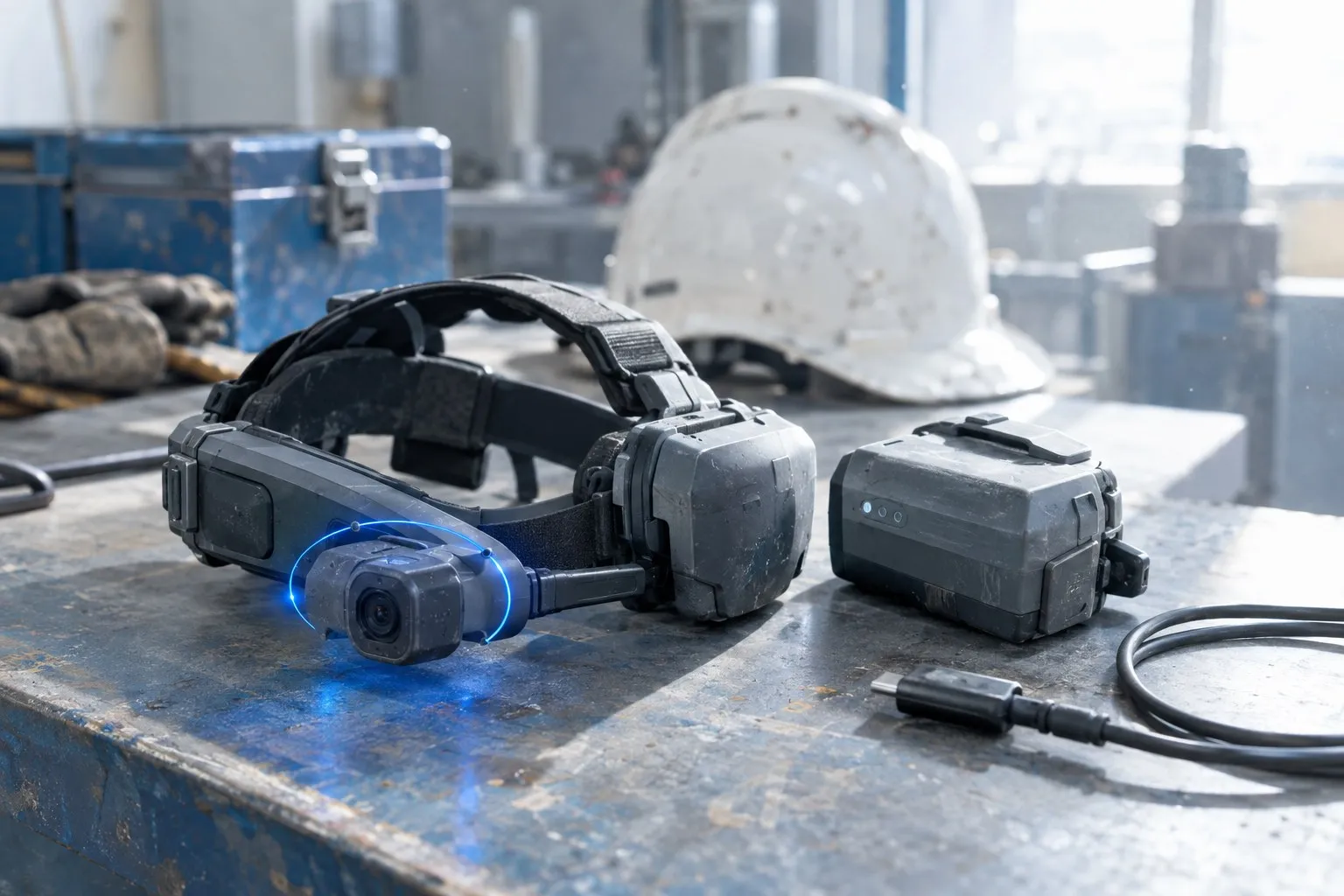
Live viewing from the office makes the operating mode important. The Kiber 3 ATEX, a model with explosive-atmosphere approval, lists two to three hours of battery life. Its datasheet adds “No streaming”.
The figure describes operation with streaming switched off. A live remote-support call sits outside that stated condition. Those hours therefore apply to a different operating mode from the one you need for live viewing.
For a different model, the Kiber 3S, the manufacturer advertises six to eight hours and replaceable batteries. Its page says nothing about streaming either way.
For the Onsight Cube, Librestream specifies “up to over 4 hours”, depending on media and illumination settings. The manufacturers rate dust and water protection at IP64 for the Cube and IP66 for the Navigator 520. RealWear also lists a hot-swappable battery. You can replace its power source during use.
The manufacturers publish operating-temperature ranges for these devices. Cold-weather runtime remains unquantified across the specifications reviewed. A temperature range tells you the device switches on in January; the winter hours are the figure you measure on your own site.
Your budget needs the capture service as well as the hardware
Your tools and technology budget needs to cover what happens to the pictures if you want progress tracking.
At the Royal Bournemouth Hospital extension, Integrated Health Projects, the Vinci and Sir Robert McAlpine joint venture, used Buildots helmet cameras, Construction Management reported in January 2023. Project director Bruce Preston described tracking build progress against “design and schedule”. The report documents a deployment and its purpose. It carries no figure for time or money saved, on that job or on any other.
PlanRadar’s British pricing page, checked on 21 September 2026, lists Basic at £23 per user per month and Pro at £119 per user per month.
SiteView capture is an additional package across the plans, priced on enquiry. You can price the base platform from the website. SiteView, the camera-capture service, needs a separate quote. The published plan prices cover only part of the bill.
Recording people also brings what CCTV in the workplace requires alongside the equipment decisions.
The paperwork must cover the equipment your staff wear
The Navigator Z1 is a different RealWear model from the 520 above. Its user guide says “PPE Compatible”; the copy reviewed came from distributor Matts Digital. The mounting instructions describe sliding clips into helmet accessory slots. The declaration covers radio equipment; the guide separately lists explosive-atmosphere approvals.
The guide does not mention the PPE product rules, Regulation 2016/425, or the industrial helmet standard, EN 397. Helmet protection needs its own supporting documents from the helmet maker.
The available paperwork does not include a declaration covering helmet and camera together.
The public UK and EU registers list the organisations that assess products and what they can assess. They do not publish individual product certificates. Certification of an individual helmet-camera combination therefore remains a question for its own documents.
For you, the distinction is between evidence for the camera’s electronics and evidence for the head protection being worn.
An equipment record can identify the exact helmet and attachment, alongside the instructions and suitability assessment. It gives your business a record of the configuration assessed, including the other PPE that worker needs.
HSE’s PPE at work guide, L25, puts the suitability assessment with you as the employer, including compatibility with other PPE worn at the same time. The duty comes from Regulation 4 of the Personal Protective Equipment at Work Regulations 1992: you must provide suitable PPE where other controls leave risks at work. The paperwork stays with your business; the duty applies throughout that exposure.

Trade resources for tradespeople, straight to your inbox.
Occasionally we will send you a newsletter. Free, unsubscribe in one click.
Keep reading

AI receptionist for tradesmen: what it costs and what your contract must cover
An AI receptionist for a small UK trades business can answer without booking. The price needs to cover a working connection to your diary; emergency cover needs someone who actually picks up.
AI for tradesmen: a UK owner's guide, trade by trade
AI can turn a house scan into a heat pump design and help code sewer footage. Further down the trades, the offering gets thin. The price often tells you less than the allowance beside it.
Safety glasses with camera: why your phone usually wins
You can buy glasses with a built-in camera. Whether they can replace your existing PPE is a separate question, and some manufacturers' own pages leave it open.