
Are smart glasses allowed at work? The gap in the privacy regulator's guidance
The privacy regulator's guidance names body cameras, not glasses. Your decisions start before purchase and get harder when an employee brings their own pair.
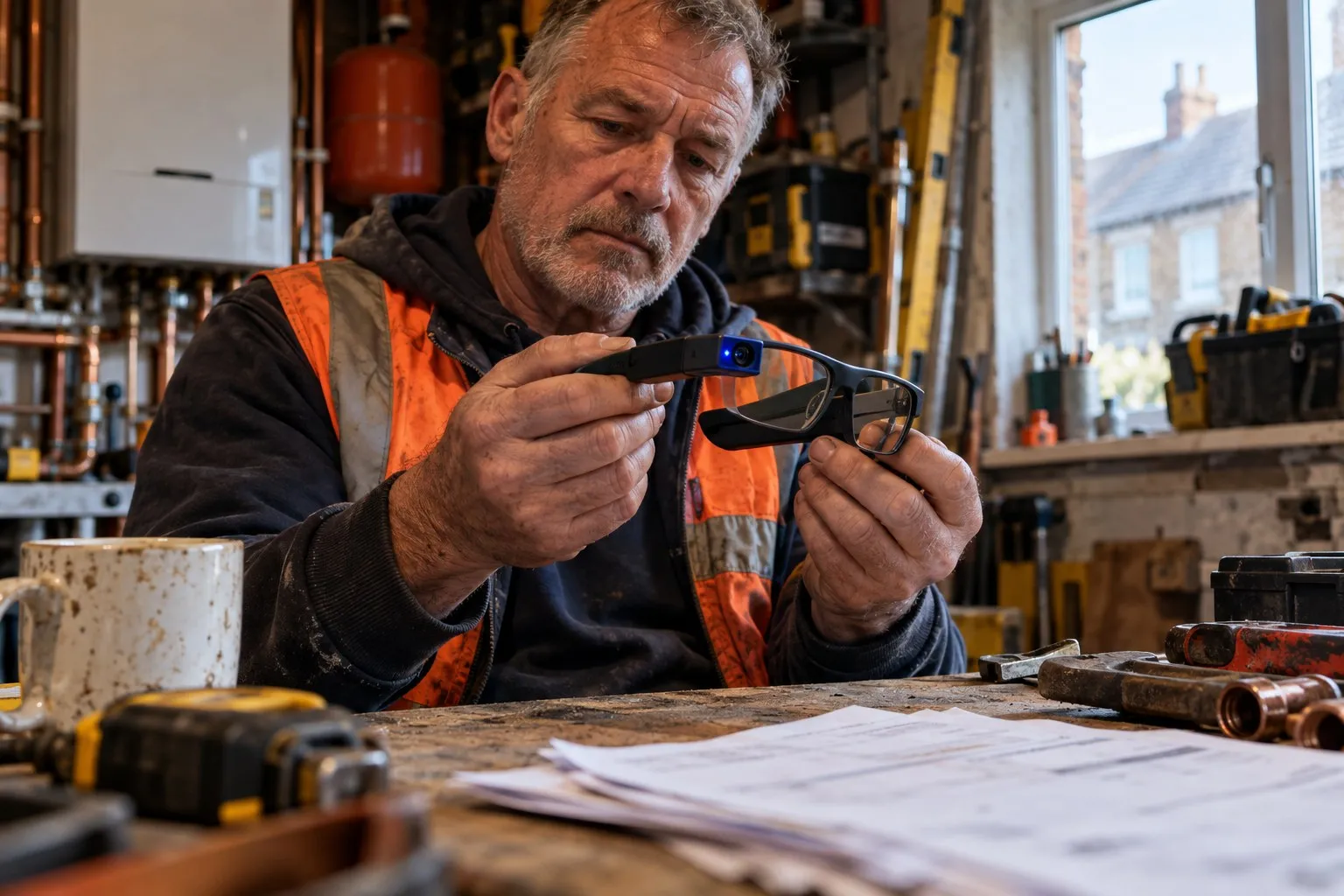
The ICO, the UK’s privacy regulator, names these surveillance technologies: number-plate recognition, body cameras, drones, facial recognition, smart doorbells, vehicle surveillance and action cameras. As checked on 21 September 2026, smart glasses have no entry.
For you, that gap is neither permission nor a ban. The ICO’s worker-monitoring guidance says data protection principles apply regardless of technological developments. An employee arriving in their own Meta glasses adds another question: who answers for what they record?
Are smart glasses allowed at work? The recording purpose matters
You might want footage of a repair, or a way to monitor your staff. You need to decide which before buying.
For camera-equipped glasses, the closest published starting point is the ICO’s Body Worn Video guidance. BWV means cameras worn by a person, often attached to clothing. The scope page of the wider video surveillance guidance is what keeps the door open: the systems it covers “include, but are not limited to” the seven it names.
The BWV page says to justify recording before buying the kit. Your decision about smart glasses at work therefore begins before you order the kit. The worker-monitoring guide’s overview includes wearable cameras “for the purpose of health and safety”, but none of its eleven sections on specific methods covers wearing one.
There are no smart glasses privacy laws of their own. The UK GDPR and the Data Protection Act 2018, the same law that governs CCTV in the workplace UK, are the starting point for camera glasses too. The BWV page requires you to complete a data protection impact assessment before use, setting down why you need the recording and how it affects people’s privacy.
BWV guidance is the closest fit because glasses record. Applying it by analogy does not approve a model.

Your buying decision rests on the guidance already published
Waiting for glasses-specific advice is an option. The ICO lists seven planned technology guides, none about cameras worn on a person.
Updates following changes to data protection law have taken priority, the ICO’s plans page explains.
The BWV advice has not changed since October 2022. We compared it with the archived version on 21 September 2026: the same 51 sentences, word for word.
Paul Arnold, the ICO’s chief executive, published a smart-glasses blog on 17 September 2026. The blog never addresses employers or staff.
The surveillance guidance says it is “under review” and sends you to the plans page for dates. The plans do not list it, so there is no date to find.
For your purchase, the live BWV text remains the published reference, carrying its own warning that it may change.

Separate recording controls belong in your buying decision
Your choice of kit determines whether a worker can stop the sound and keep filming. The ICO’s BWV guidance says you should establish before buying whether sound and picture can be switched on and off separately. A system that captures both together should be used only when both are justified in the circumstances.
The record button may also retain something that happened earlier. The ICO describes devices which buffer footage before the wearer starts recording. You need to decide how much earlier footage you need and ensure the device records no more than that.
Continuous recording needs strong justification under the same guidance. The ICO writes about the controls, never about the products. Which glasses let a wearer stop the sound and keep the picture is a question for the spec sheet and the demonstration, not for the guidance.
Recording inside a customer’s home needs more justification
Taking the glasses into a customer’s kitchen puts your recording inside a private dwelling. The BWV guidance treats homes as sensitive places and calls for greater evidence of need there. The guidance sets a higher bar for homes and leaves you to decide whether a boiler swap in a hallway clears it.
You also have a training job before sending anyone out. The ICO’s BWV checklist puts that on the organisation: you train staff to tell people they may be recorded whenever recording is not obvious. The guidance includes announcing the recording and its purpose before switching on.
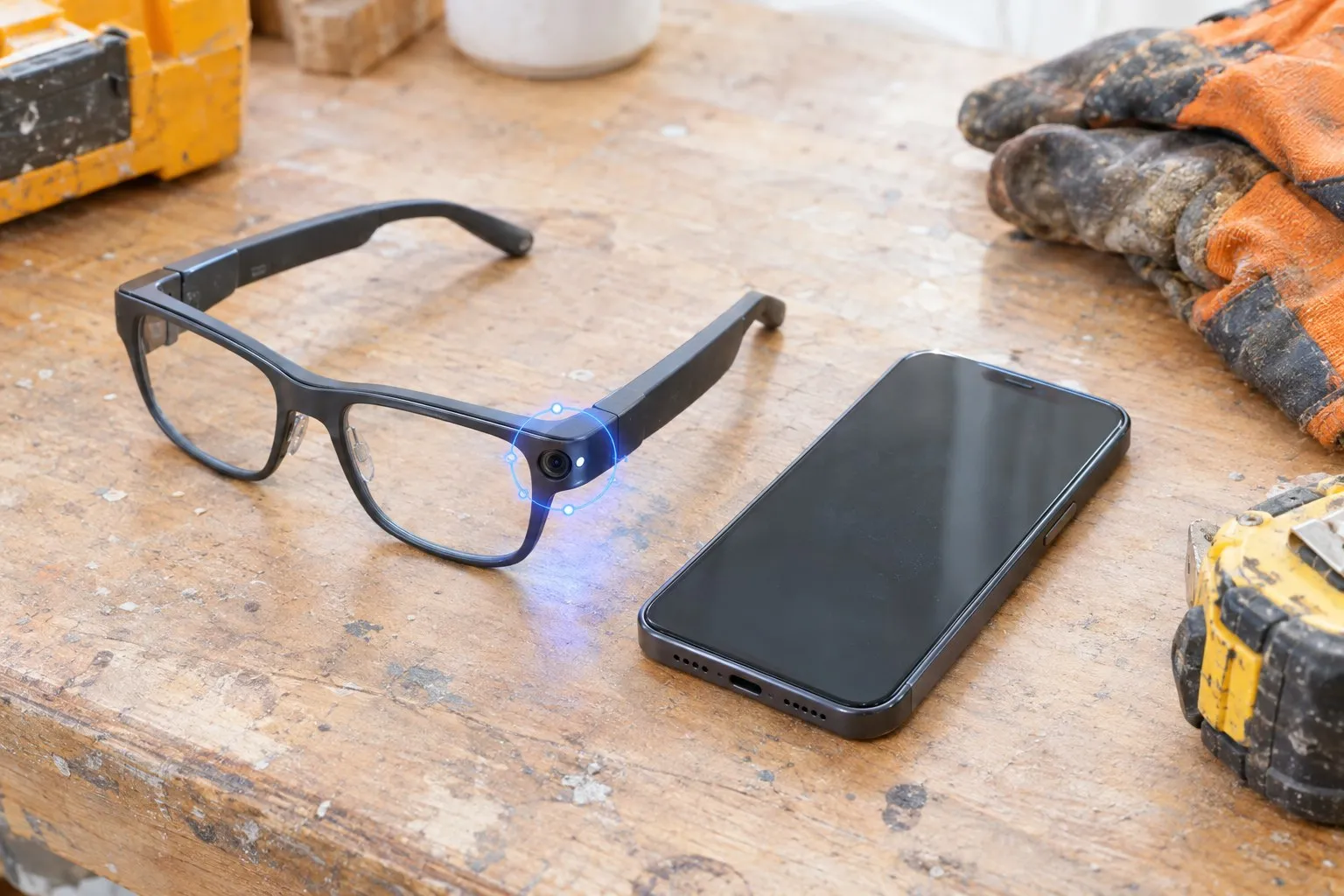
The light on the glasses is only part of the information available to the customer. Meta said on 7 July 2026 that the white light blinks when the glasses take photos or record videos for your gallery. That is the manufacturer describing what its own device does, and nothing more.
France’s privacy regulator, the CNIL, collected G7 regulators’ views, including the ICO’s, in June 2026. Some doubt small lights give people enough warning. Those authorities note a lack of comprehensive field testing proving that the lights give the public sufficient notice.
The compendium records concerns, not a UK workplace rule. Your practical decision remains how to make the recording clear to the person standing in front of your worker.

Can employees wear Meta glasses at work? Recording is a separate decision
A decision to let an employee wear personal Meta glasses is separate from authorising them to record for your business. Arnold’s September blog says the household exemption can apply when someone uses the device for purely personal or household activity, and that it will generally not apply once they share the recordings publicly. It turns on how the wearer uses the data, and it says nothing about businesses. The law itself is narrower still: the UK GDPR sets the exemption for personal or household activity “and thus with no connection to a professional or commercial activity”. A job at a customer’s house has that connection.
For work data already under your control, the ICO’s Bring your own device guidance says you must retain control regardless of who owns the device. The document carries a warning on its front page: it has not been updated since the Data Protection Act 2018 became law. It deals with work files on phones and laptops, not cameras recording other people.
Barrister Frederick Powell addressed who is responsible in his May 2026 commentary for Doughty Street Chambers. An employer issuing glasses will usually be responsible for the work-related data. Wearers will often be responsible for their own recording decisions.
Powell’s is a barrister’s reading, not an ICO ruling. On the case in between, your employee filming a customer at work on their own glasses, the ICO material we reviewed stops short: it tells you who controls work data and leaves the rest to a court.
The route taken by the footage matters too. Meta’s July 2026 explanation says gallery photos and videos stay on the glasses until the wearer imports them to a phone. Its privacy policy says cloud processing sends photos and videos to Meta, as does using them with Meta AI.
For data your business controls, the ICO’s BYOD guidance warns about inappropriate disclosure through personal cloud backups. Personal devices add a question beyond equipment comparisons in tools and technology guides: how will you keep control of work data held on someone else’s kit?
Switching on first leaves you explaining the decision afterwards
If you start filming staff before writing down why, you are piling up footage with no reason on paper. The ICO’s worker-monitoring guidance says you must document why you monitor people and what you intend to do with the information.
A customer’s contract requirement still leaves the decision with you. The ICO puts it plainly: “You cannot justify monitoring workers solely because your customer makes it a condition of business.”
GOV.UK’s workers’ rights guidance directs staff to their handbook or contract to see whether the employer is allowed to monitor them. Where the employer lacks that permission, GOV.UK says a worker might resign and claim constructive dismissal. The guidance presents this as a possible claim and a last resort.
If a worker challenges the recording, you are accounting for something already done. You can put your recording limits in the buying brief and require a demonstration before committing to the kit.

Trade resources for tradespeople, straight to your inbox.
Occasionally we will send you a newsletter. Free, unsubscribe in one click.
Keep reading
CCTV in the workplace UK: what you have to do before you switch it on
The maximum fine gets quoted in every article about cameras at work, and it is not going to happen to you. Staff complaints, an order to stop recording and an unpaid ICO fee are the nearer concerns.

Missing building regs certificate: where to look and who applies
Your former client's buyer wants the certificate. A paid archive search can end empty. The owner applies for regularisation, with a fee to pay and a separate question over who ultimately bears the cost.

Contractor or subcontractor under CIS? The registration you may be missing
Being paid under CIS does not register you to pay your own subcontractors. Your role follows each contract. If you already employ staff, adding the contractor side changes your existing PAYE scheme.