
Asbestos clearance rules: your removal contractor won't be able to pick the analyst
HSE is changing who can appoint the analyst who signs off an asbestos removal in Great Britain. The rule is due to apply from 24 November 2026, subject to parliamentary procedure, with enforcement from November 2027.
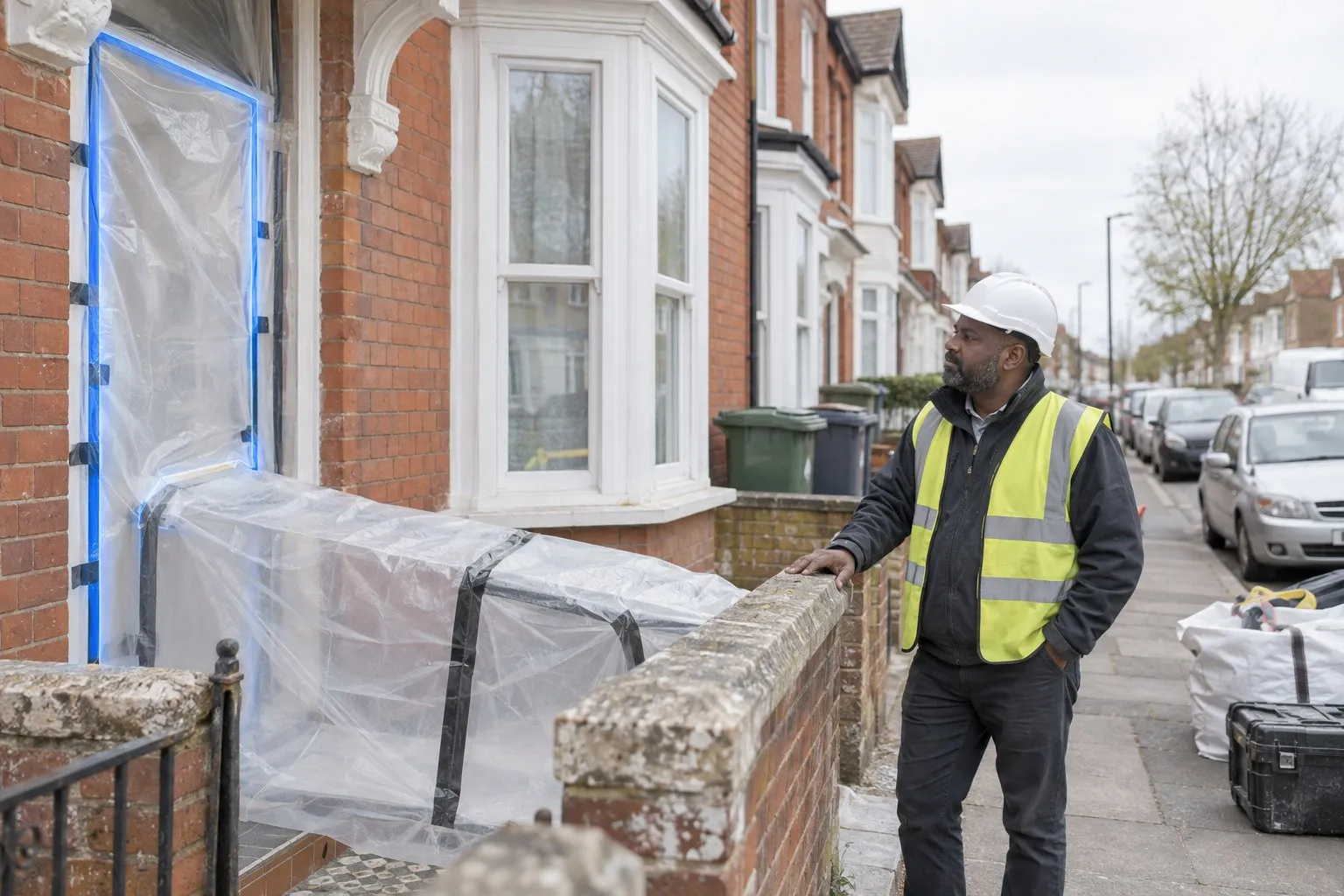
New asbestos clearance rules in Great Britain will stop the contractor that removes the asbestos from choosing the analyst who certifies the site as clear. The Health and Safety Executive (HSE) announced the change on 3 November 2026. It’s due to come into force on 24 November 2026, subject to parliamentary procedure, and HSE says it will enforce it from November 2027.
It matters to you if you commission or manage asbestos removal that ends in four-stage clearance, or if you’re the removal contractor. If you’re running the business that books asbestos removal, the question of who appoints the analyst may now land on you. HSE lists construction and facilities management among the professions its consultation is relevant to.
The change amends regulation 20 of the Control of Asbestos Regulations 2012, which covers air testing and site clearance certification. Four-stage clearance includes the visual inspection, the clearance air test and the certificate that says the area can be reoccupied. HSE says the aim is to strengthen independence and impartiality in that process, and to remove the potential conflicts of interest that may arise when the licensed removal contractor appoints the analyst.
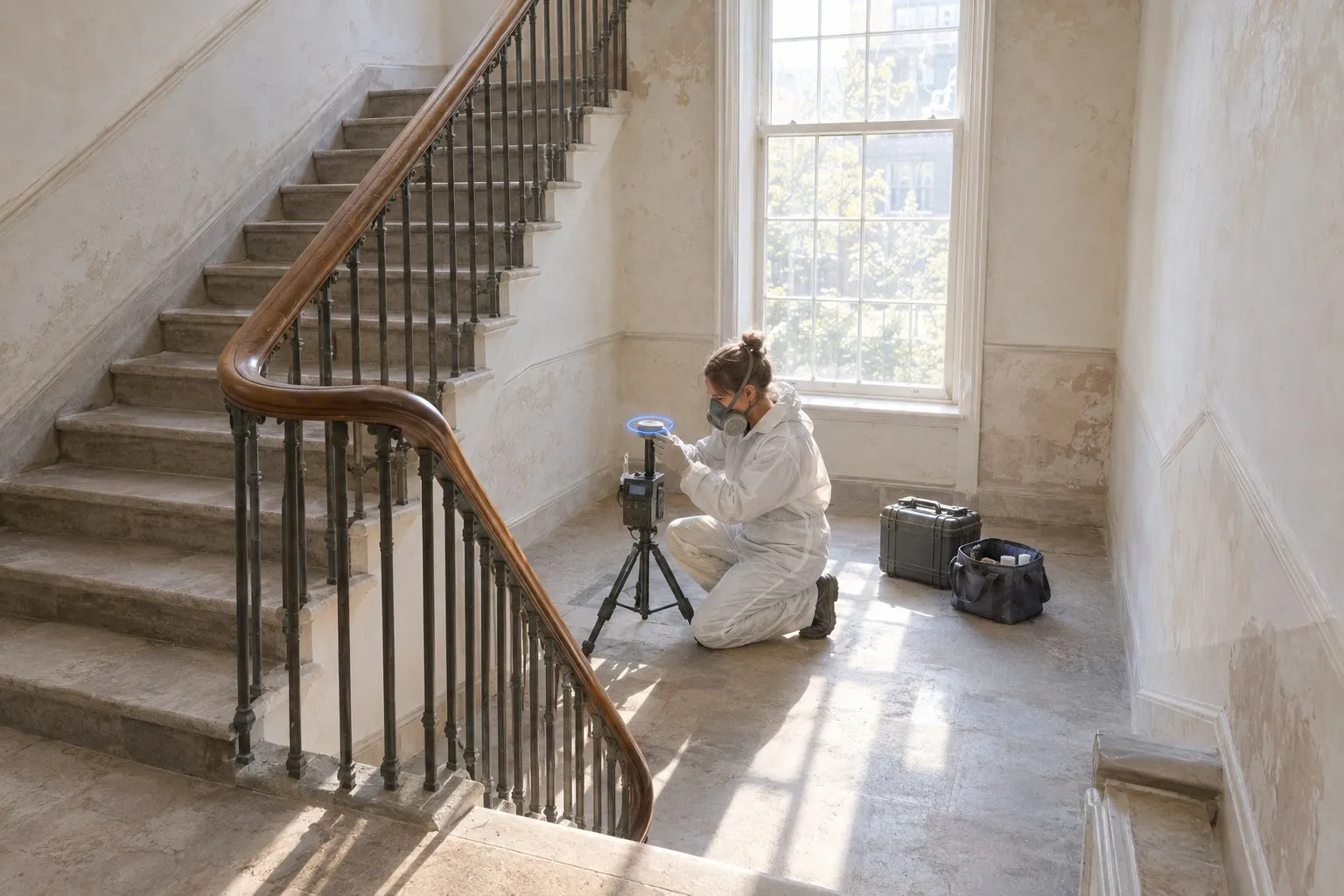
So if your removal contractor usually books the analyst as part of the job, that’s set to stop.
HSE hasn’t said who appoints the analyst instead
The rule says who can’t make the appointment, not who must. HSE’s consultation results page gives industry and dutyholders a year from November 2026 to understand what the change means for them and who is now required to appoint the analyst.
Neither announcement explains how that works on a domestic job, where the builder may be acting as the principal contractor, or when a main contractor subcontracts the removal to a specialist. Before you price the next job with asbestos in it, ask your removal contractor how they’ll arrange the analyst once the rule applies. If the specialist works under you, the hot works permit fine on a plumbing business shows how a subcontractor’s job can still end up as your conviction.
Asbestos clearance rules apply before HSE starts enforcing them
HSE’s press release describes the year to November 2027 as a year “to comply” before it enforces the change. Neither announcement explains the legal status of that period, so don’t count on it being a grace period. The rule itself is due to apply from 24 November 2026.
HSE’s consultation ran from 10 November 2025 to 9 January 2026 and drew 358 responses.
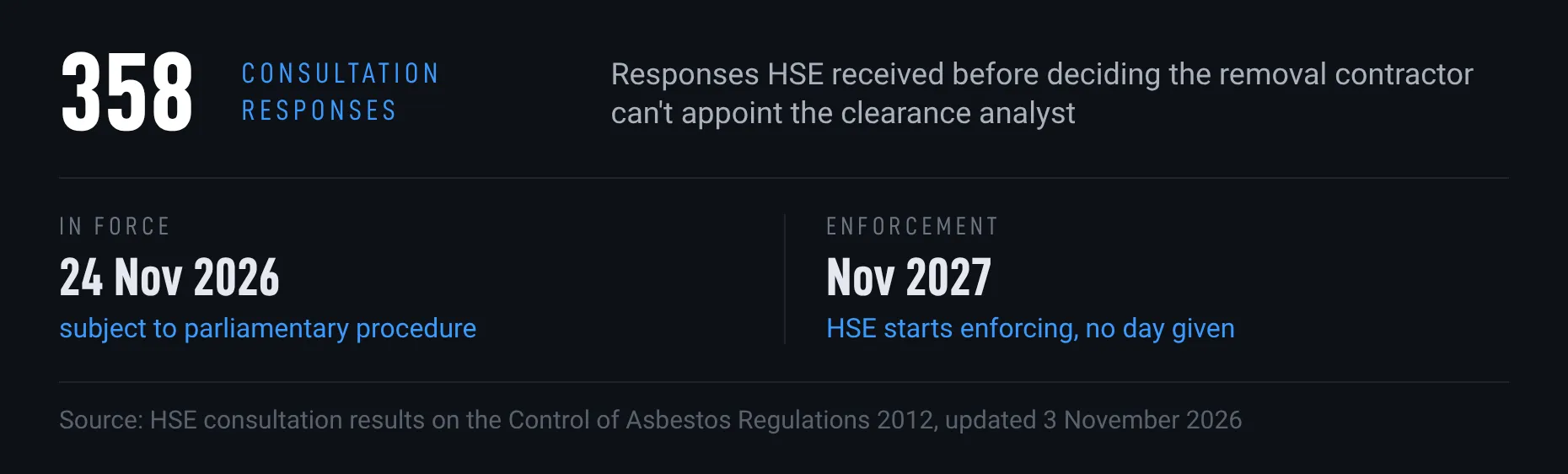
HSE plans to update its Approved Code of Practice, Managing and working with asbestos, and Asbestos: The Analysts’ Guide later in 2026 to reflect the amendment.
The same consultation looked at asbestos surveys and notifiable non-licensed work (NNLW). Neither brings a rule change: HSE still strongly recommends using accredited organisations for surveys, keeps the NNLW category and says better guidance on both is on the way.
Until the new guidance lands, the question for your next asbestos job is simple: who’s booking the analyst? Under the new rule, it can’t be the business doing the removal.
Trade resources for tradespeople, straight to your inbox.
Occasionally we will send you a newsletter. Free, unsubscribe in one click.
Keep reading
Molson administration: Bristol plant dealer's stock is being sold, Construction Enquirer reports
Construction Enquirer reports administrators now control five Molson companies and are selling off the remaining stock. If you've got plant on order or a deposit paid, the answer has to come from them.
Scaffolding company fined £16,000 after a trainee's fall: neither scaffolder was clipped on
Michael Swales died after falling five metres from a scaffold he was helping to put up. HSE found no safe zones, and neither he nor his colleague was using a harness or lanyard. The guidance it points to covers exactly that stage of the job.
Fragile roof safety: firm with a risk assessment fined £20,000 after a worker fell 10m through a barn roof
AJ Riley Landscapes and Building Limited had a risk assessment, but its workers hadn't been trained well enough to use the controls it named. HSE also found the skylight job was poorly planned and lacked the controls to stop a fall through the fragile roof.