
Hot works permit not issued: £20,000 fine after four subcontractors fled a roof fire
Four subcontractors fitting a heat pump escaped a burning roof through one opening in the floor. The plumbing business that controlled the job had failed to follow its own hot works procedures.
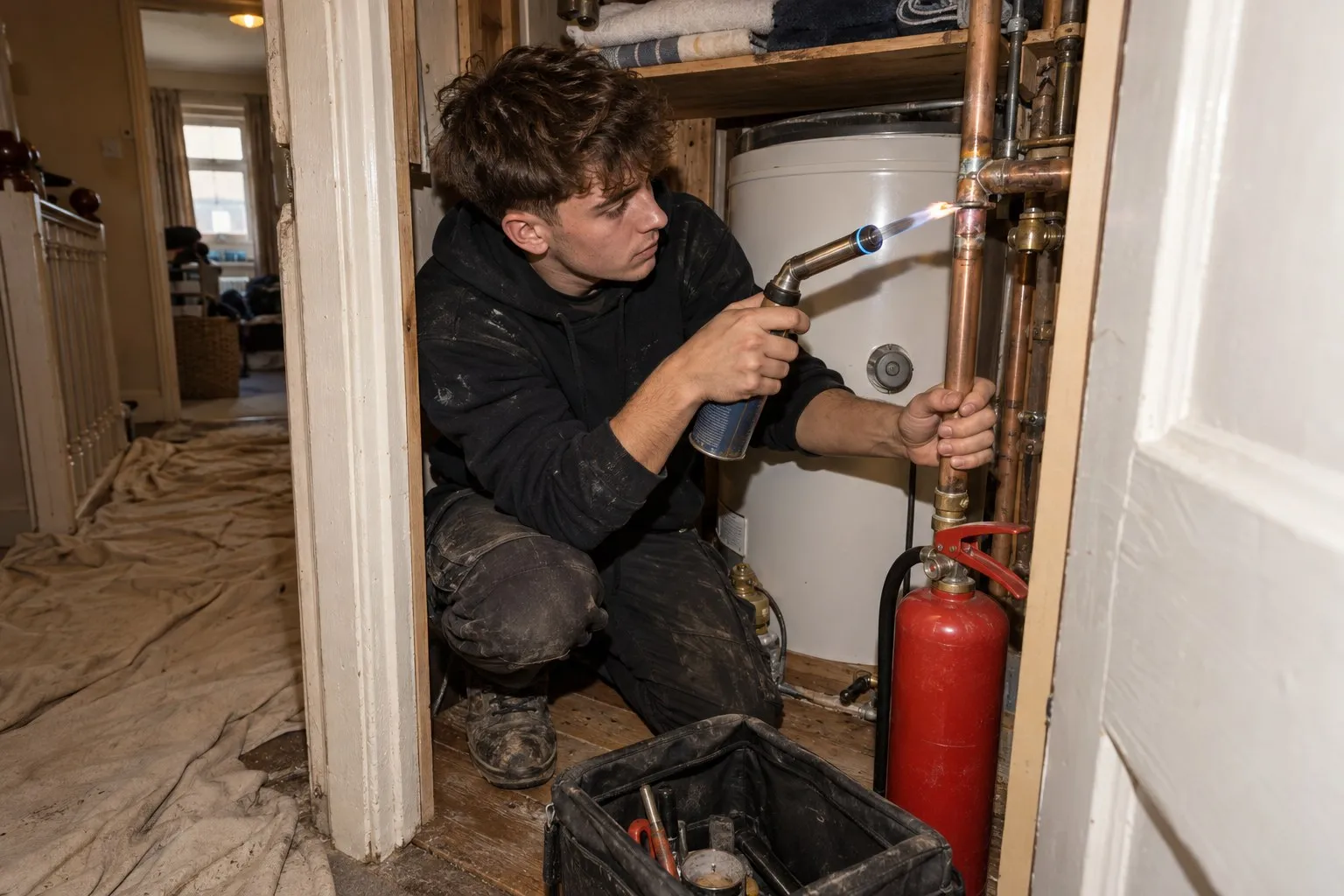
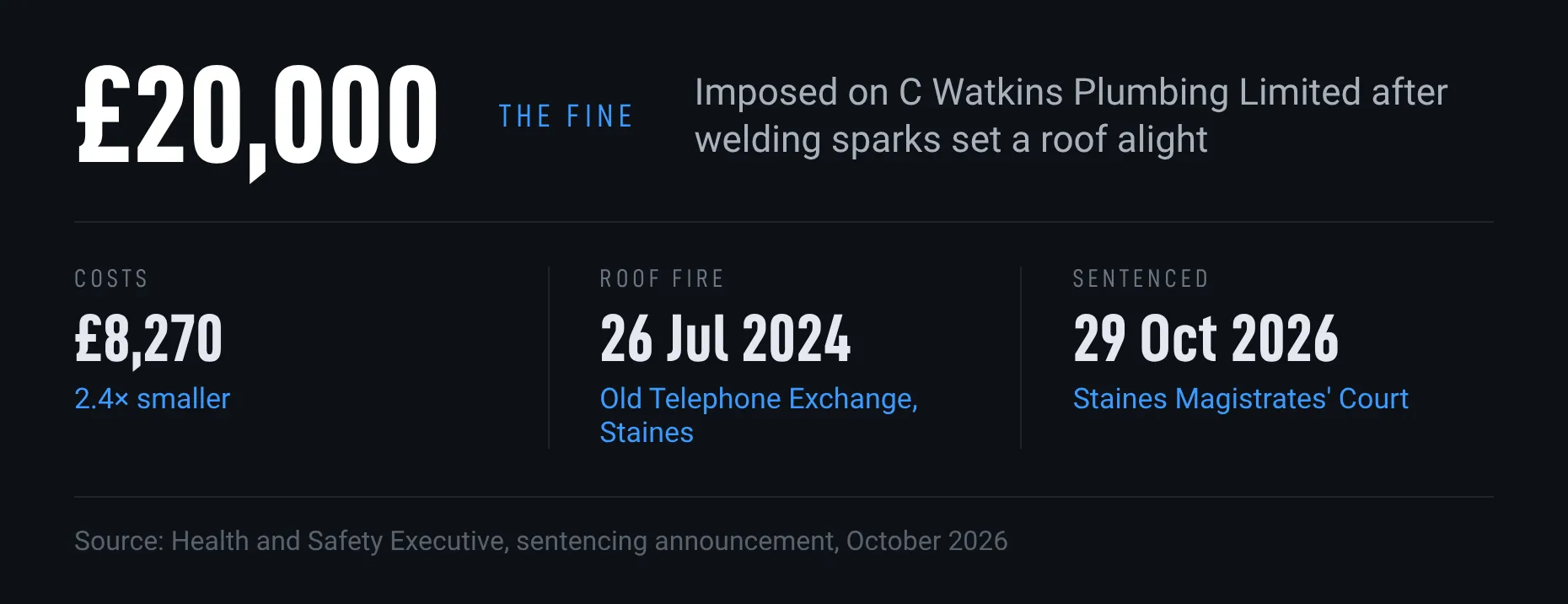
A plumbing business has been fined £20,000 after welding sparks set fire to a roof where four subcontractors were fitting an air source heat pump. No hot works permit was issued for the welding, and the investigation found the business had failed to follow its own hot works procedures.
Staines Magistrates’ Court fined C Watkins Plumbing Limited on 29 October 2026 and ordered it to pay £8,270 in costs on top. The Health and Safety Executive (HSE), which investigated and brought the case, reported the sentence the next day. The business pleaded guilty to breaching Regulation 15(2) of the Construction (Design and Management) Regulations 2015. No rule changes: this is a sentence for a fire in 2024.
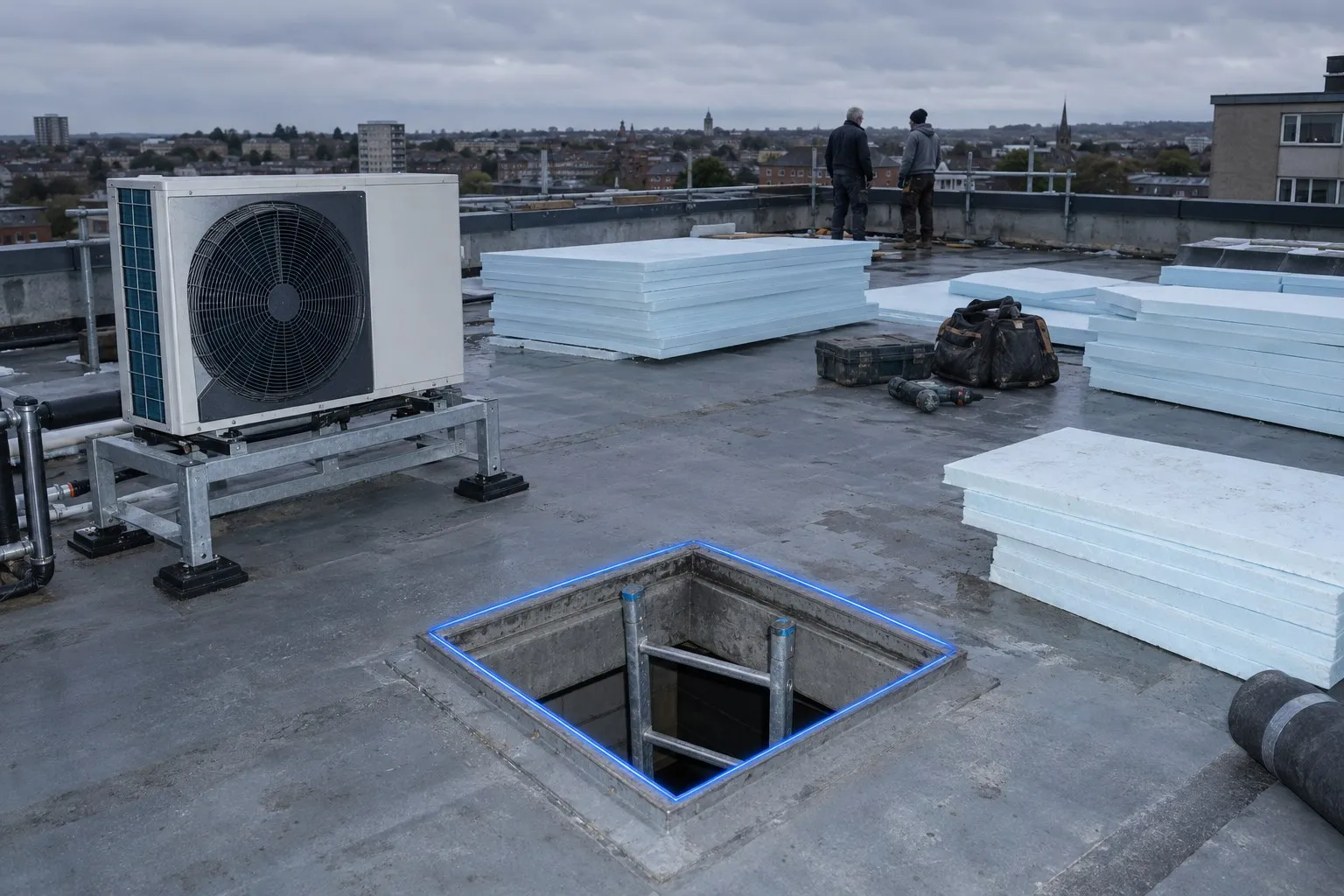
The four men on the roof were subcontractors, not Watkins’ employees, and the conviction was still Watkins’. The same happened in a recent work at height fine, where the injured labourer worked for another company. If you send subbies up to weld on someone else’s building, how they would raise the alarm and get down is part of running the business.
The fire started on 26 July 2024 at the Old Telephone Exchange development in Staines-upon-Thames, on the roof of a 14-storey apartment building that was still under construction. Sparks from the welding ignited uncovered rigid foam insulation laid across the roof. The fire developed quickly and spread across the whole roof space.
The men escaped through a single opening in the floor and down a ladder to Level 14. There was no other way off the roof and no means of raising the alarm.
HSE inspector Stephanie Hickford-Smith said the four men were “lucky to escape”. She added: “Had the fire started closer to their escape route, or had they not acted as quickly as they did, the outcome could have been devastatingly different.”
Hot works went ahead with no plan for a fire
The missing permit makes the headline. What HSE describes is a job nobody planned. Watkins had policies requiring a risk assessment and a method statement, and neither was in place. “It did not assess the risks and so had no control measures in place,” Hickford-Smith said. HSE found the business had failed to plan, manage and monitor the hot works on the roof.
Your installer may know exactly how to make the weld. The danger in this case was what lay next to it: uncovered foam insulation across the roof. Proving the conditions are safe before the work starts was also the gap in the steam pipe isolation case, where nobody checked the pipe was dead before the joint was opened.
What HSE’s fire guidance asks of a rooftop crew
HSE’s guidance on fire in construction, HSG168, says fire safety measures must be considered throughout all stages of design and procurement, and implemented effectively during construction. For a crew on a roof, the useful part is the risk assessment. It must identify high-risk activities where fires can spread quickly, and situations where evacuation plans are complex.
On this roof both answers were the same place. Foam was laid across the whole surface, and the only way down was one hole in the floor with a ladder through it.
A roof under construction changes week to week. The guidance also says all risk assessments and control measures must be reviewed throughout the construction phase so they remain suitable and sufficient. The plan has to keep up with the job.
The fire on the Staines roof went out on its own, once there was nothing left to burn. There were no fire extinguishers on the roof.

Trade resources for tradespeople, straight to your inbox.
Occasionally we will send you a newsletter. Free, unsubscribe in one click.
Keep reading

Molson administration: Bristol plant dealer's stock is being sold, Construction Enquirer reports
Construction Enquirer reports administrators now control five Molson companies and are selling off the remaining stock. If you've got plant on order or a deposit paid, the answer has to come from them.

Scaffolding company fined £16,000 after a trainee's fall: neither scaffolder was clipped on
Michael Swales died after falling five metres from a scaffold he was helping to put up. HSE found no safe zones, and neither he nor his colleague was using a harness or lanyard. The guidance it points to covers exactly that stage of the job.
Fragile roof safety: firm with a risk assessment fined £20,000 after a worker fell 10m through a barn roof
AJ Riley Landscapes and Building Limited had a risk assessment, but its workers hadn't been trained well enough to use the controls it named. HSE also found the skylight job was poorly planned and lacked the controls to stop a fall through the fragile roof.