
Scaffolding company fined £16,000 after a trainee's fall: neither scaffolder was clipped on
Michael Swales died after falling five metres from a scaffold he was helping to put up. HSE found no safe zones, and neither he nor his colleague was using a harness or lanyard. The guidance it points to covers exactly that stage of the job.
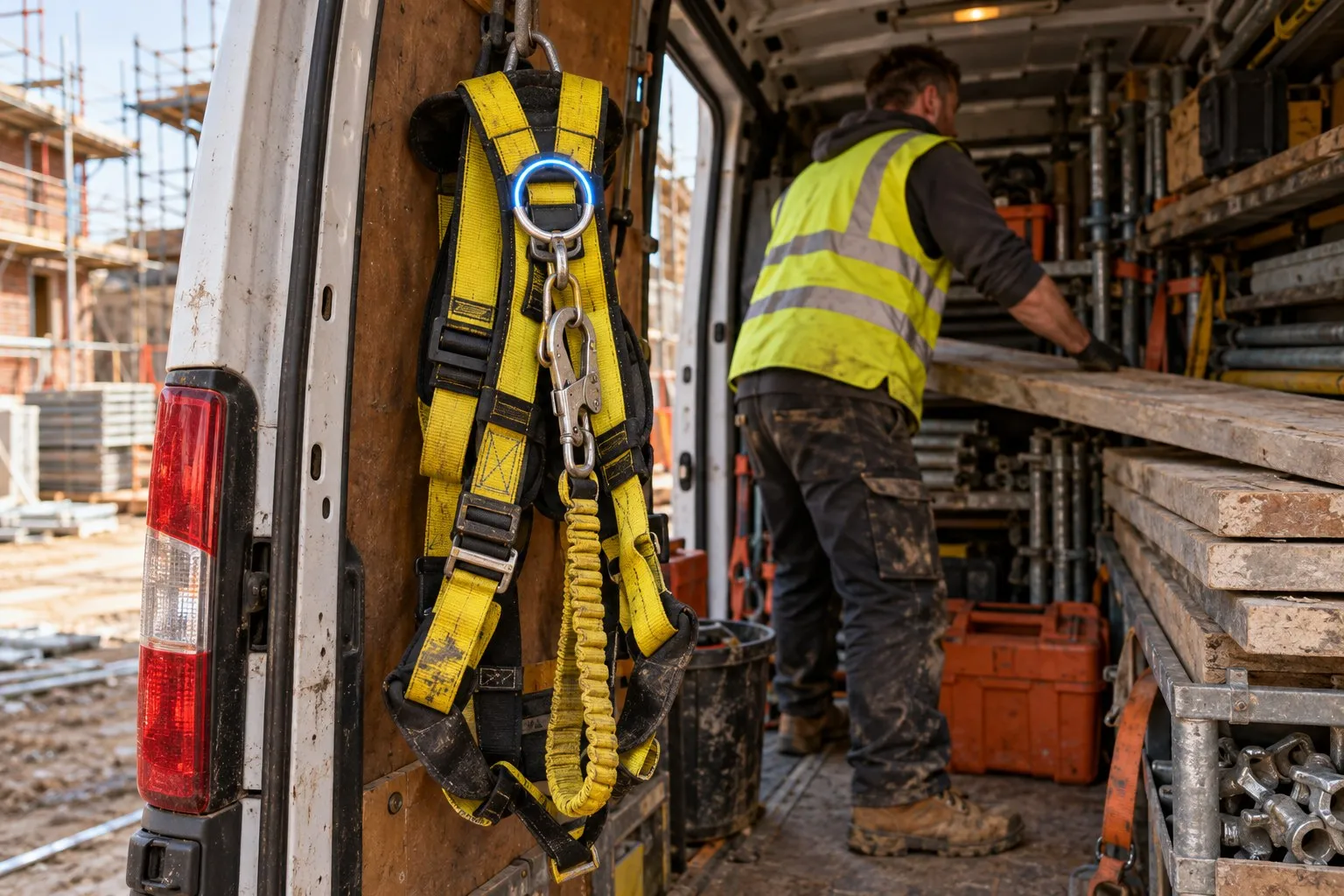
Michael Swales stepped onto a scaffold board that wasn’t secured. He was a trainee scaffolder, five metres up on a scaffold he and a colleague were still putting up, and neither of them was using a harness or lanyard. He died at the scene.
The scaffolding company fined over his death is his employer, Ask Scaffolding Ltd, which has to pay £16,000. If you’re running the business behind a scaffolding crew, or take trainees on, the case is about the most dangerous stretch of the job: the hours before the scaffold is finished.
It’s the same work at height duty that sat behind a recent fragile roof fall on a barn, where a business with a risk assessment was still fined, and behind a work at height fine after floorboards came up under a carpenter replacing joists.
The scaffolding company had skipped the guidance before
The accident happened on 5 July 2023 at a housing development near Ripon, North Yorkshire. Ask Scaffolding Ltd had been contracted to provide the scaffolding, and Swales and his colleague were erecting it at the front of a two-storey house under construction.
The Health and Safety Executive (HSE) found that the work that day was unsafe and did not follow industry guidance. Safe zones had not been established, and there were inadequate measures in place to prevent or mitigate the risk of a fall.
It wasn’t only that day. HSE’s investigation found that earlier scaffolding work had not followed the guidance either, and a post-accident inspection found guardrails missing where they should have been, though HSE doesn’t say where.
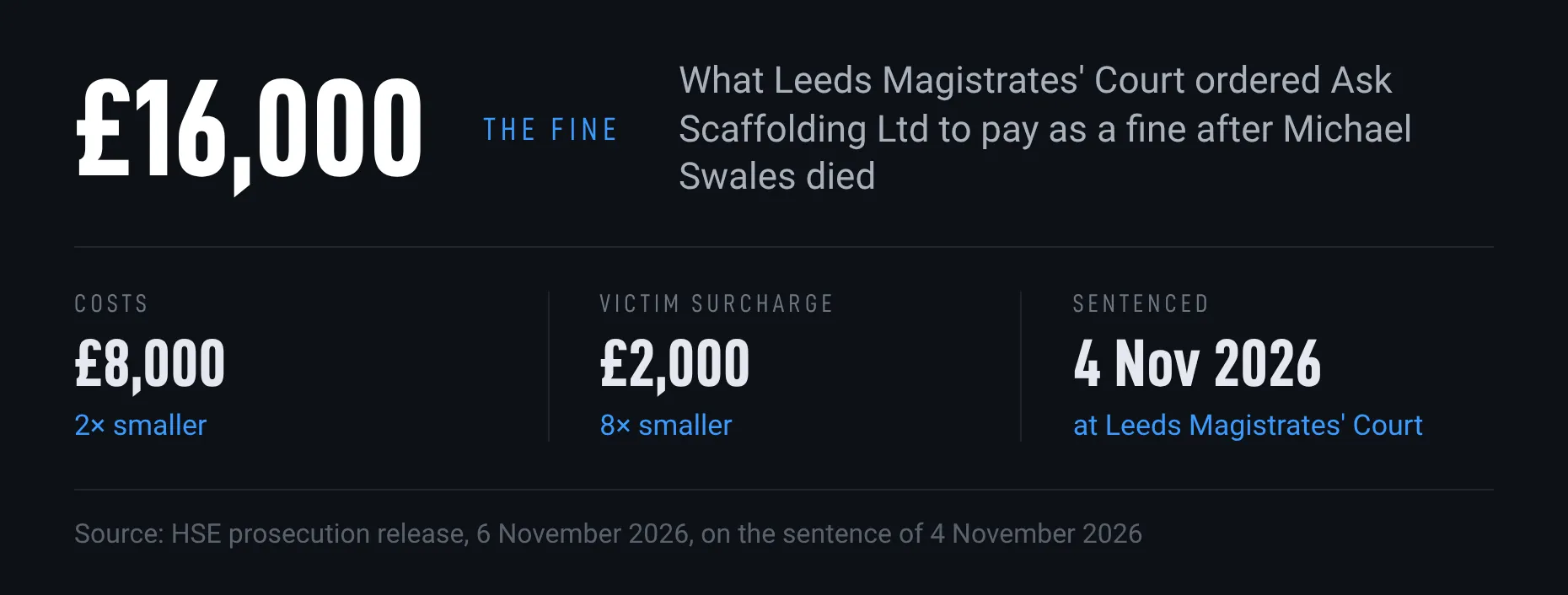
The company pleaded guilty to breaching Regulation 4(1)(c) of the Work at Height Regulations 2005, for failing to make sure work at height was done safely. At Leeds Magistrates’ Court on 4 November 2026 it was fined £16,000 and ordered to pay £8,000 in costs and a £2,000 victim surcharge. HSE, which brought the case, announced it on 6 November.
HSE Inspector David Beaton said the accident “underlines the importance of those in control of scaffolding work making sure that it is being done safely and in accordance with industry guidance”. That covers the scaffolding company HSE prosecuted here. The release doesn’t say whether anyone else on the site was investigated.
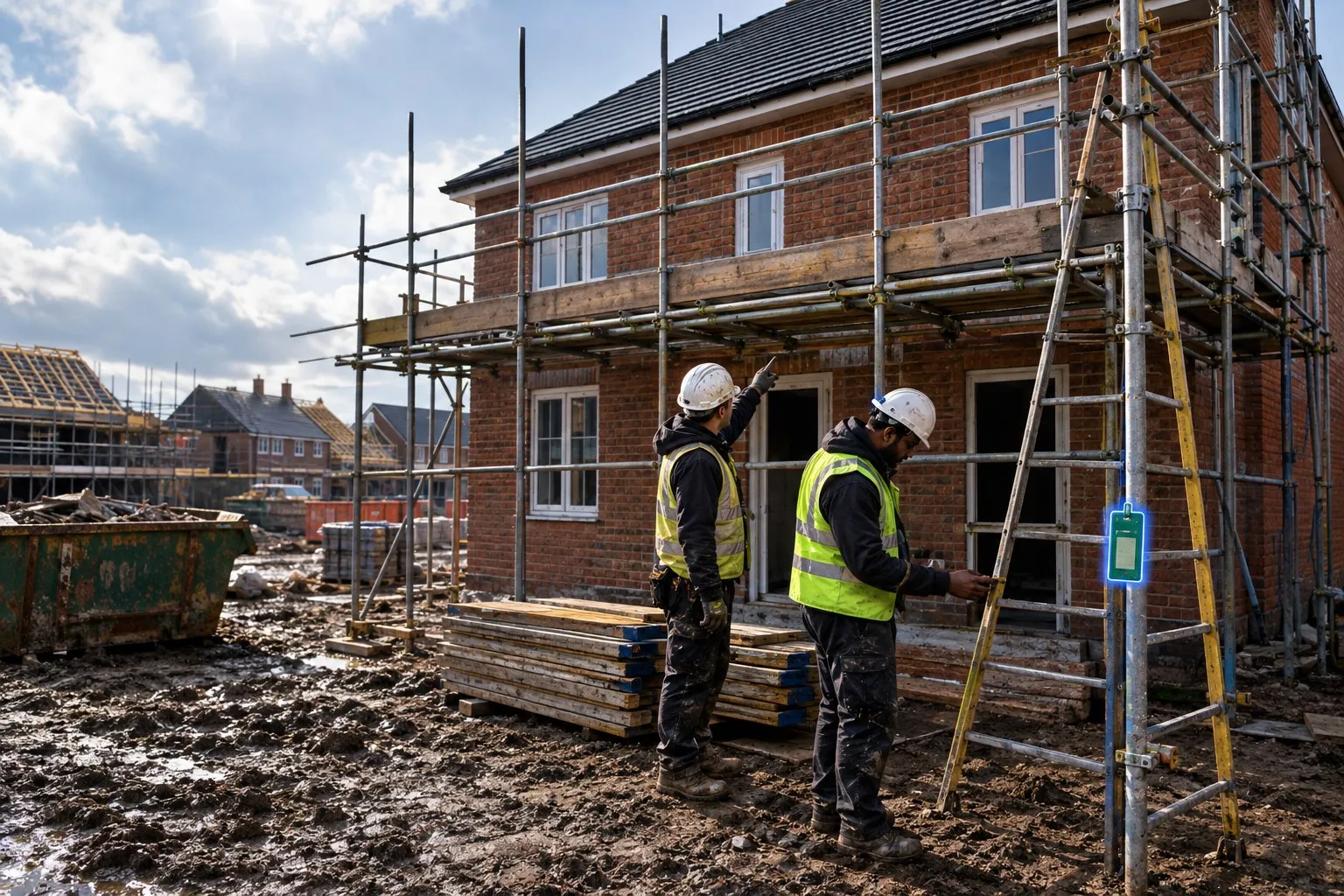
Fall protection starts while the scaffold goes up
The duty is the one you already have: assess the risk of working at height, then plan the job so it can be done safely. HSE puts the order plainly. First, collective protection that gives your scaffolders a “Scaffolder’s Safe Zone” to work from. Where they have to work outside it, a harness and lanyard.
For the method itself, HSE’s scaffolding page points to NASC Safety Guidance SG4, “Preventing falls in scaffolding operations”, or similar guidance from the manufacturers of system scaffolding. SG4 covers putting scaffolds up, altering them and taking them down.
Trainees need a competent scaffolder alongside them
The release doesn’t mention supervision. HSE’s general guidance is still worth knowing if you take trainees on: they must always work under a trained, competent scaffolder, and the level of supervision has to reflect how complex the work is and how trained and competent the scaffolders are. If you’re building that into how you train new starters, the assembly stage is where it counts.
Several witnesses told HSE that the company’s scaffolders regularly worked without following the guidance. On 5 July 2023, Michael Swales was the one on the loose board.

Trade resources for tradespeople, straight to your inbox.
Occasionally we will send you a newsletter. Free, unsubscribe in one click.
Keep reading

UK average salary: full-time median pay hits £811.20 a week, a 2.7% rise after inflation
Provisional ONS figures put full-time median weekly earnings at £811.20 in April, up 5.8%, or 2.7% after inflation. For a pay review, the useful comparison is someone doing similar work near you.

Plant training standards: tower crane and supervisor courses move back to phase 5
CITB has confirmed the plant training groups due for an update in early 2027. Tower cranes and lifting supervisor training have moved into this phase from the last one, alongside earthworks, cranes and demolition plant.
Right to work subcontractors: the self-employed you bring in can now count as your hire
The Home Office guide now covers individual subcontractors you bring in for a customer's job, and can make you liable for labour another business supplies. What protects you depends on who holds which contract.