
Cladding remediation bill reaches Parliament: contractors who paid could chase the manufacturer
A bill introduced on 14 October would make freeholders and others responsible for building safety fix unsafe cladding without delay, with fines of up to £500,000 for ignoring a Remediation Order. Contractors who have already paid for the work would get a simpler claim against the manufacturer.

If your business has already paid to fix a building made unsafe by its cladding, the cladding remediation bill would give you a simpler route to recover that money from the manufacturer. The Ministry of Housing, Communities and Local Government (MHCLG) announced on 14 October 2026 that the Remediation of Unsafe Cladding Bill had been introduced to Parliament that day. The measures are proposals, and MHCLG gives no date for them to start.
The cladding remediation bill names contractors who paid
The route to the manufacturer is the only measure in the announcement that names contractors. MHCLG says developers, contractors and others who have paid to make buildings safe would have a simpler and more effective way to pursue cladding manufacturers, where their products contributed to a building being unsafe.
Money spent putting right someone else’s product sits on your books until it comes back, and that matters when you’re running the business and funding the next job. How you would claim, by when, and how much you could get back are all still to be set out. The announcement does not mention the building safety levy on new homes either.
Owners such as freeholders would carry the duty to fix
The bill would put a new legal duty on those responsible for the safety of their buildings, such as freeholders, to identify, assess and fix issues without delay. The fire risk checks on outside walls, known as FRAEWs, would all follow the same approach, with evidence-based assessments audited by someone independent. The announcement does not say whether that approach would rest on the PAS 9980 2026 external wall code.
For you, it would show up as an owner who needs the work booked, and a date for it. Where an assessment recommends remedial work, the responsible entity would have to share a plan with residents, setting out the steps and proposed timescales for their building. Those timescales could decide when your crews are needed.
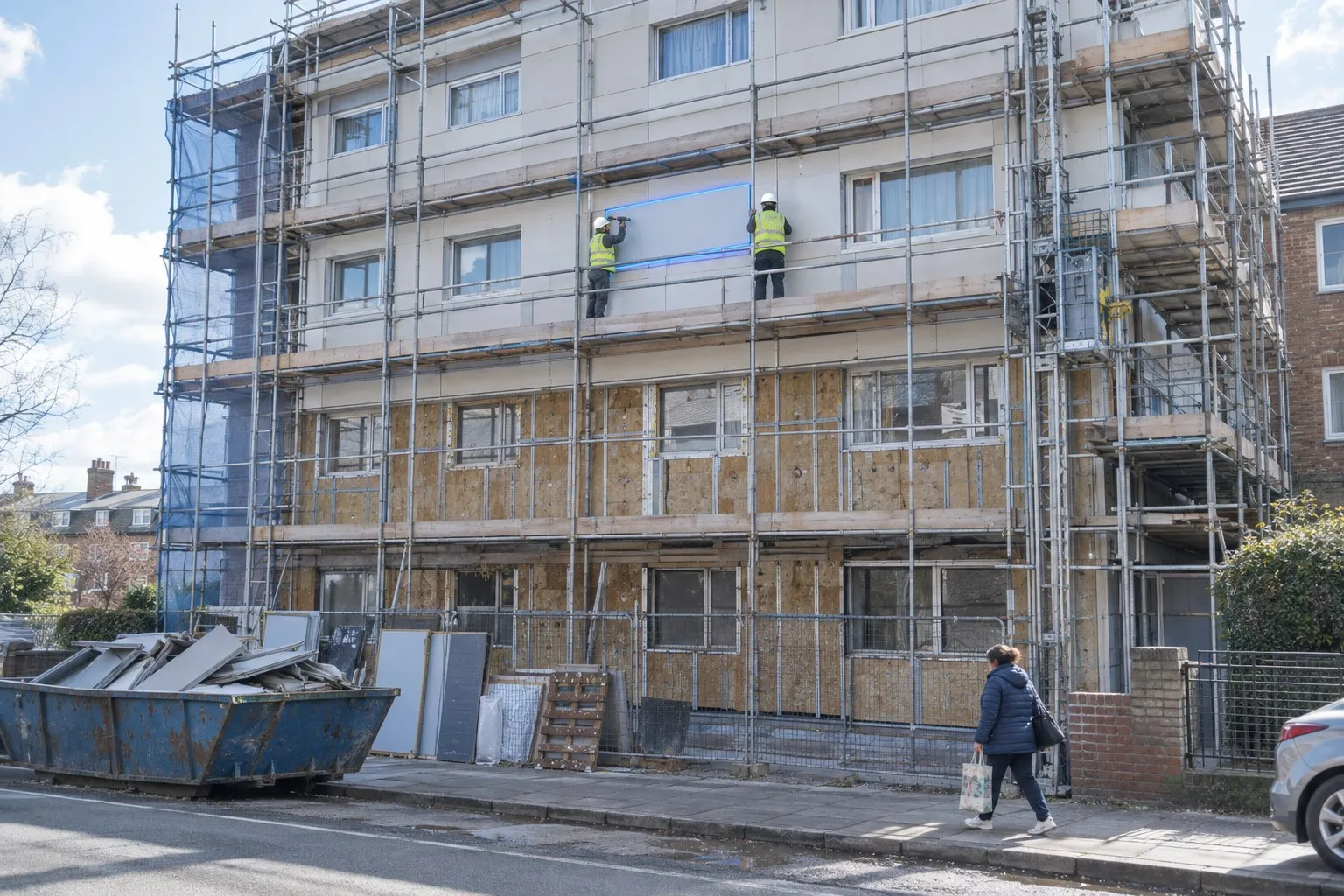
Ignoring a Remediation Order could mean fines of up to £500,000
A new register would cover all medium-rise residential buildings in England. Failure to register could bring civil penalties of up to £7,000, with higher financial penalties of up to £40,000 or prosecution available. The announcement does not say who must register a building.
Anyone who obstructs the work to identify and fix safety problems could face criminal penalties. The First-tier Tribunal would also be able to impose financial penalties of up to £500,000 on responsible entities that fail to comply with a Remediation Order.

England is named for the register. The announcement does not detail where the other measures would apply.
The 2029 date is a target, not a hard stop
MHCLG says its expectation remains that by the end of 2029, every building over 11 metres with unsafe cladding should either have been remediated or have a clear date for completion. So a building that isn’t finished by then can still meet that expectation, as long as it has a finish date. MHCLG says the tougher powers in the bill should arrive before that point.
If an owner keeps failing to act, Homes England or a local authority could step in and carry out the remediation themselves.

Trade resources for tradespeople, straight to your inbox.
Occasionally we will send you a newsletter. Free, unsubscribe in one click.
Keep reading
Grid connection delays: Great British Grid announced, and a plan to let businesses build their own
A new public body, Great British Grid, and a plan to let more businesses build their own grid connections instead of queuing for the network company. Useful one day, if your kind of job qualifies. Nobody has said which jobs do, or when.
CIS penalties: you could pay for a connected party's deliberate non-compliance
Construction payments or CIS credits linked to a connected party's deliberate non-compliance can expose your business to a penalty if you knew or should have known of the link and HMRC has issued the relevant determination. Company officers can also be personally liable.
BS 7671 Amendment 4 is now the only current version: live jobs depend on the contract, ECN reports
From 15 October, new installations must follow BS 7671 Amendment 4, Electrical Contracting News reports. Citing SELECT, it says a job designed to the old version may be finished to it if the contract allows. Of the forms, the EICR changes most.