
Health and Safety Excellence: Modern Training for Construction Safety
Master modern construction health and safety training. Learn risk assessment, safety management, and innovative training approaches.
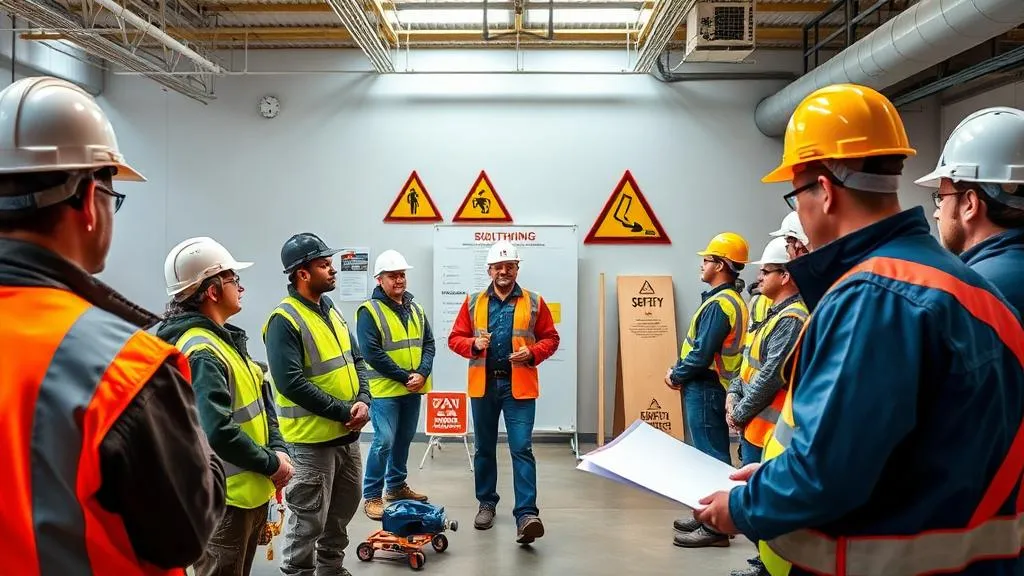
Health and Safety in UK Construction: The Stakes Are High
Construction remains one of the more hazardous sectors in the UK. According to the Health and Safety Executive (HSE), in 2023/24 there were 138 fatal injuries across all workplaces in Great Britain, an increase of 3 from the previous year. In addition, non-fatal injuries reported by employees rose from 60,645 to 61,663 over the same period.
In construction specifically, data from industry sources suggest:
- Around 53,000 non-fatal injuries occur annually in construction
- More than 69,000 construction workers report work-related ill health
- The cost of injuries and ill health in 2022/23 was estimated at £21.6 billion
- Falls from height account for over half of fatal accidents in construction
These numbers show that even though the UK is often considered one of the safer countries for workplaces, construction still bears heavy human, financial, and reputational costs when safety fails.
Beyond accidents, the industry also contends with musculoskeletal disorders (MSDs), respiratory risk, noise, vibration, and mental health pressures. The HSE’s annual report underscores that 70,000 more workers are now suffering from MSDs in recent years.
Given these challenges, modern health and safety training is not optional. It is a core investment in protecting people, reducing downtime and liability, and sustaining productivity.
What “Excellence” Means in Safety Training
Excellence in health and safety training means going beyond checkbox compliance. It is about embedding competence, awareness, and accountability into the culture of every site. Key elements include:
- Competence-based training, not generic courses
- Blended delivery (classroom, e-learning, simulation, VR/AR)
- Behavioural safety focus (mindset, hazard recognition, communication)
- Just-in-time refreshers and micro-learning
- Data feedback loops: metrics, near-miss logging, dashboards
- Integration with contract and project risk systems
- Continuous improvement and audit
In effect, excellent training bridges theory and practice. It shapes how people behave in real conditions under pressure.
Regulatory & Standards Context in the UK
Construction in the UK operates under a robust regulatory regime. Key frameworks that drive training needs include:
- The Health and Safety at Work etc. Act 1974, which mandates that employees receive “information, instruction, training and supervision” to ensure their safety
- CDM Regulations 2015 (Construction Design and Management), requiring duty-holders (clients, designers, contractors) to ensure competence and that everyone is adequately trained to carry out their duties
- Many contractors require CSCS (Construction Skills Certification Scheme) cards to work on sites. Though not a legal requirement, these cards serve as de facto proof of training/competence
- Industry bodies such as IOSH, NEBOSH, British Safety Council, and CITB set recognised health and safety training standards
These frameworks provide the minimum standard, but excellence requires pushing further.
Core Topics & Modules for Modern Safety Training
A modern health and safety curriculum for construction must cover both foundational and advanced topics, ideally contextualised to the site or project type.
Foundational Modules
General awareness and site induction
- Basic orientation in hazards, emergency procedures, welfare, PPE, site rules
Manual handling and ergonomics
- Safe lifting techniques, risk of musculoskeletal injury, rotation practices
Working at height & fall prevention
- Scaffold, ladders, edge protection, harness systems, inspection routines
Hazardous substances (COSHH)
- Asbestos awareness, chemical handling, dust control, respirators
Work equipment & machinery safety
- Safe use, guarding, lock-out/tag-out, inspection, maintenance
Slips, trips & falls
- Housekeeping, access routes, lighting, drainage
Personal Protective Equipment (PPE)
- Selection, inspection, correct use, limitations
Fire safety & emergency response
- Fire risk assessment, escape routes, fire suppression, drills
Advanced / Specialised Modules
Behavioural safety & hazard recognition
- Cognitive bias, situational awareness, reporting near-misses
Health risks & occupational illness
- Noise, vibration, respiratory disease, heat stress, mental health
Site logistics & traffic management
- Vehicle movements, segregated zones, deliveries, crane zones
Temporary works & structural support
- Propping, underpinning, ground conditions
Confined spaces & permits to work
- Atmosphere monitoring, rescue procedures
Advanced simulation / VR / AR training
- Virtual hazard scenarios, immersive “what-if” drills
Data analytics, dashboards & feedback loops
- Using safety metrics to refine training and controls
Training Methods & Delivery Modes
To achieve excellence, training must be varied, adaptive, and immersive. Below are methods that work in modern construction safety training.
Blended Learning
Combine traditional classroom (or webinar) sessions with online modules, quizzes, and assessments. This allows flexibility and keeps on-site disruption low.
Micro-learning & Just-in-Time Modules
Short 5-10 minute units (e.g., “hazard of the day,” “PPE check reminder”) delivered via mobile app or site screens. These reinforce knowledge continuously and reduce forgetting.
Simulation, VR / AR
Virtual reality simulations let workers experience high-risk conditions in a controlled environment (e.g. fall hazard, scaffold failure). A systematic review shows that computer-aided methods outperform traditional training in engagement, representation of real workplace situations, and altering unsafe behaviour.
These methods are not a panacea but an enhancement when well designed.
Scenario-Based Workshops
Run mock incidents, small group role play, and hazard walkabouts. Use site replicas or scale mock-ups. Participants apply knowledge to real or hypothetical problems.
Mentoring, Observation & Feedback
Pair newer workers with experienced safety mentors. Use peer observation, “safety moments,” and debriefs to provide feedback. Record near-miss lessons.
Data-Driven Reinforcement
Track KPIs: lost time incidents, near misses, toolbox talk attendance, training completion rates. Use dashboards to identify gaps and target refreshers.
Assessment & Verification
Use multiple methods: quizzes, practical tests, onsite audits, re-certification assessments. Ensure competence, not just attendance.
Key Safety Metrics (Annual benchmark, UK construction)
- Annual Cases
• Lost Working Days (construction): ~2.6 million
• Cost to Sector: ~£1+ billion
Sources: Protecting.co.uk, HSE, acornsafety.co.uk
A Blueprint for a 12-Month Safety Excellence Training Programme
Here’s a suggested roadmap to build a high-performance safety training regime:
| Period | Focus | Activities |
|---|---|---|
| Month 1 | Baseline & Induction | Site hazard audit; staff safety culture survey; refresh foundation modules |
| Months 2-3 | Core Modules Roll-out | Deliver modules on height, manual handling, hazardous substances, equipment |
| Months 4-5 | Specialty Topics | Site logistics, temporary works, confined spaces |
| Month 6 | Simulation & Immersive Training | VR fall-scenario; mock rescue drills; safety walkabouts |
| Months 7-9 | On-Site Mentoring & Observation | Mentors observe, give feedback, run hazard sessions |
| Months 10-11 | Data Feedback & Adaptive Refresher | Use safety metrics to pinpoint weak modules; micro learning boost |
| Month 12 | Review & Certification | Assess competence, award safety badges, launch next cycle |
This cycle is not one-off, it is continuous. Each year should build on the last, elevating standards.
Embedding Safety Culture: Beyond Training
Training is necessary but not sufficient. A strong safety culture ensures behaviours endure. Some strategies:
Leadership buy-in and visibility
- Senior management regularly participates in toolbox talks, site tours, incident reviews
Worker involvement & safety committees
- Give site teams voice in hazard identification and mitigation planning
Recognition & reward systems
- Celebrate safety improvements, near-miss reports, safe behaviour
Consistent communication & feedback loops
- Use daily safety moments, weekly dashboards, safety alerts
Audit & continuous improvement
- Use audits and incident review to evolve procedures and training content
Integration with project management
- Safety should be part of scope, cost, schedule, and procurement decisions, not an afterthought
When safety becomes part of the way projects are delivered rather than a bolt-on, its effect multiplies.
Challenges & Pitfalls to Anticipate
Training fatigue & resistance
- Repetition or poor design leads to disengagement. Rotate formats and localise content.
One-size-fits-all programmes
- Generic courses may miss site-specific hazards. Always contextualise training.
Lack of reinforcement
- If refresher training is ignored, knowledge drains away. Use data cues to trigger micro-learning.
Poor evaluation & feedback loops
- Without measurement and iteration, programs stagnate.
Technology overreach
- VR/AR is powerful but expensive. Only adopt where clear ROI exists and integration is seamless.
Resource constraints
- Smaller firms may lack training budgets or staff. Consider pooled training, shared resources, or subsidised programmes.
Evidence of Impact & Best Practices
Case studies and research point to the effectiveness of robust safety training:
- Firms report that good training reduces accidents by up to 40% when paired with strong culture and enforcement
- A systematic review found that computer-aided training (VR, serious games) shows stronger performance in knowledge, behaviour, and incident reduction compared to traditional methods
- Organisations that embed near-miss reporting and feedback loops see accelerations in safety improvements, not just reactive learning
These results show that training is not just theory, it can move the needle when linked to measurement and system change.
The Role of Technology & Innovation
Safety training is being transformed by modern tools. Key innovations include:
AI / Computer Vision Compliance Monitoring
- New systems (e.g., based on YOLO algorithms) detect safety gear violations (helmet, gloves, hi-vis) in real time via CCTV
- A recent study showed ~87.7% accuracy in detecting full PPE compliance
Virtual Reality & Augmented Reality
- Immersive hazard training (e.g. fall simulation, scaffold collapse) lets trainees experience risk without danger
Mobile micro-learning apps
- Daily safety “question of the day,” hazard reminder push notifications, QR-code linked micro-modules
Digital dashboards & safety analytics
- Real-time tracking of key metrics: incident rate, near-miss trends, training compliance, high-risk zones
These technologies complement, rather than replace, behaviour-based and experiential learning.
What Success Looks Like: Safety Excellence Outcomes
When safety training and culture mature, outcomes improve across multiple dimensions:
Fewer incidents & injuries
- Non-fatal and fatal accidents decline, reducing lost time and compensation costs
Reduced insurance and legal exposure
- Better record-keeping, audit trails, and proactive safety stance mitigate litigation and regulatory fines
Improved productivity & morale
- Workers feel safer, less opportunity for stoppages, more trust in leadership
Stronger reputation & client confidence
- Safety excellence becomes a differentiator in bids and partnerships
Data-driven enforcement & continuous improvement
- Trends guide training adaptation and hazard control updates
Metrics to watch include reduction in lost time injury frequency rate (LTIFR), near-miss reporting rates, training refresh compliance, and safety audit results.
A Sample Standalone Safety Training Module: “Working at Height & Falls”
Below is a stylised breakdown of a module that works well in modern training.
Module Title: Working at Height & Fall Prevention Duration: 2 hours (plus site-based practical)
Components:
E-Learning Pre-Work (30 min):
- Theory on fall physics, regulations, PPE, hierarchy of controls
Classroom / Blended Session (30 min):
- Discussion on common failures, case examples, scaffold/harness demos
Practical Walkthrough (30 min):
- On-site scaffold inspection, anchorage points, guardrail setup
Simulation & Role Play (15 min):
- Virtual scenario: identify hazards, propose mitigation
Review & Assessment (15 min):
- Multiple choice quiz + practical inspection checklist
Post-Module Micro-Refresher:
- Deliver short mobile quizzes monthly, prompt “hazard of the week” refreshers
This modular style ensures variety, application, and reinforcement.
Getting Started: Steps for Firms Today
If your organisation is seeking to raise the bar in health and safety excellence, here is a starter checklist:
- Audit current training: topics covered, delivery modes, assessment, completion rates
- Survey workforce on safety confidence and hazard awareness
- Prioritise high-risk modules (height, manual handling, chemicals)
- Pilot immersive / tech-enhanced training in one project or site
- Establish safety data dashboards (incidents, near-misses, training gaps)
- Assign safety champions / mentors on site
- Integrate safety performance into project KPIs and leadership reviews
- Refresh training cyclically, not just on hire
- Share safety lessons learnt within organisation
Start small, measure, iterate, scale.
Conclusion
Health and safety is not a “nice extra.” In UK construction, it is mission critical. Modern training, rooted in competence, reinforced by technology, informed by data, and grounded in culture, can shift performance from reactive to predictive.
With robust safety training, fewer lives will be lost, fewer projects disrupted, and the industry’s reputation will rise. Excellence in safety is possible, and it’s overdue.
Construction remains one of the most hazardous industries, making comprehensive health and safety training essential. This guide examines current safety challenges, training requirements, and innovative approaches to creating safer construction sites across the UK.
The Safety Imperative
Current Industry Statistics
2024/25 Safety Data:
- 30 fatal injuries in construction (down from 45 in 2019)
- 58,000 non-fatal injuries reported annually
- £1.2 billion annual cost of accidents
- 1 in 5 workers experience a work-related injury
Improvement trends:
- 40% reduction in fatal accidents over 10 years
- Increased reporting driving better data
- Technology improving hazard identification
Regulatory Framework
CDM Regulations 2015
Key duty holders and their responsibilities:
- Client: Ensures adequate time, resources, and competence
- Principal Designer: Coordinates health and safety in pre-construction
- Principal Contractor: Manages construction phase safety
- Designers: Eliminate or control foreseeable risks
- Contractors: Plan, manage, and monitor safety
Health and Safety at Work Act 1974
Fundamental duties:
- Provide safe systems of work
- Ensure safe plant and equipment
- Provide information, instruction, training
- Maintain safe working environment
Essential Safety Training Qualifications
Site-Level Certifications
CSCS (Construction Skills Certification Scheme)
Green CSCS Card (Labourers):
- Health, Safety & Environment Test
- Duration: 1 day preparation
- Cost: £21.50 test + £36 card
- Valid: 5 years
Blue CSCS Card (Skilled Workers):
- NVQ Level 2 + HS&E Test
- Training: 6-12 months
- Recognition: Trade competence
Gold CSCS Card (Supervisors):
- NVQ Level 3 + HS&E Test
- Advanced safety responsibilities
CITB Health and Safety Awareness (HSA)
- Duration: 1 day
- Cost: £140-£180
- Content: Basic site safety, hazards, PPE
- Target: New entrants, visitors
Management Certifications
SMSTS (Site Management Safety Training Scheme)
For: Site managers, project managers, supervisors Duration: 5 days (37.5 hours) Cost: £750-£900 Refresher: 2 days every 5 years
Content:
- Legal responsibilities
- Risk assessment methodologies
- Method statements and RAMS
- Accident investigation
- Permit to work systems
SSSTS (Site Supervisor Safety Training Scheme)
For: Team leaders, foremen, charge hands Duration: 2 days Cost: £350-£450 Refresher: 1 day every 5 years
Focus:
- Supervising safely
- Worker engagement
- Daily safety briefings
- Toolbox talks delivery
Specialist Safety Training
Working at Height
Statistics: 29% of construction fatalities involve falls
IPAF (International Powered Access Federation):
- Mobile Elevated Work Platforms (MEWPs)
- Duration: 1 day per category
- Cost: £250-£400
- Valid: 5 years
PASMA (Prefabricated Access Suppliers’ Manufacturers’ Association):
- Scaffold tower erection
- Duration: 1 day
- Cost: £180-£250
Confined Spaces
Risks: Oxygen deficiency, toxic atmosphere, engulfment
Training modules:
- Hazard identification (4 hours)
- Entry procedures (4 hours)
- Emergency rescue (4 hours)
- Gas detection equipment (2 hours)
Certification: Typically 2-day course, £400-£600
Asbestos Awareness
Legal requirement: Anyone potentially exposed must be trained
Levels:
- Awareness (e-learning, 1 hour, £15-£25)
- Non-licensed work (½ day, £120-£180)
- Licensed work (5 days, £1,200-£1,800)
Risk Assessment Methodologies
The Five-Step Approach
- Identify hazards: Site inspections, records review
- Determine who might be harmed: Workers, public, visitors
- Evaluate risks: Likelihood x severity matrix
- Record findings: Document and communicate
- Review regularly: Conditions change, learn from incidents
RAMS (Risk Assessment Method Statement)
Essential components:
- Project description
- Identified hazards
- Control measures
- PPE requirements
- Emergency procedures
- Responsible persons
Dynamic risk assessment: Real-time evaluation for changing conditions
Behavioural Safety Programs
Safety Culture Transformation
Moving from compliance to commitment:
Traditional approach: Rules-based, reactive, blame-focused Modern approach: Values-based, proactive, learning-focused
Leading vs Lagging Indicators
Lagging (reactive):
- Accident rates
- Lost-time injuries
- Severity rates
Leading (proactive):
- Near-miss reporting
- Safety observations
- Training completion rates
- Equipment inspections
- Worker engagement scores
Positive Intervention Training
Teaching workers to:
- Recognize unsafe acts/conditions
- Approach colleagues constructively
- Offer solutions, not criticism
- Foster psychological safety
Technology-Enhanced Safety Training
Virtual Reality (VR) Training
Benefits:
- Safe practice of high-risk scenarios
- Realistic without actual danger
- Engaging and memorable
- Data on trainee performance
Common scenarios:
- Working at height
- Crane operations
- Confined space entry
- Emergency evacuations
Cost: £800-£1,500 per module (setup), reducing as adoption grows
Augmented Reality (AR) Safety
Applications:
- On-site hazard highlighting
- Real-time safety instructions
- Equipment operation guidance
- Inspection protocols
Example: Workers wearing AR glasses see virtual safety barriers, exclusion zones
Mobile Apps and Digital Toolbox Talks
Features:
- Daily micro-learning (5-10 minutes)
- Multilingual content
- Video demonstrations
- Competence tracking
- Instant incident reporting
Popular platforms:
- SafetyCloud
- iAuditor
- Dashpivot
Mental Health and Wellbeing
The Hidden Crisis
Statistics:
- 1 in 4 construction workers experience mental health issues
- Suicide rates 3.7x higher than general population
- Stress, anxiety, depression affect productivity and safety
Mates in Mind Programme
Initiative: Mental health awareness in construction Training modules:
- Awareness for all workers (½ day)
- Supervisors’ responsibilities (1 day)
- First aid for mental health (2 days)
Impact:
- Reduced stigma
- Increased help-seeking
- Earlier intervention
Occupational Health Training
Manual Handling
Legal requirement: Training before tasks involving lifting
Content (½ day):
- Principles of safe lifting
- Risk assessment
- Use of mechanical aids
- Back care
Noise and Vibration
Hand-Arm Vibration Syndrome (HAVS): Permanent and debilitating
Training:
- Exposure limits (EAV, ELV)
- Tool selection and maintenance
- Health surveillance
- Symptoms recognition
Hazardous Substances (COSHH)
Control of Substances Hazardous to Health
Training requirements:
- Identification of hazardous substances
- Reading safety data sheets
- Safe handling and storage
- PPE selection and use
- Emergency procedures
Multi-Trade and Site-Specific Inductions
Purpose
Ensure all site personnel understand:
- Site-specific hazards
- Emergency procedures
- Welfare facilities
- Reporting mechanisms
- Site rules
Best Practices
Effective inductions:
- Interactive, not just presentations
- Multilingual options
- Competence verification (test/quiz)
- Site walk-around included
- Documented attendance
Duration: 2-4 hours depending on project complexity
Training for Specific Roles
Crane Operators
CPCS (Construction Plant Competence Scheme):
- Red Card (Trained Operator): 5-10 days training + test
- Blue Card (Competent Operator): NVQ Level 2 + experience
- Cost: £2,000-£4,000 per category
Ongoing: Annual medical, theory test renewal every 5 years
Demolition Workers
Specialist training:
- CITB Demolition courses (5 days)
- Structural engineering basics
- Explosive techniques (if applicable)
- Asbestos management
- Waste segregation
Temporary Works Coordinators
TWC certification:
- Understanding BS 5975
- Design verification
- Supervision of installation
- Inspection and maintenance
Training: 3-5 days, £1,500-£2,500
Measuring Training Effectiveness
Key Performance Indicators
Inputs:
- Training hours per worker
- % workforce certified
- Training budget spent
Outputs:
- Accident frequency rate
- Severity rate
- Near-miss reporting rate
Leading metrics:
- Safety observations completed
- Toolbox talk attendance
- Worker feedback scores
Return on Investment
Industry data:
- Every £1 spent on safety training returns £4-£8 in avoided costs
- Sites with robust training have 40-50% fewer accidents
- Worker retention improves 15-20% with strong safety culture
Training Provider Selection
Accreditations to Look For
- CITB Approved
- IOSH (Institution of Occupational Safety and Health) Approved
- Ofqual Regulated
- Industry body recognition (IEMA, NEBOSH)
Quality Indicators
- Experienced instructors (10+ years in construction)
- Modern training facilities
- Up-to-date content (CDM 2015, recent case law)
- High pass rates (85%+)
- Positive reviews and testimonials
Future of Construction Safety Training
Trends to Watch
- Microlearning: 5-10 minute daily modules via app
- Gamification: Points, leaderboards, rewards for safety engagement
- Predictive analytics: AI identifying high-risk scenarios before they occur
- Wearable technology: Smart PPE monitoring worker conditions
- Drone inspections: Reducing at-height exposure
Continuous Learning Culture
Safety excellence requires:
- Regular refreshers: Not just renewal deadlines
- Lessons learned sessions: After near-misses and incidents
- Cross-site knowledge sharing: Industry-wide improvement
- Worker voice: Front-line insights driving training content
Conclusion
Health and safety training in construction has evolved from tick-box compliance to genuine culture change. The most effective approaches combine:
✓ Regulatory compliance: Meeting legal minimums ✓ Behavioural safety: Engaging hearts and minds ✓ Technology integration: VR, AR, mobile learning ✓ Mental health awareness: Holistic worker wellbeing ✓ Continuous improvement: Learning from data and experience
With 58,000 injuries annually, there’s still significant work to do. But the 40% reduction in fatalities over the past decade shows what’s possible when the industry commits to safety excellence through comprehensive training.
Essential Resources
- HSE Construction Sector
- CITB Health and Safety
- IOSH Construction Group
- Considerate Constructors Scheme
This guide reflects UK construction safety training requirements as of May 2025. Regulations and best practices continue to evolve.

Trade resources for tradespeople, straight to your inbox.
Occasionally we will send you a newsletter. Free, unsubscribe in one click.
Keep reading

Is it worth taking on an apprentice? Yes, if they stay past qualifying
An apprentice can repay the investment, but the available British model puts recovery after qualification. What they produce matters, and so does the time your engineer spends teaching them.
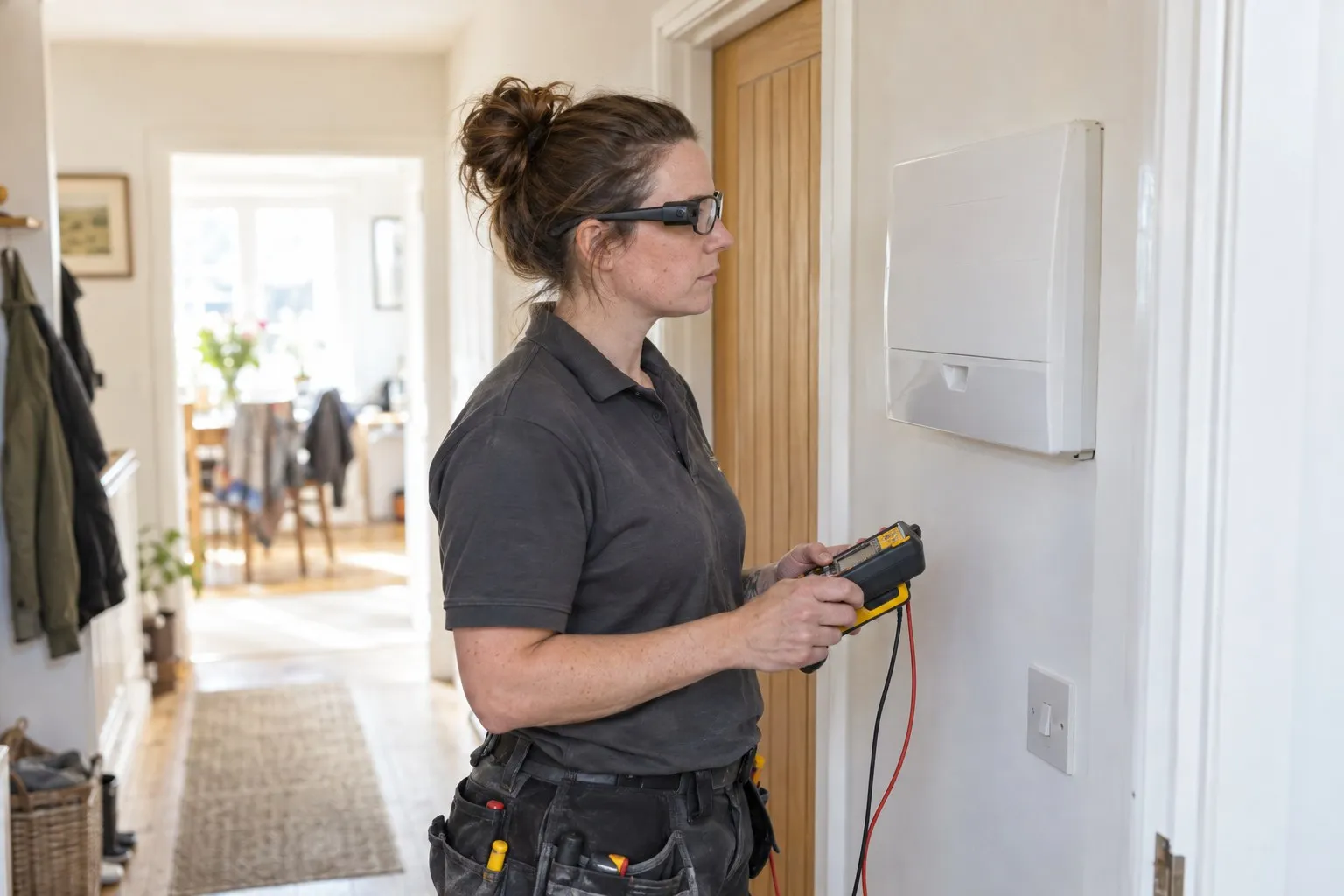
Smart glasses for electricians: where do they actually help?
A head-mounted camera can help someone else see what you see. You can talk through a fault without holding the camera. The useful bits are narrower than the adverts suggest.
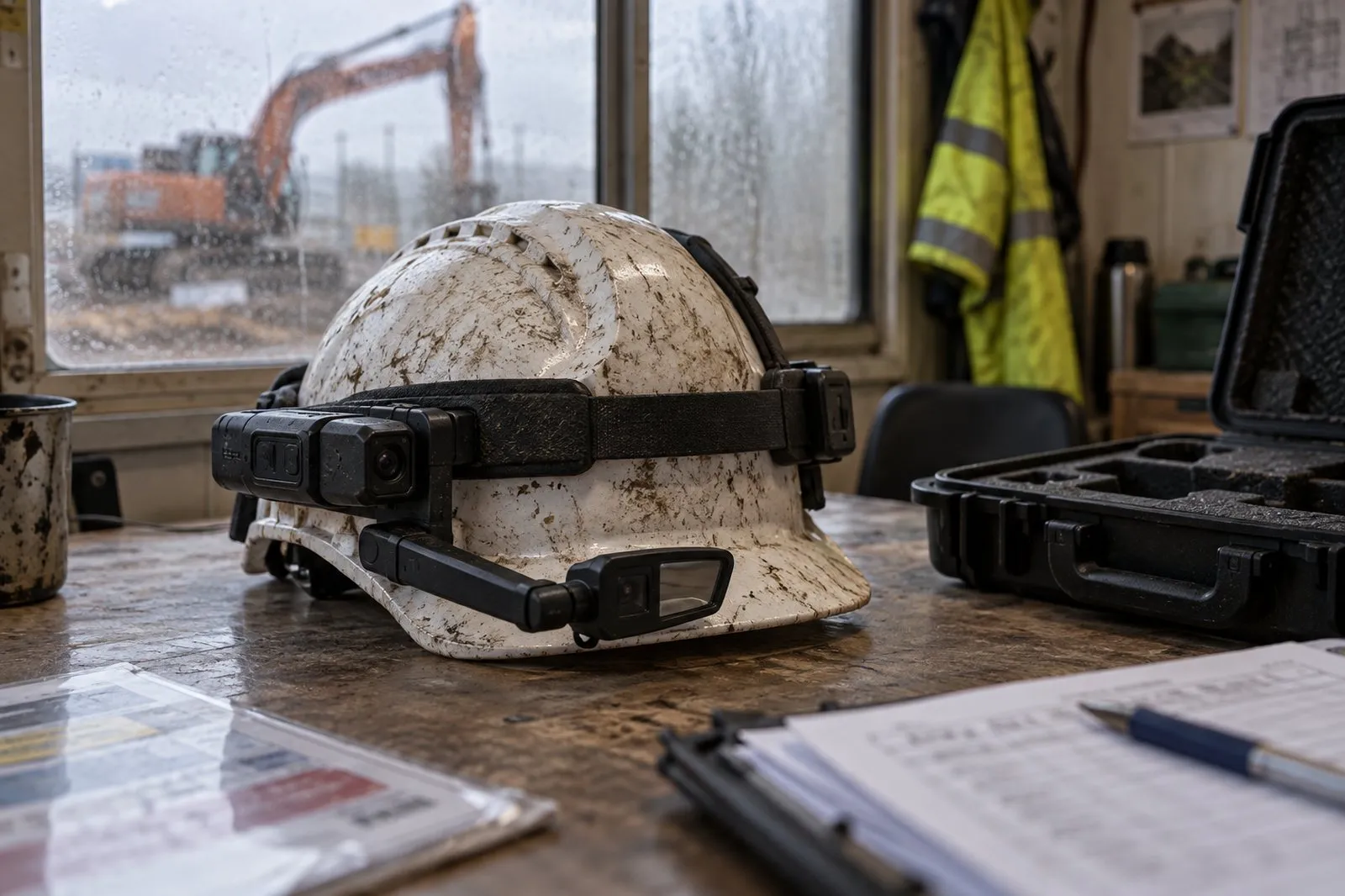
Smart glasses for construction workers: what UK sites allow, what the kit does and where it lets you down
When your people work on someone else's site, the principal contractor gets a say before the supplier does. The useful jobs are specific, and permission comes before the kit.