
Smart glasses for electricians: where do they actually help?
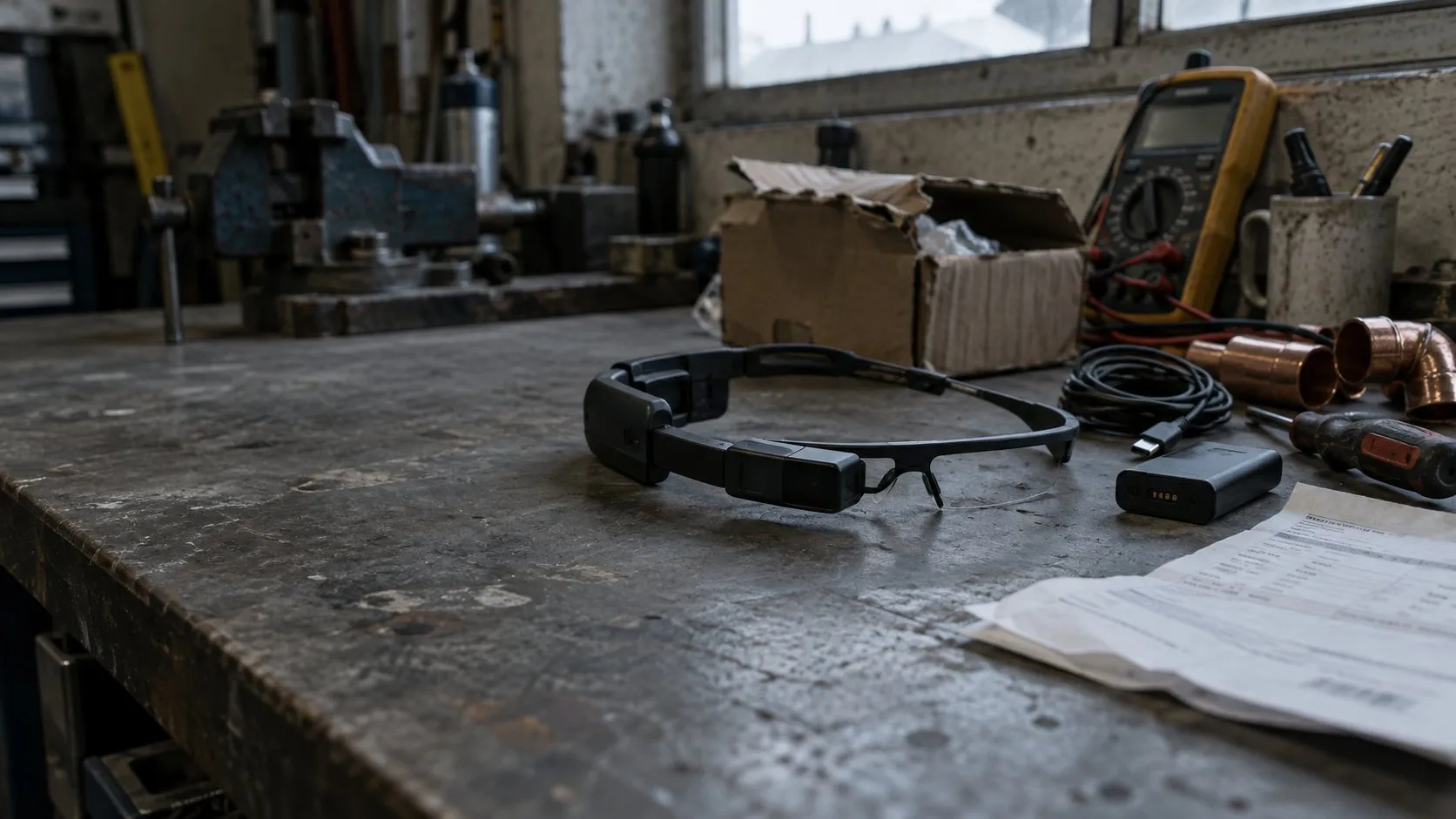
A head-mounted camera can help someone else see what you see. You can talk through a fault without holding the camera. The useful bits are narrower than the adverts suggest.
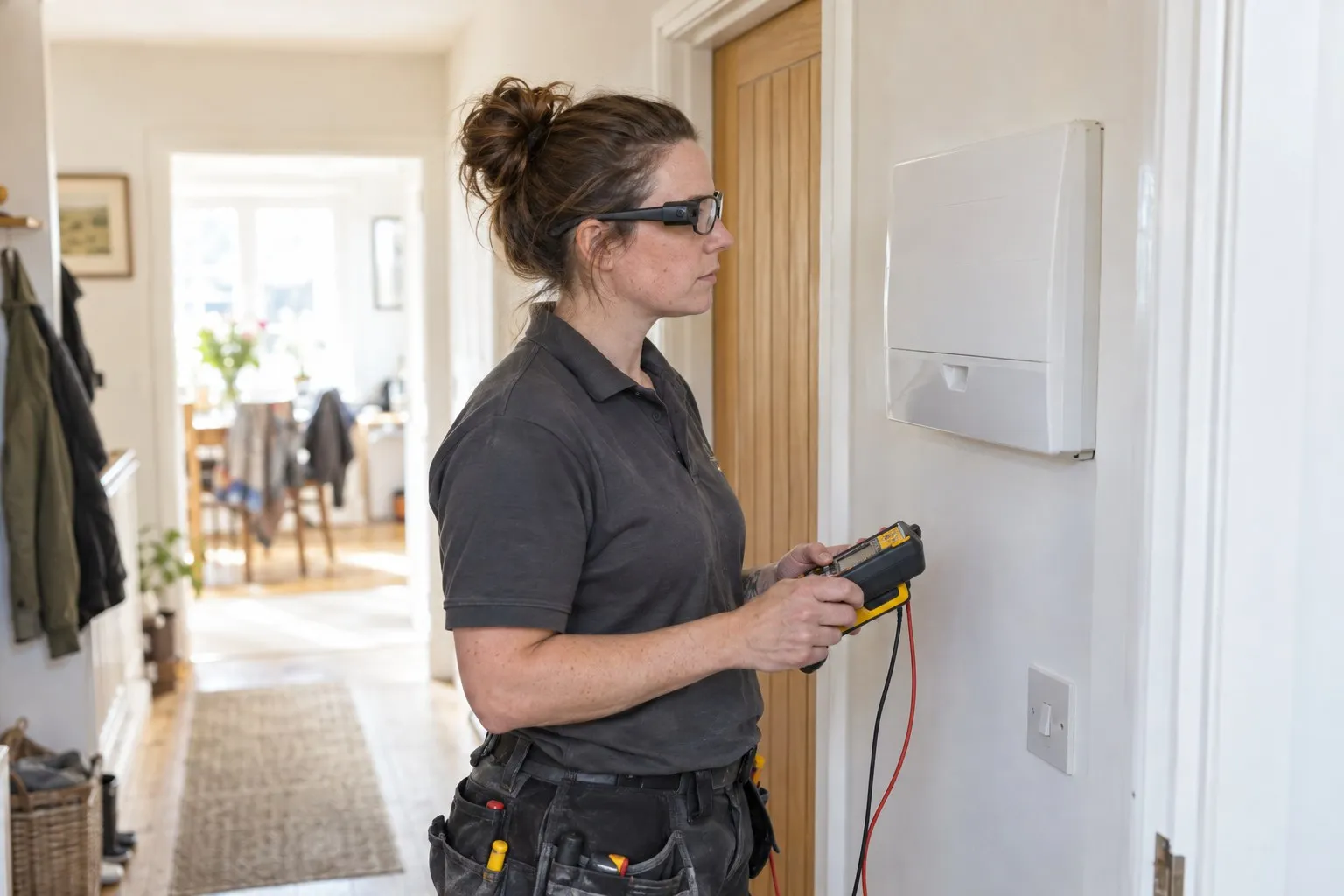
Smart glasses for electricians will not do your inspection and testing for you. They can support a conversation about a fault, or capture an image for your report. Whether you finish with less paperwork depends on where that information goes afterwards.
| Your task | Verdict | What the glasses contribute |
|---|---|---|
| Safe isolation and proving dead | No | Your two-pole voltage detector proves dead. The camera cannot do that. |
| First fix: marking out | Prepared instructions | Prepared visual instructions might help. You still establish suitable locations alongside other services. |
| Making off | Equipment-specific guidance | Guidance must match the equipment and installation specification. |
| Fault finding | For the call | A remote expert can share your view while you carry out the diagnostic work. |
| Photos for the EICR | Yes | The IET model EICR allows images to support observations in Section K. |
| Test sheets and certs | Transfer needed | Captured information needs to reach the correct certificate entries. |
| Supervising an apprentice | Not on its own | The arrangements follow the operative’s level and the risk of the work, and a video call does not settle either. |
These tasks come from Skills England’s electrician apprenticeship standard and the City & Guilds electrical qualification logbook. Electrical Safety First supplies the proving-dead guidance. EICR photography comes from the IET model report; apprentice supervision comes from the Electrotechnical Assessment Specification.
Safe isolation and proving dead stay with the instrument
Electrical Safety First’s Best Practice Guide 2, issue 4.3, says conductors must be proved dead before they are touched. Proving dead should use a proprietary test lamp or two-pole voltage detector.
The guide covers identifying and securing the isolation point as well as proving dead. It also flags app-controlled heating and lighting: equipment may remain unisolated while those controls are available. The electrical evidence comes from the proving device.
Wearing the camera raises a separate question. RealWear and Vuzix make industrial headsets without certified eye protection, a distinction that matters when you wear smart glasses at work.
HSE’s 2013 guide Electricity at work: Safe working practices, HSG85, says that where a risk of burns from arcing or flashover cannot be avoided, consider adequately rated, thermally insulating, flame-resistant PPE, including face and eye protection. HSG85 does not assess head-mounted electronics.
If your risk assessment calls for face protection, wearing a headset must not compromise it. None of the manufacturers reviewed says whether its headset is suitable near live parts or offers protection against an arc.
If you wear safety glasses with a camera, the required protection comes before the convenience of recording.
First fix still starts with the installation specification
You are marking out the locations for containment and equipment. Those locations have to work alongside the other services. City & Guilds’ logbook treats measuring and marking out as work in its own right.
Vuzix advertises hands-free access to service instructions. Scope AR, a software supplier, says its WorkLink system can display instructions over real objects using augmented reality. Both provide ways to show content. Somebody still has to prepare the content for your installation.
In a 2026 lab study by Blattgerste and colleagues, 18 people followed assembly instructions: a monitor was quickest on the simplest task, while glasses won when the layout became more complicated.
For your marking out, the practical question is whether the displayed guidance matches the locations you need to establish.
Even the future needs someone to write the instructions.
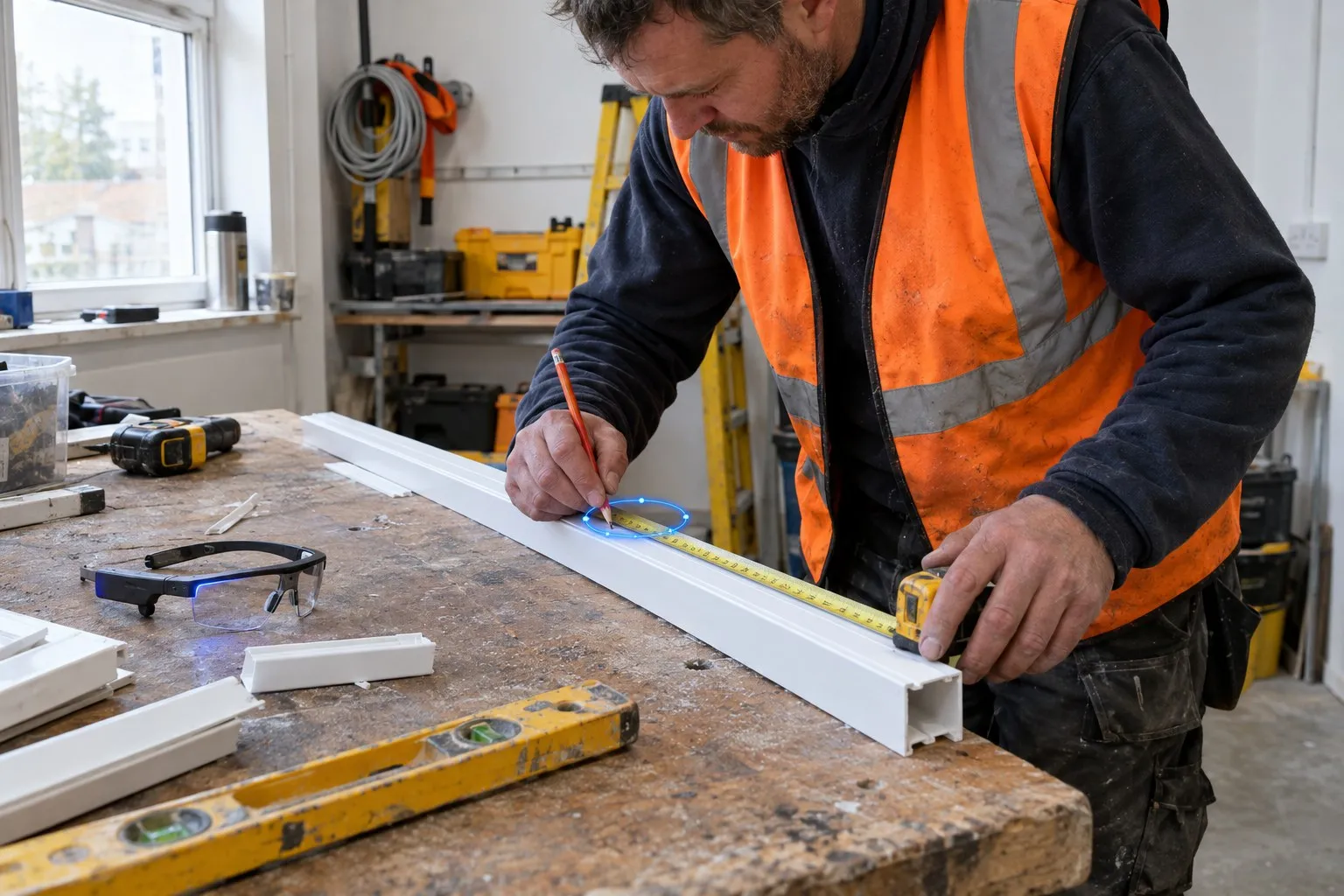
Making off leaves the connection in your hands
City & Guilds’ electrical qualification logbook calls making off “terminating and connecting conductors”. It requires you to confirm that the connections are “safe and free from defects”.
A displayed instruction could keep the relevant information available while you work. The useful content would be the instruction for that equipment, tied to the installation specification. A general maintenance demonstration is several steps removed from that.
The same distinction applies to a remote conversation. You can show somebody the connection and discuss it. Your hands still make the termination, and confirming its condition remains part of your work.
Smart glasses for electricians can help with fault finding
Getting somebody else to see the equipment can help when you need their knowledge. RealWear’s Navigator product page advertises connecting and collaborating with remote experts. The practical attraction is a call with a camera you can leave on your head.
City & Guilds’ fault-diagnosis unit includes obtaining details of the reported fault and consulting system documents. Suitable diagnostic tests and appropriate instruments remain part of that job.
In their 2021 research at a Brazilian utility, Bastos and colleagues reported initial resistance to the glasses’ voice controls and problems using the kit. Appreciation of the application grew with use.
HSG85 warns about pressure leading to risks during breakdown fault finding. A remote conversation belongs inside your safe working procedure and the limits of your competence.
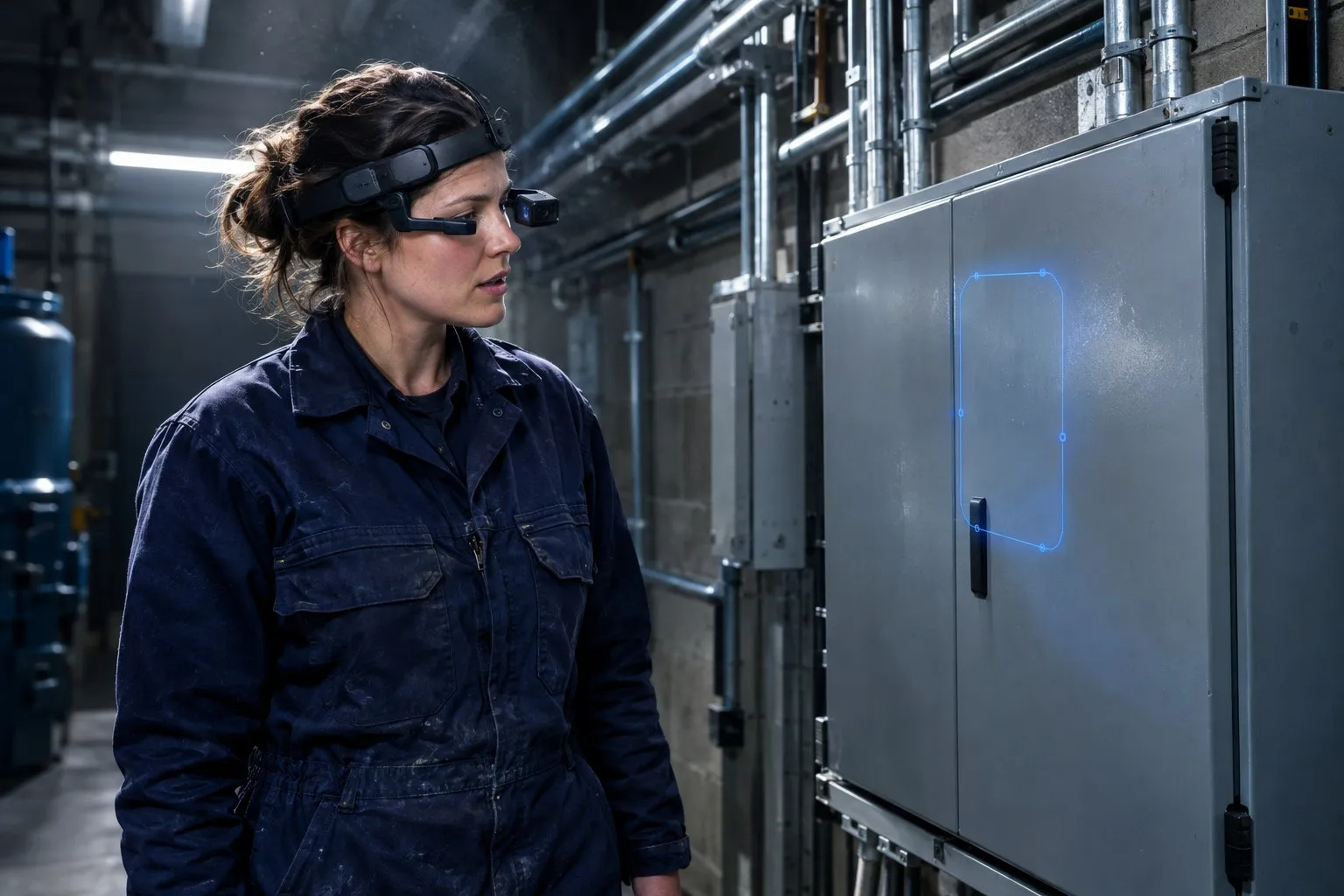
Apprentice supervision follows the operative and the work
If you are supervising an apprentice, the starting point is their level and the risk of the task. The October 2021 Electrotechnical Assessment Specification, EAS, uses those axes to determine the arrangements.
For some work, the table allows verbal instructions and “Remote” involvement by the Qualified Supervisor. Other rows call for periodic involvement or close and detailed involvement. The EAS says supervision does not necessarily require continuing attendance at the work site.
The guidance does not say whether “Remote” means a phone call or video. A video link alone cannot tell you whether your apprentice has enough supervision for the job in front of them.
Your own ability to work independently is a different matter. Skills England describes the qualified electrician as able to work without immediate supervision. HSE’s lone-working guidance says work near exposed live conductors may require another person present.
HSG85 describes an accompanying person trained to recognise danger and switch off, with emergency assistance where necessary. A colleague watching remotely has the camera view. Physical assistance requires somebody there.
Photos for the EICR can support your observations
The IET’s EICR model form for BS 7671:2018+A4:2026 says photographic or thermographic images can be attached to support observations in Section K. Electrical Safety First’s Best Practice Guide 4 also describes photographic evidence as advantageous.
A hands-free photograph therefore has a plausible place in your reporting. You need the image attached to the observation you made, ready to issue with the report.
EDIS, a certificate app, says you can take photographs within the app and store them in the certificate. Every route the apps describe starts with the phone in your hand, so a headset would still leave you moving the image across by hand.
What a headset would change for you is the moment of capture. Any extra sorting afterwards would eat into that benefit, and the published material on UK electrical inspections stops at what each app does, never at what the two ways cost you in minutes.
Our UK search check found no suggested searches for “smart glasses for electricians”, which tells you neither search volumes nor how many electricians use them.
Recording around customers or colleagues also brings in the rules for CCTV in the workplace. An observation photograph and a running recording of somebody’s home are different things.
Operational limitations still belong in the report. The IET form requires them to be recorded where access to parts of the installation is restricted.
Test sheets and certs still need the right readings
A photograph of the tester’s display is useful when the reading reaches the right circuit entry.

iCertifi, a certificate app, describes Board Vision as reading a photograph of a distribution board or circuit schedule and preparing circuit details for review. Its Test Vision feature reads a multifunction tester’s display and enters the value into the certificate, according to the supplier. The supported devices it names are iPhone, iPad and Mac.
Test-equipment maker Fluke’s ShareLive article, updated in February 2026, describes colleagues seeing the same measurements and images on smartphones from different locations. You can already share readings through a phone-based system.
Zuper Glass is a headset advertised for electrical work. You could only reserve it on 21 September 2026; it was not yet on sale. Zuper describes captures flowing through Zuper Go on your phone into its own job platform. The photo goes into the job record. Zuper’s description does not say it fills your test schedule.
Using tools and technology at work should leave you with less retyping after the tests are finished.

When a headset reliably puts the right reading against the right circuit in your cert software, you’ll have a reason to look again.

Trade resources for tradespeople, straight to your inbox.
Occasionally we will send you a newsletter. Free, unsubscribe in one click.
Keep reading
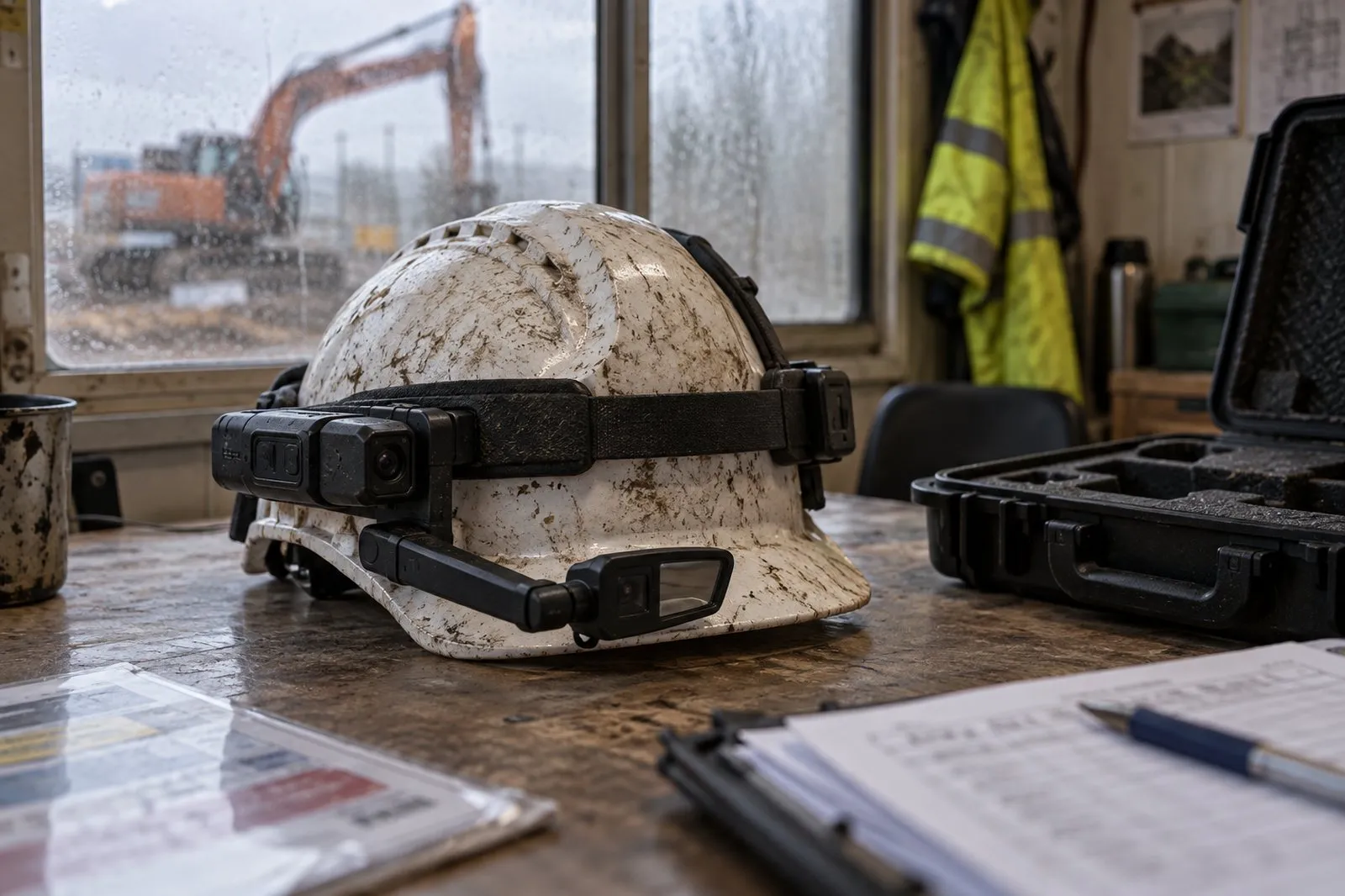
Smart glasses for construction workers: what UK sites allow, what the kit does and where it lets you down
When your people work on someone else's site, the principal contractor gets a say before the supplier does. The useful jobs are specific, and permission comes before the kit.
Smart glasses at work: the real cost
Everyone selling smart glasses shows you the catalogue. Nobody shows you the bill. What a pair actually costs a business with vans on the road, what they fix on the tools, and what they leave exactly as it was.
Is it worth taking on an apprentice? Yes, if they stay past qualifying
An apprentice can repay the investment, but the available British model puts recovery after qualification. What they produce matters, and so does the time your engineer spends teaching them.