
Work at height fine: £120,000 after floorboards came up while a carpenter replaced joists
A carpenter died after falling through a stripped first floor while others removed boards. Investigators found workers could reach areas without sufficient protection against falls.
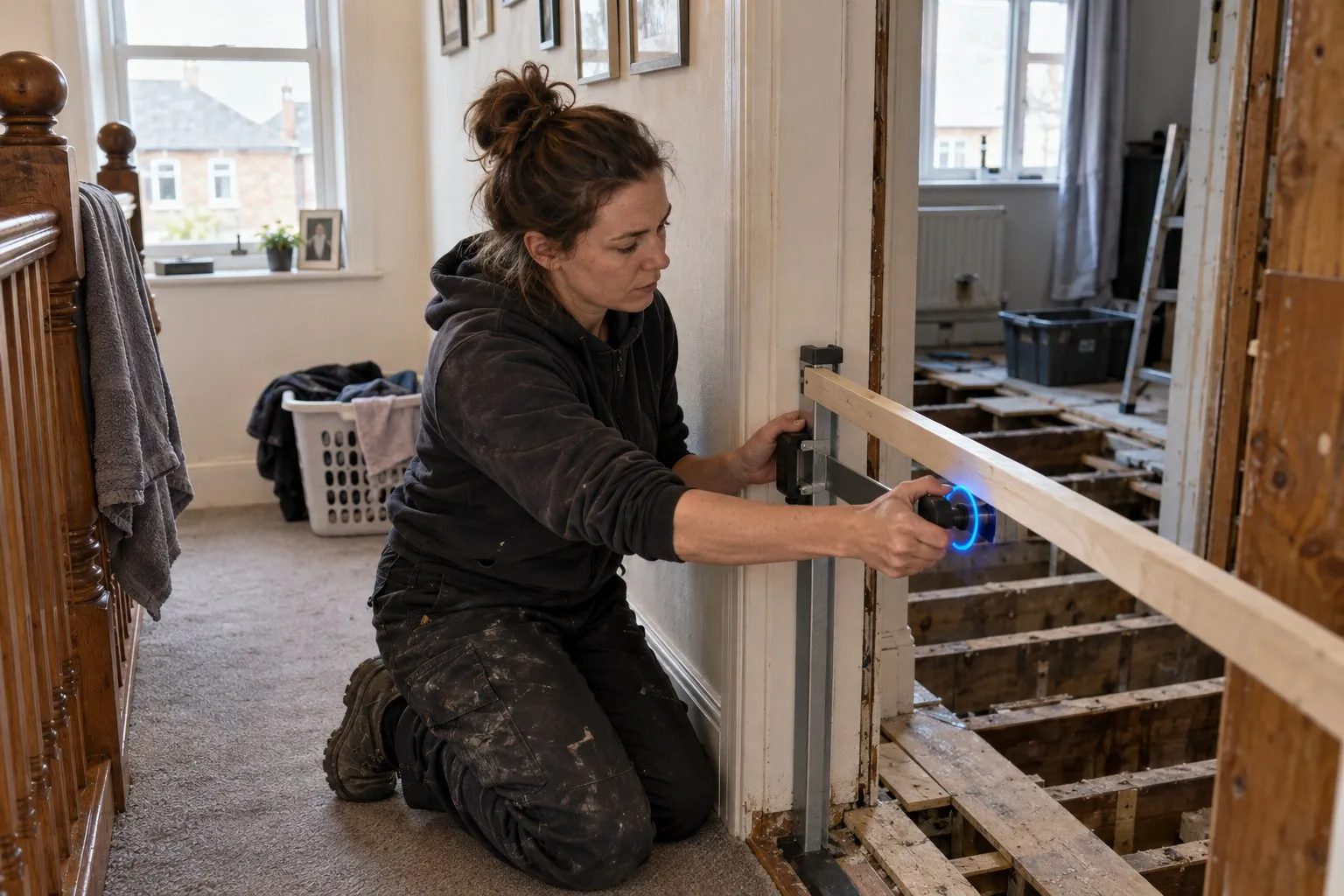
A carpenter was replacing damaged joists while other workers lifted floorboards in the same area. His fatal fall through the first floor has led to a £120,000 work at height fine for W G Carter Limited.
If you are running the business side of a trades firm with teams replacing floors or joists, the question this case asks is who can reach the floor while the boards are coming up. That’s a project management call as much as a safety one: if one lot are lifting boards and another lot are working on the joists, somebody has to decide the order, and somebody has to stop people walking onto the bit that’s already open.
The same question sat behind last month’s work at height fine involving a stairwell: what stops someone walking onto an opening that nobody has protected? This time only the business was convicted. HSE’s release names no director or manager as prosecuted, unlike the trench collapse prosecution after a house extension death, where, Construction Management reported, a director was jailed.
The Health and Safety Executive (HSE) reported the sentence on 2 October 2026. W G Carter pleaded guilty to breaching Regulation 4(1) of the Work at Height Regulations 2005 at Bristol Magistrates Court on 24 September 2026. The court imposed the fine and also ordered the business to pay £5,247 in costs.
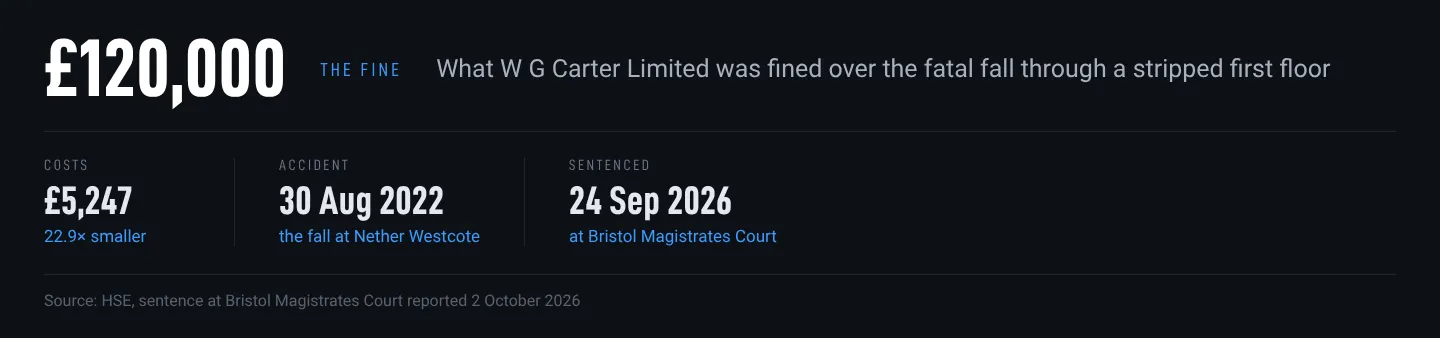
The figure is the court’s, not HSE’s: the regulator does not pass sentences, set guidelines or collect fines.
Richard “Felix” Roper, 59, was working at Manor Barn House in Nether Westcote, Gloucestershire, on 30 August 2022. He was there to replace rotten joists and floorboards on the first floor.
Large parts of the first-floor structure had been stripped back, leaving open gaps between the joists. Some joists were missing or had not been secured. Roper fell onto the concrete ground floor below and suffered severe head injuries. He died in hospital the following day.
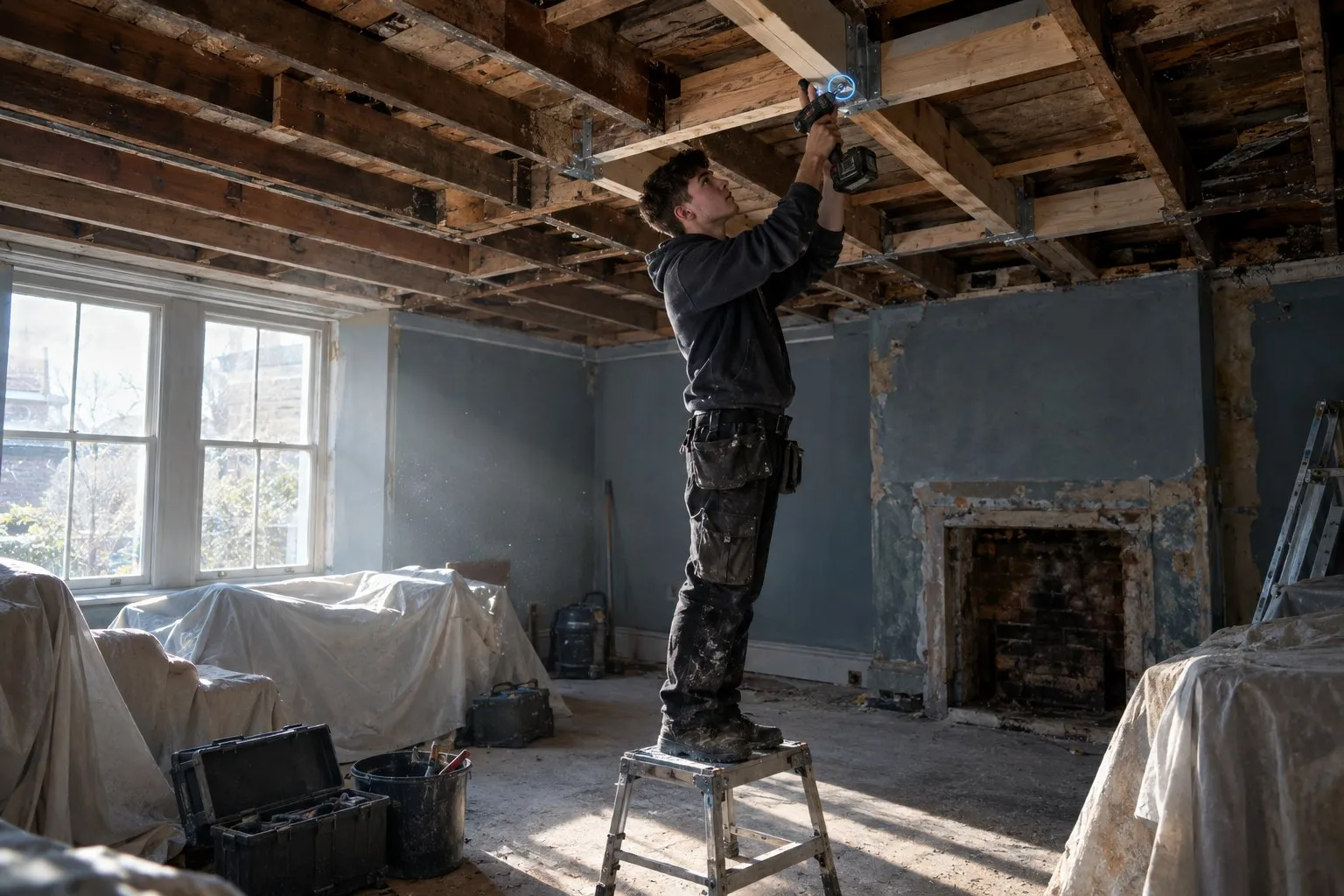
The work at height fine: workers could reach the stripped floor
The joint investigation by HSE and Gloucestershire Police found that the work at height had not been properly planned, appropriately supervised or carried out safely.
Workers could enter areas where flooring and structural supports had been removed, with insufficient measures to prevent falls. At the same time, other workers carried on removing floorboards, creating and increasing the risk of falling from height.
HSE principal inspector James Lucas said: “Had appropriate controls been in place, Felix’s death could have been prevented.”
The rule isn’t new. HSE’s guidance says employers must make sure work at height is properly planned, supervised and carried out by competent people. And falls remain the biggest killer: HSE’s annual figures for 2025/26 count 31 deaths from falls from height among the 126 workers killed in Great Britain, across all sectors, the most common cause of fatal injury.
After the fall, the joists went in from below
HSE served a Prohibition Notice stopping further work at height until adequate safety measures had been introduced.
W G Carter then changed its method. It installed the floor joists from below using appropriate work at height equipment, and kept people off the first floor while that work was under way.

Trade resources for tradespeople, straight to your inbox.
Occasionally we will send you a newsletter. Free, unsubscribe in one click.
Keep reading
BS 7671 Amendment 4 is now the only current version: live jobs depend on the contract, ECN reports
From 15 October, new installations must follow BS 7671 Amendment 4, Electrical Contracting News reports. Citing SELECT, it says a job designed to the old version may be finished to it if the contract allows. Of the forms, the EICR changes most.
Cladding remediation bill reaches Parliament: contractors who paid could chase the manufacturer
A bill introduced on 14 October would make freeholders and others responsible for building safety fix unsafe cladding without delay, with fines of up to £500,000 for ignoring a Remediation Order. Contractors who have already paid for the work would get a simpler claim against the manufacturer.
Awaab's Law private renters: consultation opens, no start date for repair deadlines
MHCLG wants private landlords in England held to legal deadlines for damp and mould repairs. How long they would get, and from when, is still to be decided. The consultation closes on 18 December 2026.