
Smart glasses for plumbers: another pair of eyes, the same responsibility
The engineer on the call can look. You still have work to do in the house, with gas registration and unvented hot-water rules attached to the person doing it.
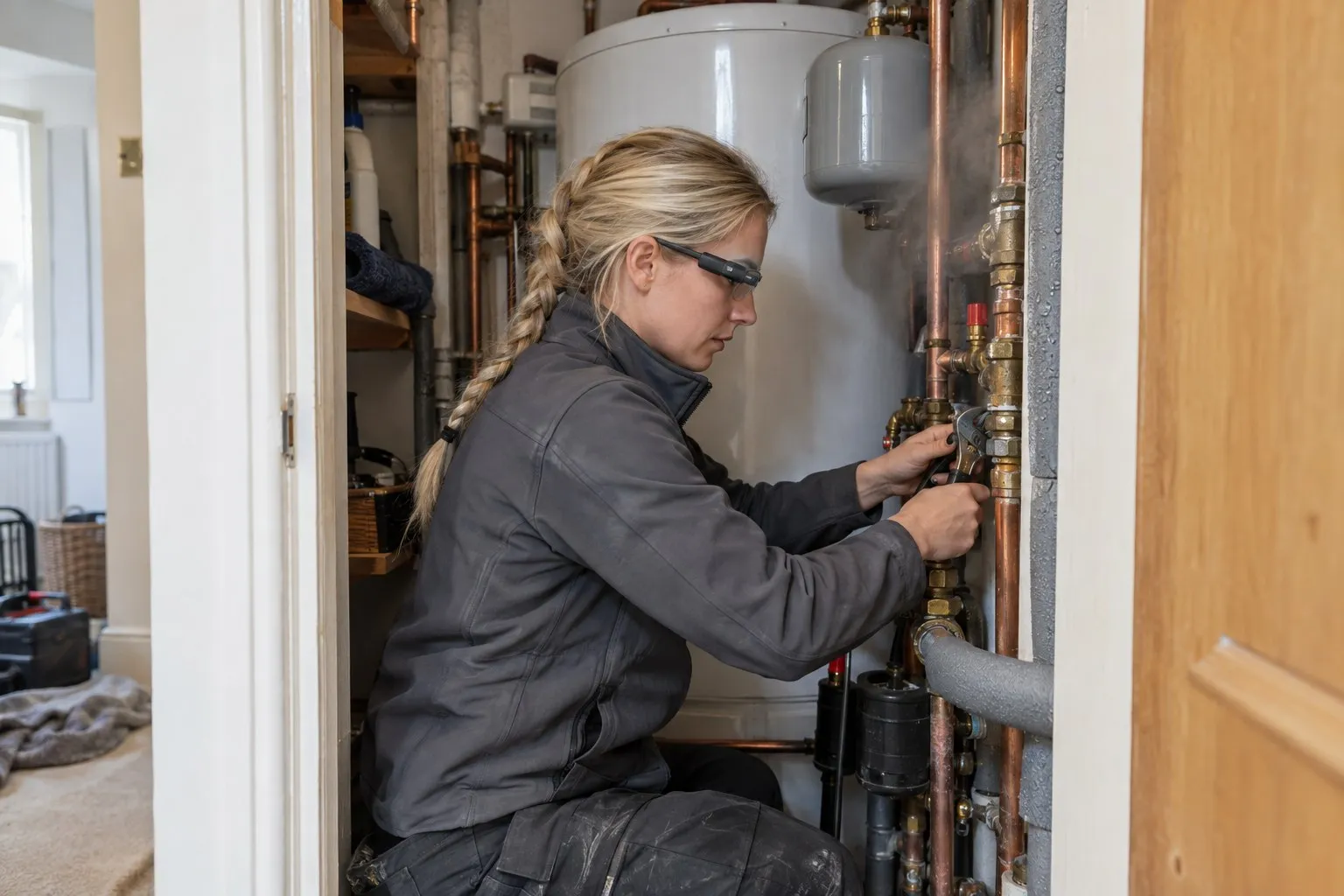
Beneath a kitchen floor, your head can be close to the joint while both hands are occupied. A boiler cupboard leaves much the same problem: very little room to hold a phone where you can see the work.
Smart glasses for plumbers would do one job for someone working alone: put another pair of eyes on the work without a phone in your hand. For now, that second pair of eyes comes through the phone, on the manufacturers’ technical lines. Screwfix Community, PHPI and Cooling Post, searched on 6 October 2026, carry no first-hand account of a UK plumber or heating engineer wearing smart glasses through a day of visits. Who does the gas work stays the same: the person with their hands on it has to be competent for that job, and the business has to be on the Gas Safe Register.
Gas work in the boiler cupboard
You are already registered, so the point here is narrower. A camera does not move the competence duty, which stays with the engineer inside the boiler cupboard. HSE’s L56 code, fifth edition (2018), describes competence as a combination of practical skill, training, knowledge and experience to carry out the job in hand safely, and to leave the installation safe to use.
If price is your first question, the main guide sets out what smart glasses at work really cost. Here the question is who answers for the work. Gas Safe’s Registration Policy of February 2026 keeps responsibility for gas work done in your business’s name with your business, and everyone doing it, employed directly or subcontracted, must be competent and Gas Safe registered. When you bring in a subcontractor for a gas job, run the Gas Safe Register check on them before they start.
Regulation 3 of the Gas Safety (Installation and Use) Regulations 1998 also puts a duty on any employer or self-employed person who controls the work “to any extent” to make sure the person doing it is competent. If you guide a job from the van over a video call, the safe reading is that the duty includes you, so decide before the call who on site is doing the gas work.
What your apprentice can do while you watch
Regulation 3 is titled “Qualification and supervision”, yet neither the regulation, Gas Safe’s Registration Policy and gas appliance factsheet nor L56 defines trainee supervision or says whether it can happen remotely. What they do say still draws the line for your apprentice.
L56 puts gas work with someone who has successfully completed an industry-recognised training course followed by an assessment of competence. Until your apprentice has that for the job in hand, the gas work is yours, whether you stand beside them or watch on a screen. Having them do it while you check afterwards is ruled out too: Gas Safe’s factsheet says it is illegal for someone who is not registered to do gas work and then have a registered engineer check it, and that both parties would be breaking the law.
Learning in a customer’s home comes under the same rules. L56 says on-the-job training away from training centres remains subject to the regulations in full, so on a gas job your apprentice learns by watching you do the work and asking as you go.
Once they are assessed, L56 says competence needs only to be sufficient for and relevant to the work done, and asks employers for ongoing monitoring of performance standards. A call lets them show you what they see; the gas work itself goes to whoever is assessed for it, on site and registered through your business.
Beside the unvented cylinder
For unvented hot water in England, the guidance speaks to your customer. Approved Document G, incorporating the 2024 amendments, advises building owners and occupiers in paragraph 3.40 to choose installers who have the necessary skills. Registration with a competent person scheme for this type of work, or a current registered operative skills certification card for unvented hot water systems, are examples of how those skills can be demonstrated.
Requirement G3 itself addresses system safety, including resistance to temperature and pressure. It also requires discharge from the safety devices to be safely conveyed to where it is visible without endangering anyone in or about the building.
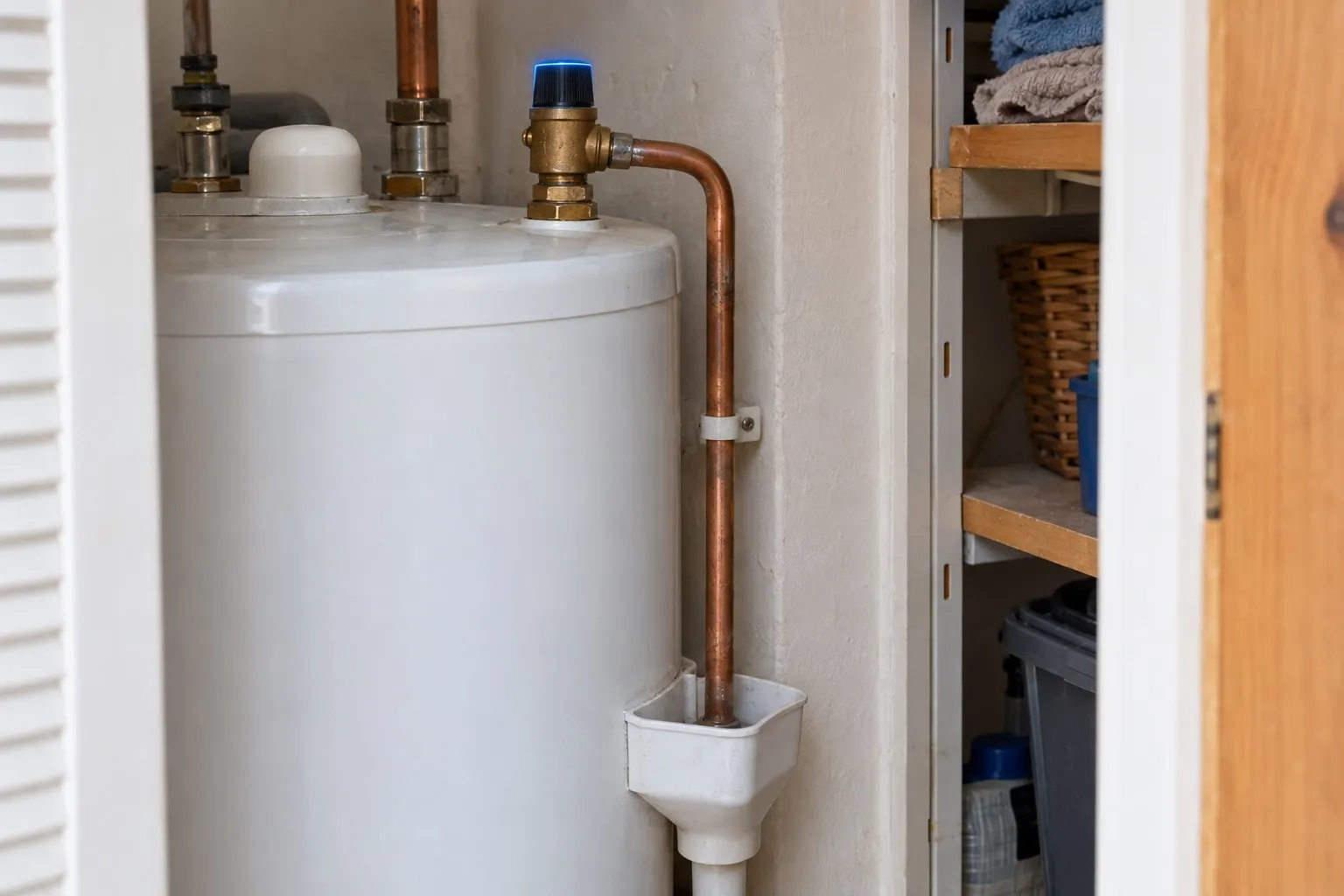
Building control has to be told before an unvented installation starts, unless the installer belongs to a scheme covering that work and self-certifies. Both routes attach to the person installing the system, whoever else is watching through a camera. Keep your card or scheme membership current and to hand, because it is how your customer can see that the installer has the skills.
A second pair of eyes at the boiler
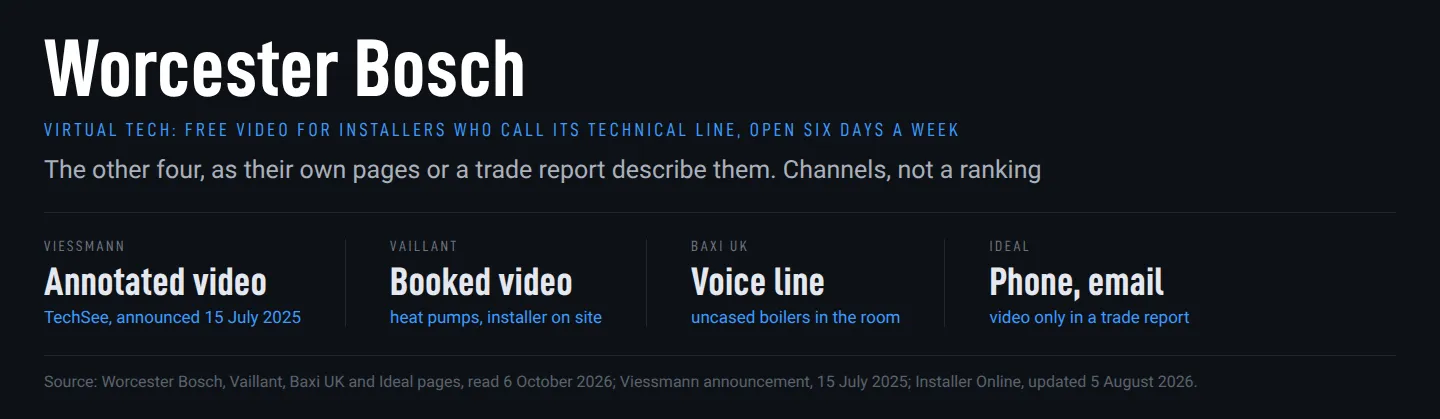
The help you can use today runs on your own phone. Worcester Bosch’s Virtual Tech is free for installers who call its Technical Support line, and Worcester’s support pages, read on 6 October 2026, set out how it works. It asks for your specialist installer number and sends a text link. There is no app to download, and you move the screen around the boiler to show the problem.
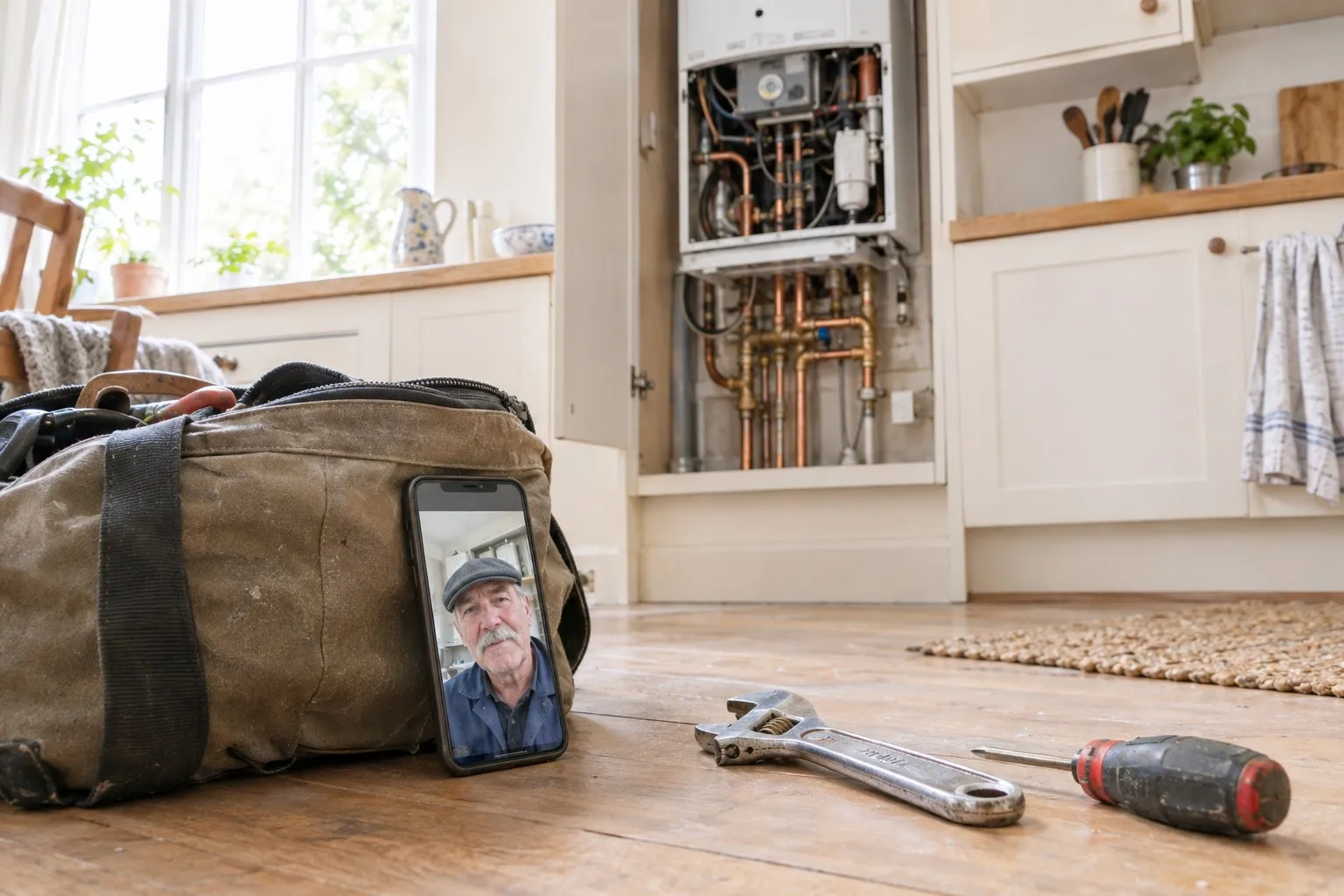
Viessmann’s announcement of 15 July 2025 describes TechSee support through a smartphone camera, with its technical team able to annotate live video and highlight components or testing points. The announcement specifically mentions support for Gas Safe engineers.
If you fit Vaillant heat pumps, its remoteGO mini video check needs an appointment requested by form, can take up to two hours, and requires the installer who fitted the heat pump to be on site. For other technical questions, Vaillant’s technical help page lists a telephone line and WhatsApp.
Baxi UK describes voice support from gas engineers with boilers beside them, casings removed, so they can follow what you describe. Installer Online, in a report updated on 5 August 2026 about Ideal’s Investor in Customers award, lists video remote assistance among Ideal’s customer channels. Ideal’s own installer contact page lists telephone and email.
So the help on offer comes through the phone in your hand: a video call with Worcester and Viessmann, a voice call with Baxi and Ideal, a booked check for a Vaillant heat pump. Next time a fault needs another look, ring the manufacturer’s technical line first, with your installer number ready for Worcester’s video link. You show the technician the problem and remain the installer doing the work.
What smart glasses would face in a damp cupboard
Inside a cylinder cupboard, condensation brings you up against the wording of the specification.
RealWear’s specifications put the Navigator 520 at IP66. Its shop page gives humidity of 10% to 80%; the manufacturer’s PDF datasheet, distributed by reseller Alloys, gives 5% to 95%. Both specify non-condensing conditions. The Navigator Z1 is also rated IP66, again for non-condensing humidity. Their temperature limits matter more on a winter building site, and the guide to smart glasses for construction workers deals with those.
Vuzix conditions the M400’s IP67 rating on its 3,200 mAh battery. Iristick’s G3 is IP54 and draws power through a cable to your phone; its H1 is IP67, although Iristick says the last units have shipped and will not be restocked. Zuper sells its glasses as dust and water resistant, with no IP number on its page.
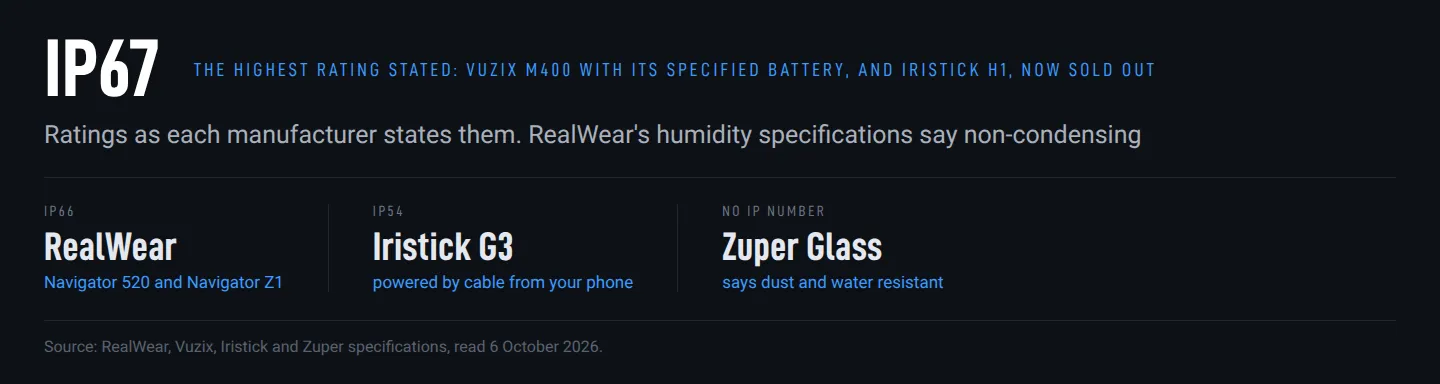
On battery, Iristick’s specification sheet claims five hours or more for the H1, and Zuper advertises eight hours. Zuper’s pages list plumbing and HVAC alongside roofing, solar and electrical work, and it sells the glasses for recording the job: photographs, video and voice notes go into the job record.
If you ever trial a headset, it joins the other tools and technology in your van, with limits on where it can go. A cupboard with moisture condensing on the pipework is outside what RealWear’s humidity wording covers. Before any trial, ask the supplier in writing for the IP rating and humidity range of the exact model.
Your customer is still at home
Your customer is in the house while you work, and whoever is on the call is somewhere else. If the camera shows the inside of the house, recording in a customer’s home has its own rules, separate from the gas ones.
The nearest UK example is not plumbing but refrigeration. Cooling Post reported on 25 May 2026 that Arcus FM, a facilities management business, was introducing Ray-Ban Meta glasses in its refrigeration team to strengthen on-the-job learning and improve remote technical guidance. The business intended to keep reviewing how the technology supports refrigeration engineer development.
Until a plumber publishes a day with them, any judgement on glasses rests on specifications and the rules governing the work, and the competence and registration duties under regulation 3 stay where they are.
At the last visit of the day, the phone in your bag already gives you a second pair of eyes, and the gas work is still yours to do.

Trade resources for tradespeople, straight to your inbox.
Occasionally we will send you a newsletter. Free, unsubscribe in one click.
Keep reading
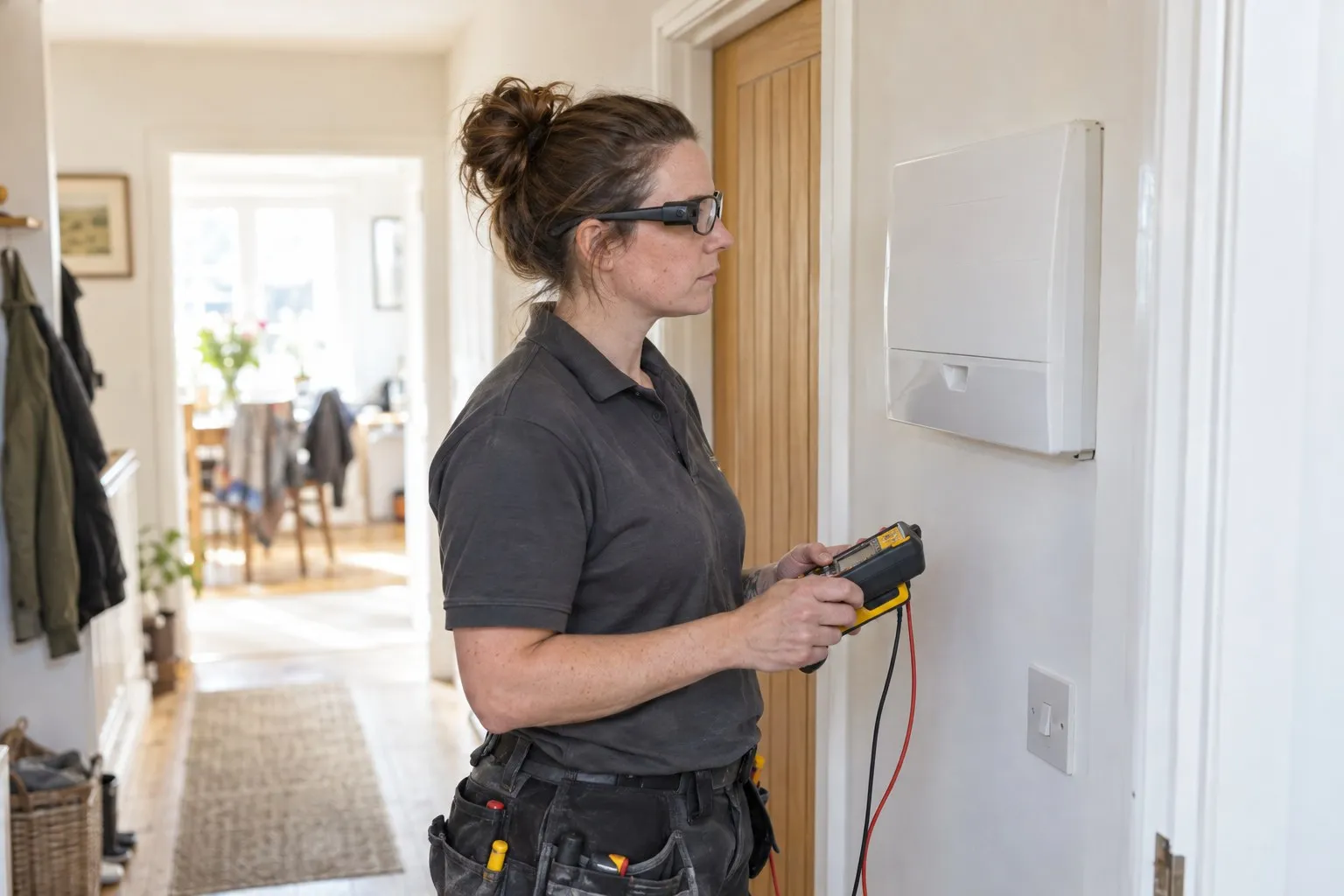
Smart glasses for electricians: where do they actually help?
A head-mounted camera can help someone else see what you see. You can talk through a fault without holding the camera. The useful bits are narrower than the adverts suggest.
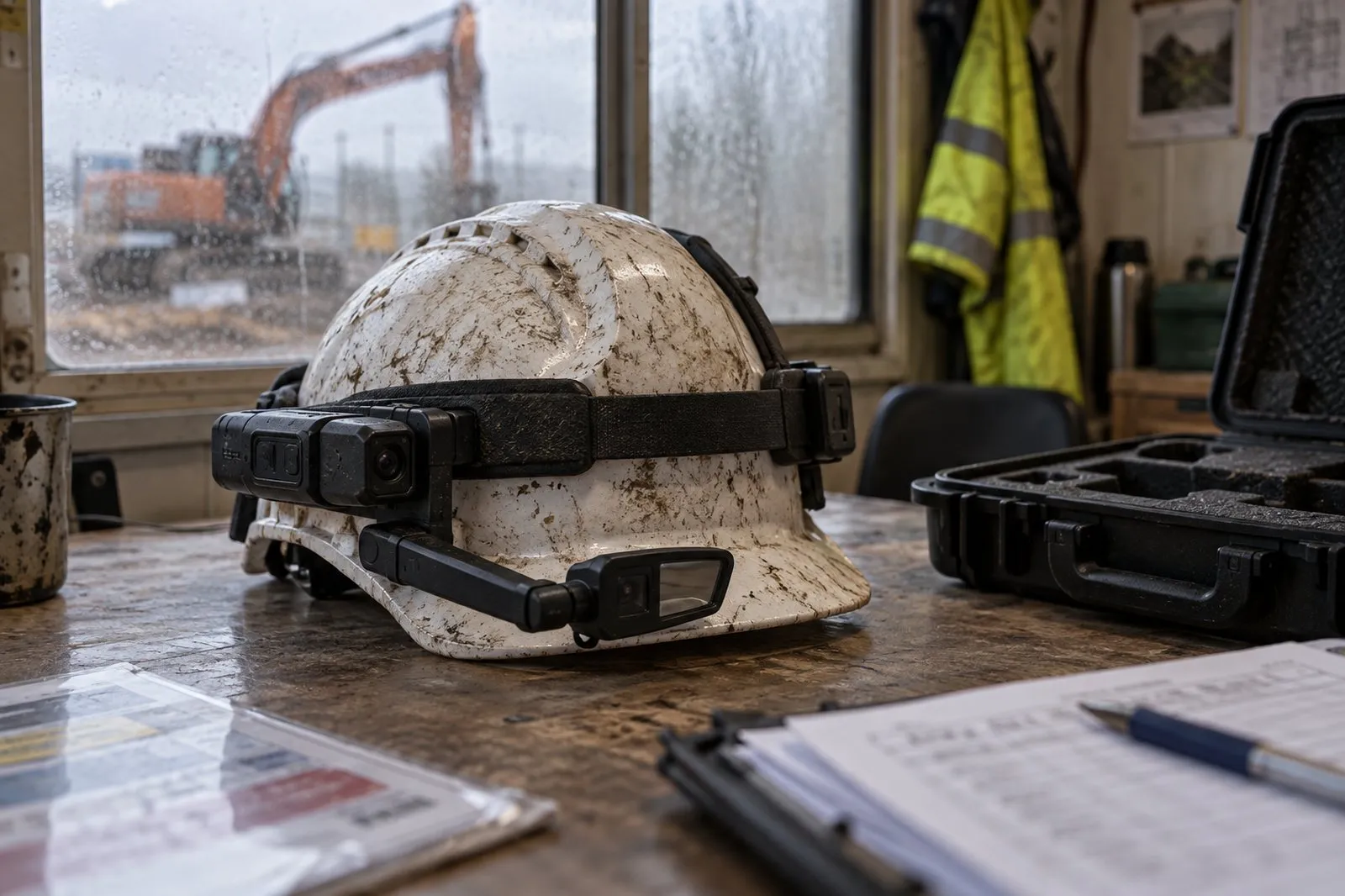
Smart glasses for construction workers: what UK sites allow, what the kit does and where it lets you down
When your people work on someone else's site, the principal contractor gets a say before the supplier does. The useful jobs are specific, and permission comes before the kit.
Smart glasses at work: the real cost
Everyone selling smart glasses shows you the catalogue. Nobody shows you the bill. What a pair actually costs a business with vans on the road, what they fix on the tools, and what they leave exactly as it was.