
The CCTV evidence disciplinary procedure: the clip is only the start
You already have the footage. Whether you can rely on it turns on how it was obtained, what you investigated and whether your employee had a fair chance to answer.
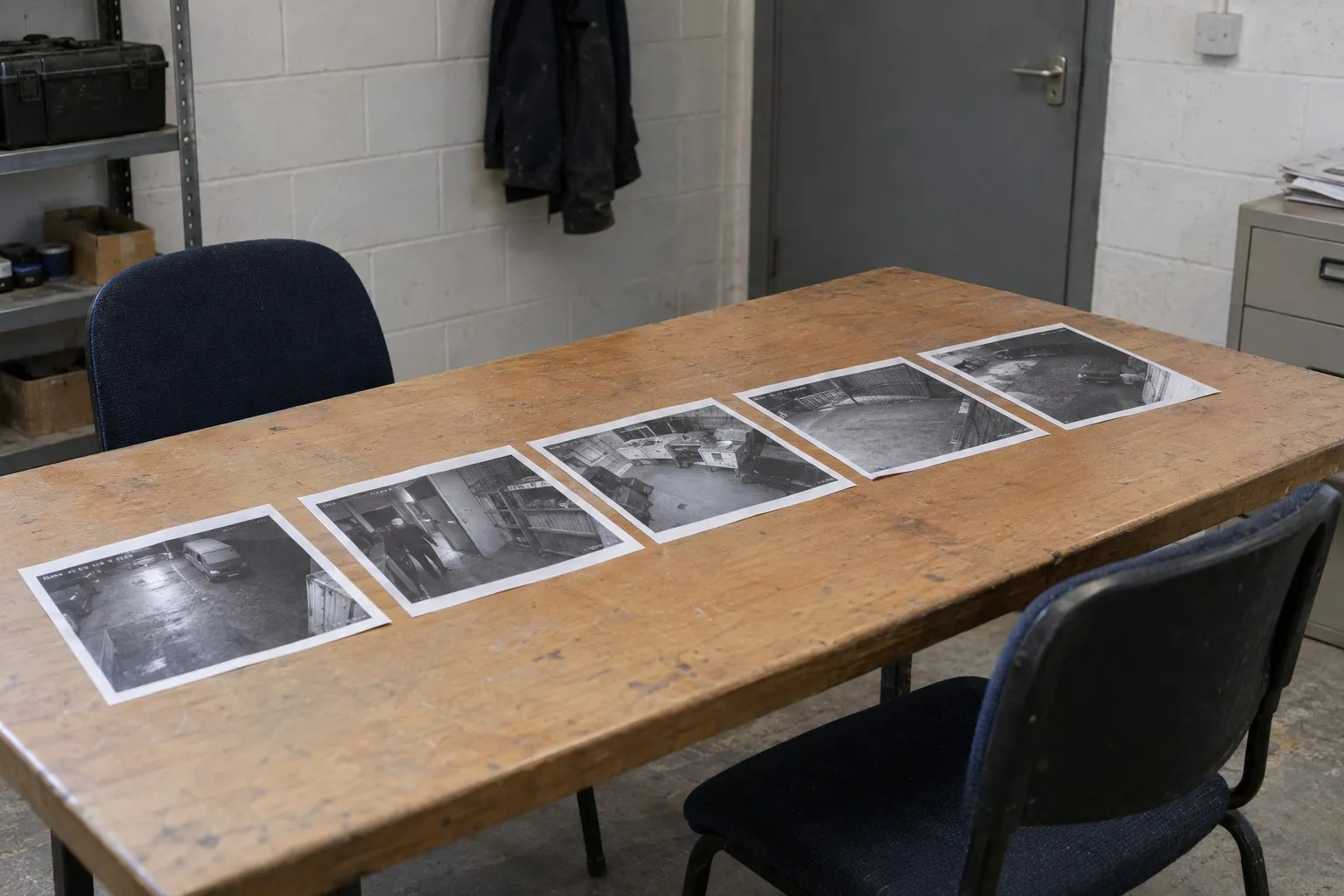
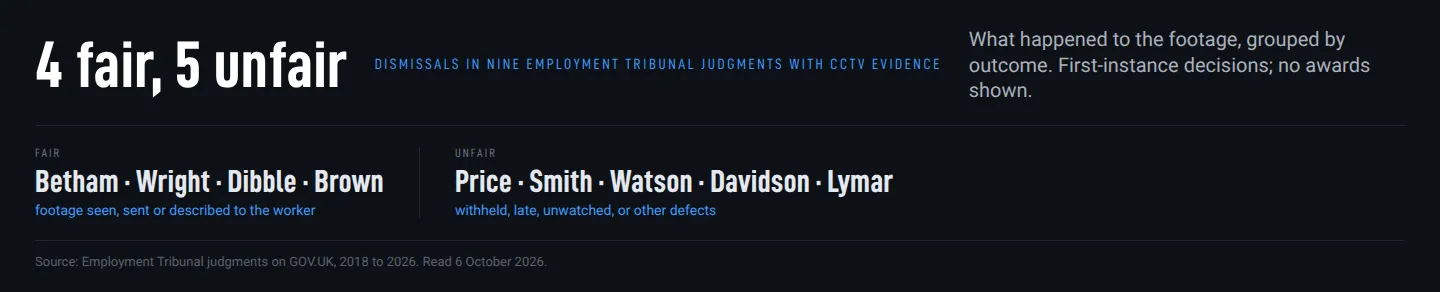
In Betham v Northern Joinery, a Manchester Employment Tribunal case heard on 2 October 2023, the judge and the employee’s lawyer could open only one of the CCTV clips uploaded for the hearing. The employer relied on still photographs in the hearing bundle and won; an Employment Tribunal decision is first-instance and decides only its own case.
You can use CCTV evidence in a disciplinary, and it can support dismissal. Whether a CCTV evidence disciplinary case holds up is judged under section 98(4) of the Employment Rights Act 1996, as applied in Turner v East Midlands Trains (Court of Appeal, 2012): a reasonable investigation, a genuine belief on reasonable grounds, and a dismissal within the reasonable responses for a business of your size and resources. In Betham, the employee had seen the footage at his disciplinary hearing and could respond.
One date comes first. At 6 October 2026, section 108 of the 1996 Act generally requires two years’ service to claim ordinary unfair dismissal. The Employment Rights Act 2025 cuts that to six months wherever the effective date of termination falls on or after 1 January 2027, even for an employee dismissed before then. The worker’s start date and the date a dismissal would take effect should head your file.
The camera behind the clip
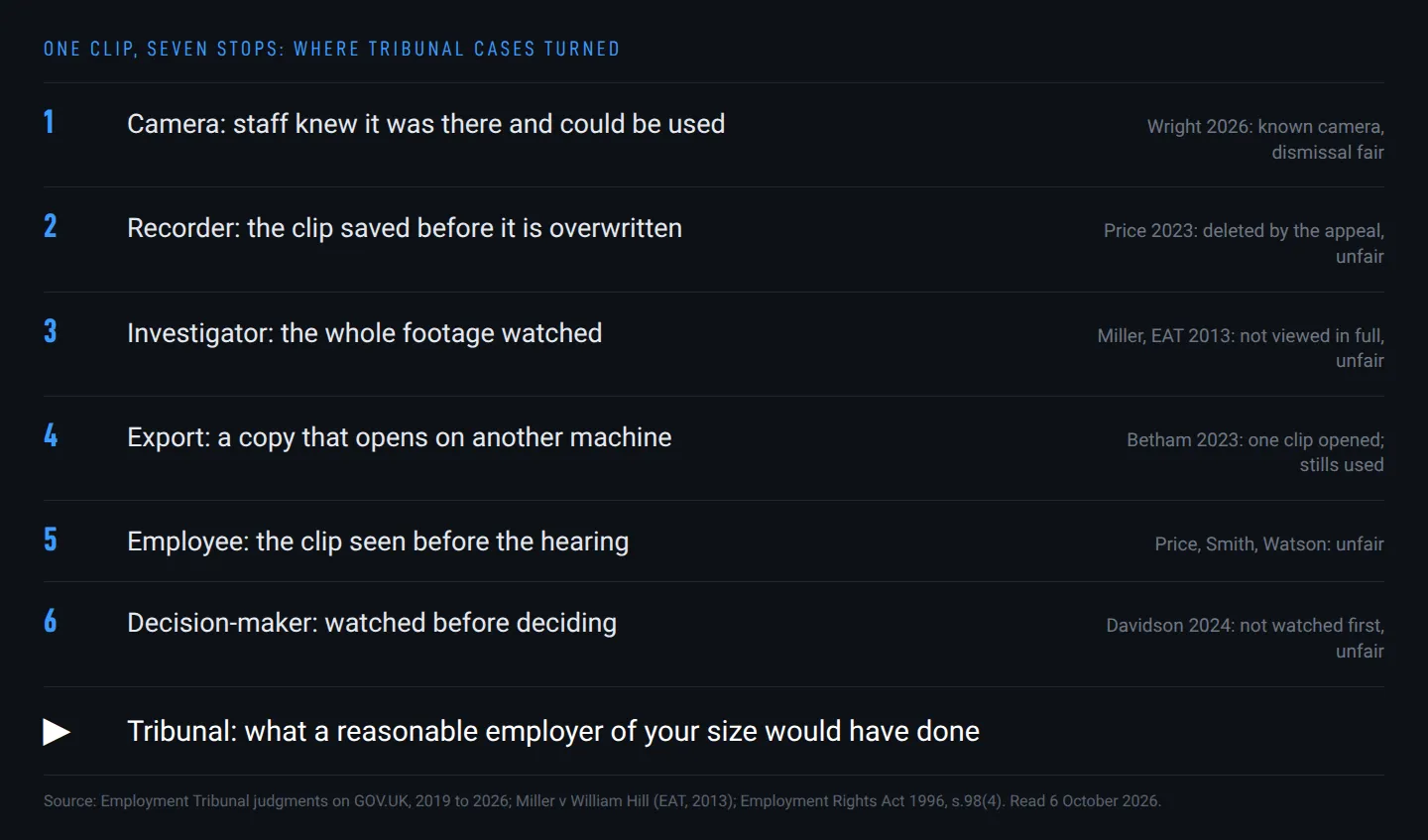
Your clip might come from a wall camera, a van dashcam, a customer’s system or the camera built into smart glasses at work. Acas, in guidance updated 24 June 2026, says employers should make it clear when CCTV is in place and can be used in investigations. The ICO’s advice for small organisations, read on 6 October 2026, adds that if you put CCTV up for security, using it to discipline staff without warning won’t usually be fair. The purpose the camera was put up for matters.
In Brown v R C Ayres (2018), viewing the client’s withheld footage and describing it to the employee was accepted as reasonable.
If there was no sign and nothing in the contract or handbook, the clip is not automatically ruled out: the ICO’s word is “usually”. In Kelly v Costco (2021), the tribunal treated it as a question of reasonableness under section 98. In Wright v Extraction Solutions (2026), timesheet checks using work-area CCTV were accepted because the worker knew the camera was there: he could view it on his phone, had helped install it, and its monitor sat in the office. A note of what your worker knew about the camera should go on the file, and the warning should go in your staff policy before the next clip.
When the camera was hidden
The ICO’s Monitoring workers guidance requires a data protection impact assessment for covert monitoring. The ICO says covert monitoring is unlikely to be justified except in exceptional circumstances, such as suspected criminal activity or gross misconduct where telling staff would prejudice prevention or detection.
Senior management should authorise it, for the shortest fixed period, ending with the investigation and away from places staff reasonably expect to be private, such as toilets or changing rooms. If your clip came from a hidden camera, you should be able to justify each of those decisions.
Before the recorder overwrites it
Acas gives CCTV deletion as an example of a time limit to plan an investigation around. The recorder’s retention period is that deadline. In Price v Fleet Express (2023), key CCTV had been deleted by the appeal, and the dismissal was unfair. In Lymar v K & D Joinery (2022), another joinery firm saved three short clips before they were wiped, which the tribunal called reasonable; other failings made that dismissal unfair.

The stretch worth saving runs from before the worker appears until after they leave the shot, not just the seconds that look bad.
Watching the surrounding footage
The investigator should gather both sides’ evidence and keep a record of how and why it was obtained, says Acas.
Miller v William Hill (EAT, 2013) found the investigation not sufficiently thorough because management had not viewed the whole of the footage. Shortly before the appeal it emerged that the CCTV and till clocks differed by 2 minutes and 12 seconds. The dismissal was unfair.
A dated note does the job: who watched which camera, from when to when, and how far the recorder’s clock sits from a phone checked the same day.
An export that opens elsewhere
Dstl’s police guide, Recovery and Acquisition of Video Evidence (2022), recommends exporting in the recorder’s own file format with the player software it needs, then testing playback on another machine. It treats filming the screen as poor practice because that misses the original data.
Even so, in Dibble v Falzon (rehearing, 2018), all that remained was a clip the pub’s owner had taken on his phone when he realised the full footage would be erased automatically, and the worker’s claim failed.

The first export should stay untouched as your master, with a working copy and a dated note of who exported it and when; the working copy should open on a computer other than the recorder before the invitation goes out.
Showing CCTV evidence to the employee before the hearing
The Acas Code (2015) normally expects “copies of any written evidence”. Acas’s hearing guide, updated 4 December 2025, goes wider: “any evidence from the investigation” should arrive “in good time before the hearing”.
In Wright, the footage went with the invitation. In Price, footage the worker never saw was a significant factor in the manager’s decision. The judgment said:
discussing the relevant evidence with the Claimant is a basic step that would have been taken by any reasonable employer.
Smith v The Rising Sun (2026), at a very small employer, went the same way: no CCTV evidence before the only meeting, and an unfair dismissal.
In Watson v Wickersley Nursery (2019), the CCTV also showed other staff and children. The tribunal rejected data protection as a reason for limiting who could accompany the worker, noting faces could have been pixelated; the worker was only to be shown the CCTV just before the meeting. Her dismissal was unfair.
Under the Employment Relations Act 1999, the worker can bring a colleague or trade union companion, and if that person can’t make your date you must accept a reasonable alternative within five working days. If the worker makes a subject access request, the ICO says what monitoring captured may have to be disclosed.
Your invitation should include a playable clip or advance viewing arrangements, with other people’s faces blurred where needed and preparation time allowed.
The decision-maker has to watch
The clip now goes to whoever decides the outcome. Under the Acas Code, that manager needs authority to dismiss. Different people should investigate and decide where practicable; an uninvolved person should hear the appeal wherever possible.
Splitting those roles is one of the harder parts of running the business with staff when there are only one or two managers. In Wright, a small firm, overlapping director roles were accepted given its size, and an external HR provider handled the appeal.
Davidson v UK Plumbing Supplies (2024) found the procedure flawed partly because the dismissing manager had not watched the clip before deciding to dismiss. Whoever decides watches the clip first.
In front of the tribunal
Your tribunal file should hold the original clip, the export note, the invitation and the hearing notes. Acas advises keeping disciplinary records; with the open caseload at a record, as September’s employment tribunal delays report shows, that file may be read long after the hearing.
Of the 473 GOV.UK decisions discussing CCTV searched for this piece, none excluded video because of how it was obtained. Whether the camera itself complied is a question for the ICO, and staff can complain to it.
Under TULRCA 1992, sections 207 and 207A, tribunals take the Acas Code into account and may adjust awards by up to 25% where it was unreasonably not followed.
These rules cover Great Britain, and Northern Ireland has its own legislation.
Under section 98(4), the tribunal will examine what you did with the clip and when, measured against a reasonable employer of your size and resources, not simply what the footage shows.

Trade resources for tradespeople, straight to your inbox.
Occasionally we will send you a newsletter. Free, unsubscribe in one click.
Keep reading

CIS sole trader: what comes back, how to claim it and how long you wait
Your deductions count towards the year's tax bill. Two worked examples show why you might get a refund or owe more, including a payment towards next year.

Principal contractor building regulations: the role your client never assigned
The same builder can hold two principal contractor roles on one domestic job. Part 2A covers Building Regulations compliance; CDM covers health and safety. Each brings its own duties.

Missing building regs certificate: where to look and who applies
Your former client's buyer wants the certificate. A paid archive search can end empty. The owner applies for regularisation, with a fee to pay and a separate question over who ultimately bears the cost.