
Safety glasses with camera: why your phone usually wins
You can buy glasses with a built-in camera. Whether they can replace your existing PPE is a separate question, and some manufacturers' own pages leave it open.
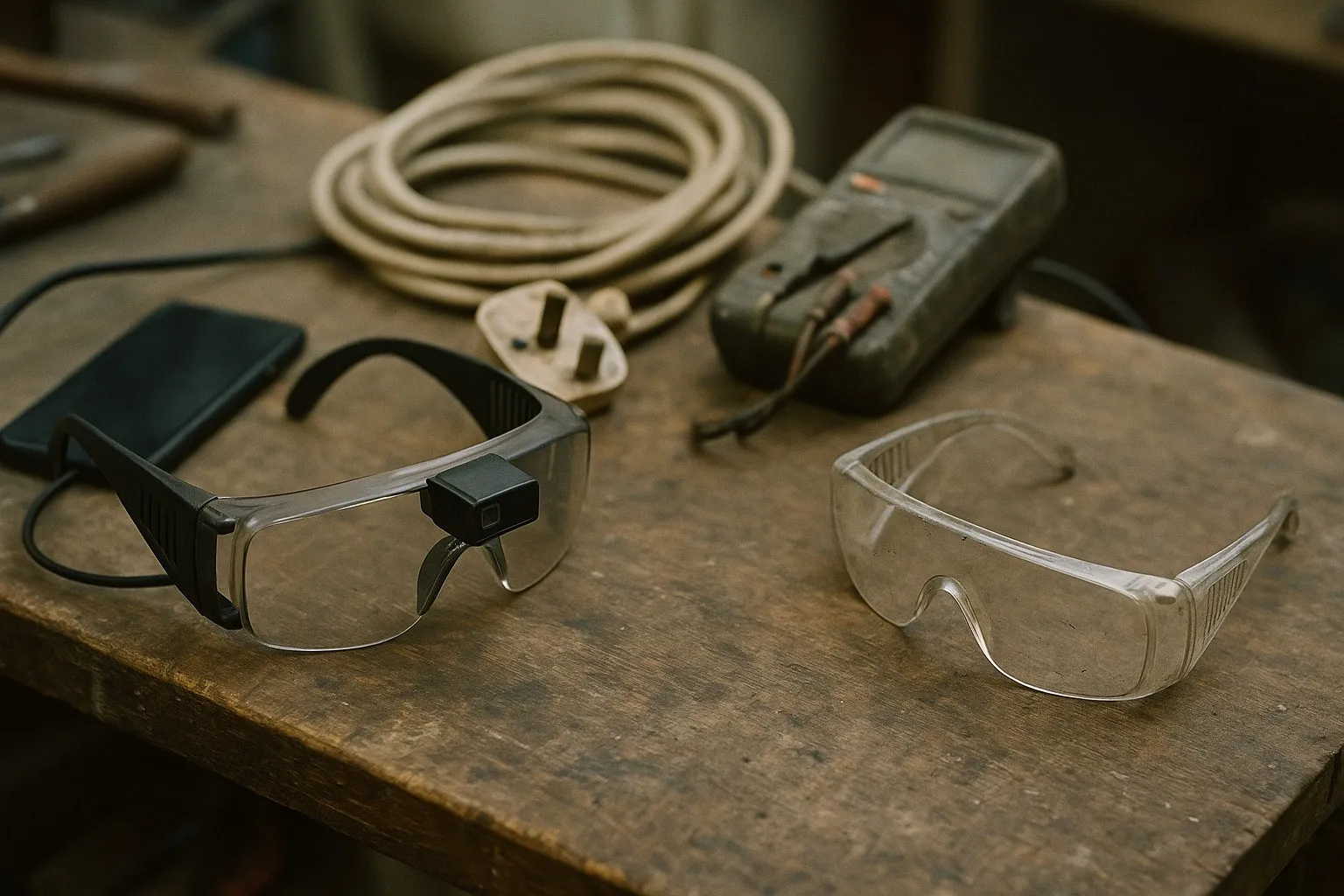
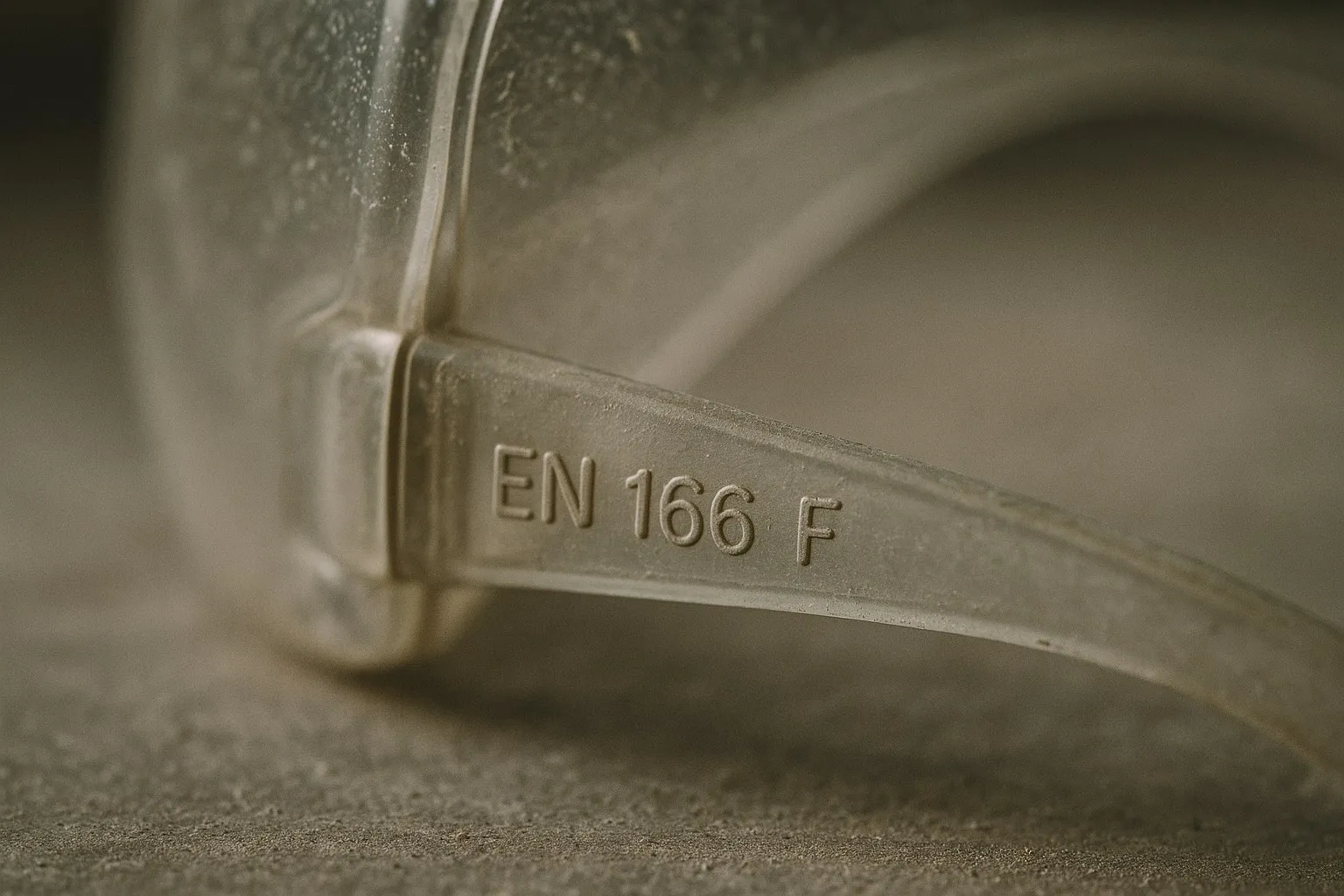
Your safety specs have markings on the arm that describe their protection. Under EN 166, the older eye-protection standard, F means low-energy impact protection, according to uvex’s marking guidance. Adding a camera does not improve that rating.
Smart PPE is the label for protective equipment with electronics added, such as glasses with a built-in camera or a helmet carrying an information chip. It describes extra functions without establishing what protection they provide. The industry has never knowingly underused an adjective.
Safety glasses with camera: on sale, but not a straight swap
On 14 September 2026, Toolstation listed DeWalt Contractor Clear safety specs at £2.99 including VAT, while Iristick priced its camera-equipped G2 PRO at €1,975 excluding VAT. Iristick’s G3 was €2,275 excluding VAT. Both camera models appeared in stock in the manufacturer’s shop. UK reseller Unbound XR offered business ordering but published no sterling price on its public pages. Confirm UK delivery before ordering directly from Iristick.
There is a sterling-priced option. Epson’s UK shop listed its camera-equipped Moverio BT-45C at £1,380 including VAT, in stock. Epson describes the included shades as “ANSI Z87.1 compliant”. That is a claim against the American standard, specifically for the shades. It does not establish protection under EN 166 or its replacement, EN ISO 16321, for the equipment you intend to use.
Product searches that day found no safety glasses with a camera in them from 3M, uvex, Honeywell, Bollé Safety, Milwaukee, DEWALT, JSP or Riley. Nothing appeared at Arco, Screwfix or Toolstation either, although direct catalogue checks at Arco and Screwfix were blocked, so treat that as an indication.
So you can buy work glasses with a camera. Whether either purchase replaces your existing PPE depends on more than the price and the presence of lenses.
Against a stamped marking, demand more than a product page
When comparing smart glasses for work, keep the change from EN 166 to EN ISO 16321 in mind: the older marking decoder below cannot simply be carried across to the newer system.
BSI’s protective-eyewear white paper supplies the impact speeds behind the EN 166 letters. JSP’s marking guide supplies the restrictions on which types of eye protection can carry them.
| EN 166 mark | Meaning |
|---|---|
| F | Low-energy impact at 45 m/s. |
| B | Medium-energy impact at 120 m/s. Goggles and face shields only. |
| A | High-energy impact at 190 m/s. Face shields only. |
| K | Resistance to surface damage by fine particles. |
| N | Resistance to fogging. |
On 14 September 2026, Iristick’s G2 PRO and G3 shop pages claimed certification to EN 166 S and ANSI Z87.1.
That includes an American protection claim alongside the European one. Neither is an EN 166 F marking. BSI lists S as “increased robustness”, with no corresponding S marking in its newer-standard column. JSP adds the qualifier “applicable to mesh eye protectors”.
For the G3, Iristick’s specification table says “EN 16321 / ANSI Z87 / IP54”, against the shop’s “EN 166 S”. The missing “ISO” leaves the intended standard unclear. Iristick publishes no downloadable declaration of conformity, the manufacturer’s compliance statement, to resolve this.
In Great Britain, Regulation 4 of the Personal Protective Equipment at Work Regulations 1992 requires PPE that suits the risk and fits the wearer. That applies to ordinary specs as much as camera glasses.
For both pairs, check who stands behind the paperwork
Check the supplier and whether the conformity documents match what arrives in the box, whether you are buying plain lenses or smart PPE glasses. HSE’s PPE guide, L25, explains that you pay for required PPE, its storage, maintenance, replacement and training in its use.
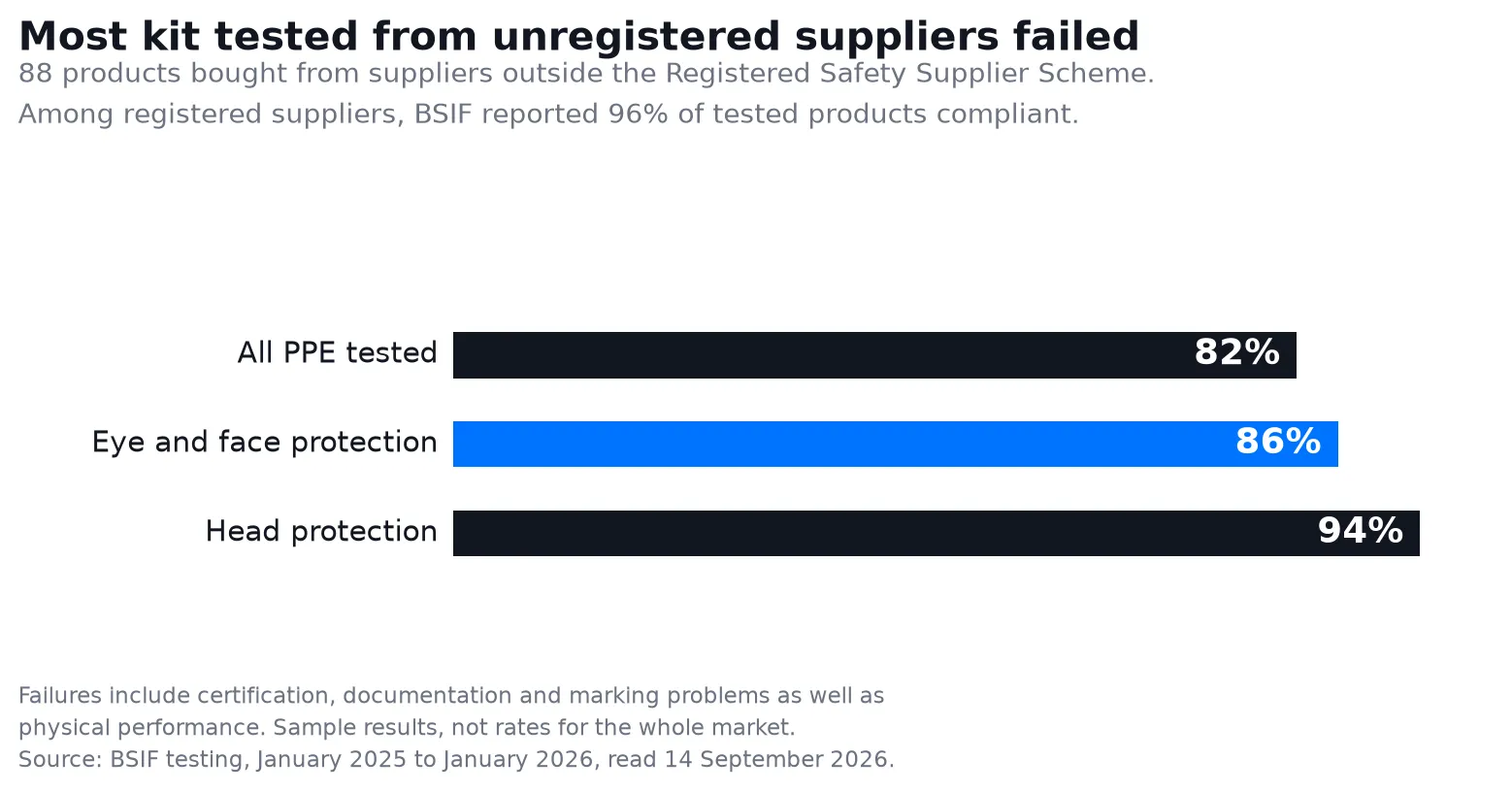
The British Safety Industry Federation (BSIF) tested 88 PPE products from suppliers outside its Registered Safety Supplier Scheme between January 2025 and January 2026. It reported that 82% failed safety or compliance checks. Within its tested categories, eye and face protection had an 86% failure rate and head protection 94%. Failures included certification, documentation and marking problems as well as physical performance.
BSIF, which operates the scheme, reported 96% compliance among registered suppliers’ tested products. These are its sample results, not failure rates for the whole market.
On your hard hat, a camera needs more than a mount
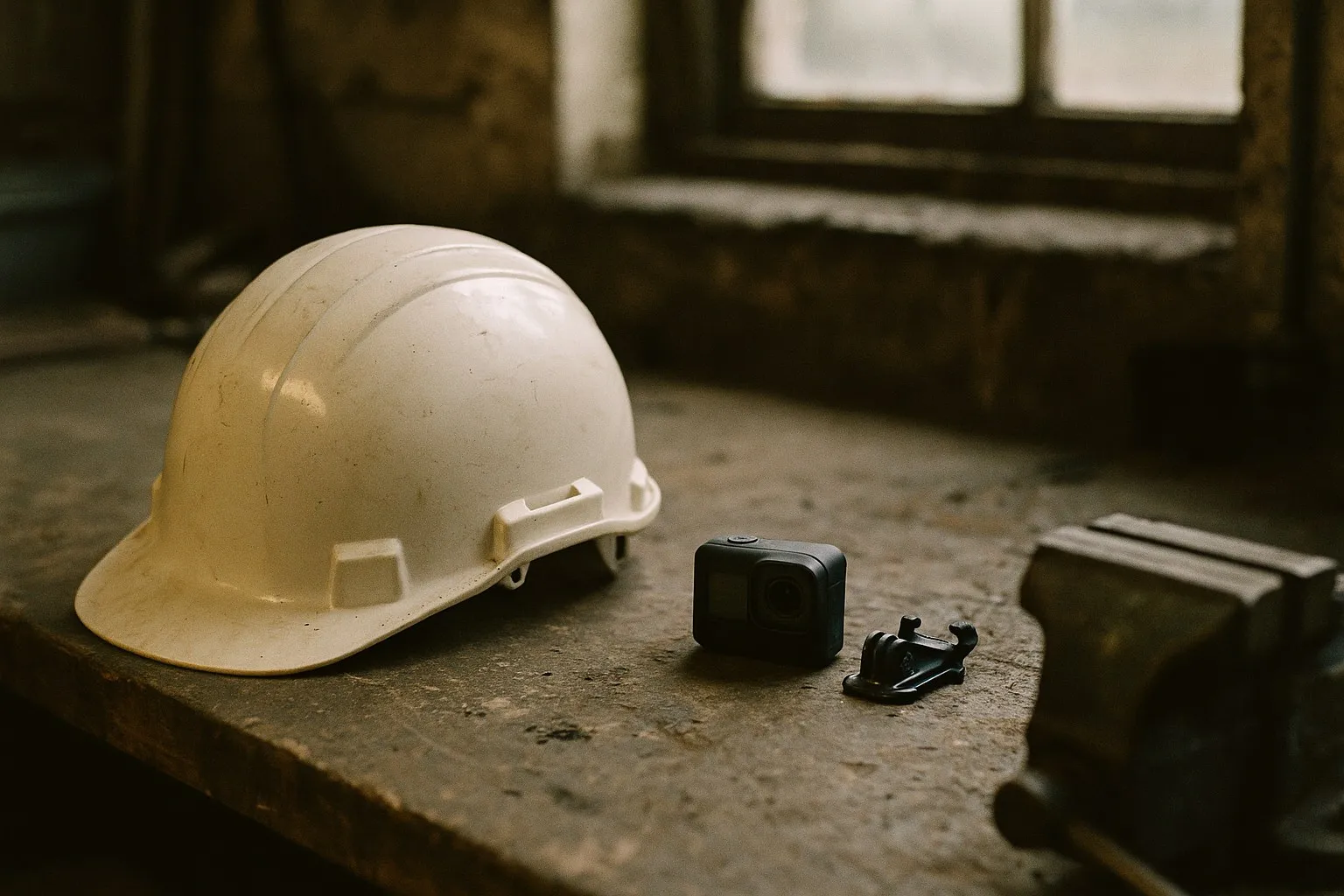
Keeping your existing glasses and attaching the camera to your hard hat looks like a way round the replacement question. It leaves you with a compatibility question instead.
JSP’s technical guidance on EN 397:2025 says accessories that may affect helmet conformity must be fitted during testing and certified as compatible. That applies when choosing mounts for smart glasses for construction workers as well as when considering a separate camera. Start with the helmet maker’s approved configuration.
Centurion describes its Twiceme helmet option as an NFC chip under the Twiceme symbol, holding medical and emergency information read by a phone. Twiceme describes the chip as passive and battery-free. Neither page mentions a camera.
ATEX Shop lists Guardhat’s IS HC1.1 Communicator with ANSI Z89.1 Type I, IECEx and ATEX Zone 1 certification for explosive atmospheres. It advertises “audio/video VOIP telephony with compatible devices”, without claiming an integrated camera. Pricing is “Call for Price”; product searches found no UK distributor or sterling price.
There is a further distinction if you modify equipment. Article 12 of PPE Regulation 2016/425 in Great Britain makes importers and distributors responsible as manufacturers if their alterations may affect compliance. It concerns equipment supplied to the market, not your own kit.
HSE publishes no specific guidance on altering PPE for your own staff to use. Your normal suitability duties and the manufacturer’s instructions still apply.
With PPE left off, supervision comes before recording
Buying smart PPE for construction does not settle whether your people wear the protection they need. The distinction matters even when equipment has already been supplied.
In HSE’s February 2026 account of the Flowchem prosecution, an agency worker suffered chemical burns to her face, eye, neck and arm. Some PPE had been provided, but HSE found it was routinely not worn and that supervision and monitoring were inadequate. Check that your people wear their PPE. Filming them is not a substitute.
Construction Management’s April 2026 coverage names Skanska and Willmott Dixon, while vendor Blackline reports its own Severn Trent rollout. The published examples are major contractors, utilities and megaprojects. We found no published UK trades-business case below 50 staff.
Nobody publishes peer-reviewed research measuring whether camera-equipped PPE reduces injuries. A vendor’s deployment announcement cannot fill the evidence gap.
Watch which figure a sales calculation uses, too. HSE’s 2023/24 appraisal values, at 2024 prices, put an injury with seven days or more off work at £44,300 to society and £7,500 to the employer. Both are all-injury averages, not eye-injury costs; the larger figure includes human costs beyond your business’s bill.
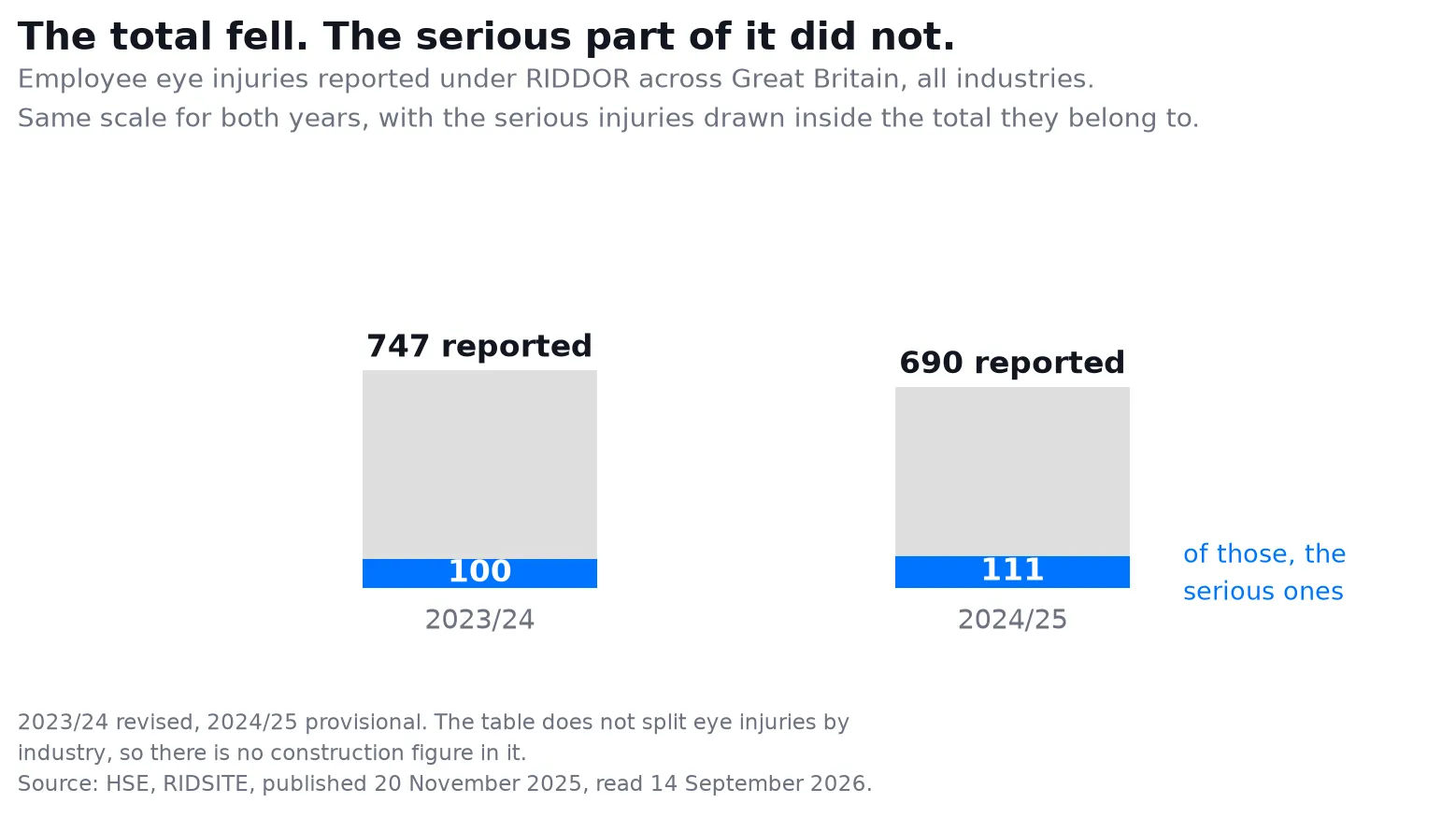
HSE’s RIDSITE table of injuries by body part records 747 reported employee eye injuries across Great Britain in revised 2023/24 figures, falling to a provisional 690 in 2024/25. Within those totals, “specified” injuries, the serious-injury reporting category, rose from 100 to 111. The table does not split eye injuries by industry, so you cannot turn these into construction figures or a measure of camera effectiveness.
Choosing recording as part of your supervision also brings CCTV in the workplace UK rules into the decision. Moving the camera onto PPE does not remove those duties.
For occasional photos, keep the camera on the phone
A phone and a suitable pair of safety glasses keep the recording purchase separate from the protection purchase. For an occasional photograph, that is a useful starting point. The brochure would, naturally, prefer a new bit of kit.
Nor does buying camera glasses necessarily remove the phone. Iristick says the G2 PRO is powered from a mobile by cable. Before ordering, establish exactly what your people must carry and connect to make the proposed recording task work.
Judge the purchase alongside your other tools and technology purchases: what can your people do with it that their existing equipment cannot?
For lone-worker alerts, SoloProtect’s own price guide quotes apps from £3 per user per month, using the phone your people already carry. Establish who receives an alert and what they do next. The app is not a supervisor.
Before buying, ask your PPE supplier: “Please send the declaration of conformity and impact rating for this exact model.”
For occasional photographs, the phone wins. Camera glasses earn their place when the task genuinely needs hands-free recording. Buy them for that job, rather than an unproven promise of fewer injuries.

Trade resources for tradespeople, straight to your inbox.
Occasionally we will send you a newsletter. Free, unsubscribe in one click.
Keep reading
AI for tradesmen: a UK owner's guide, trade by trade
AI can turn a house scan into a heat pump design and help code sewer footage. Further down the trades, the offering gets thin. The price often tells you less than the allowance beside it.

Project Management Excellence: Training for Construction Success
Master construction project management with comprehensive training covering planning, scheduling, cost control, and digital tools for project success.

CIS explained for UK trades
Paying subcontractors puts the CIS deduction, return and paper trail on your business. That applies to your subcontractor payments even on a job in someone's kitchen, and even when another contractor is making deductions from your own invoices.