
Building control fees: councils could charge for more, and the amount isn't set
Councils in England could charge for more functions and recover more of their costs. The plan still needs Parliamentary approval, and the letter sets no start date.

If your jobs go through council building control in England, the government wants to let those services charge for a wider range of functions. The building control fees reform still needs Parliamentary approval, and no start date has been set. What is on the table is the power to charge for more, not a new price list.
The Ministry of Housing, Communities and Local Government (MHCLG) set out the plans on 10 September 2026, in a letter signed by its deputy director for building professions, Alexandra Parish. It was not the only letter MHCLG sent councils that day: another restates the building safety levy exclusion for building notices.
When you are focused on running the business with a crew to schedule, the questions that matter are simple: what you will pay, and whether inspections get easier to book. For now there are no amounts, no full list of newly chargeable functions, and no promise of shorter inspection waits. How the whole process runs from the quote to the certificate, and where the fee sits in it, is in our guide to building control for the trades. The letter is addressed to council chief executives in England, not to contractors, so nothing here asks your business to act.
Building control fees would help cover recruitment and training
The proposed powers would let councils recover a reasonable proportion of overheads and costs, including recruitment, training and development, on what MHCLG calls a “fuller cost-recovery basis”. The department says the charging regulations were last significantly updated in 2010.
Its stated aims are more financially sustainable services, better compliance with building regulations and continued investment in professional capability. The letter is generous with intentions and quiet on pounds.
Alongside the charging reform, the letter points to previously announced funding of £70 million to address shortages in building safety professions, including £55 million for building control. That money supports recruiting and training new Registered Building Inspectors and developing existing inspectors’ skills, including for more complex and higher-risk buildings. On the appraisal side of those buildings, BSI has put a date on the revised PAS 9980 2026 external wall code.
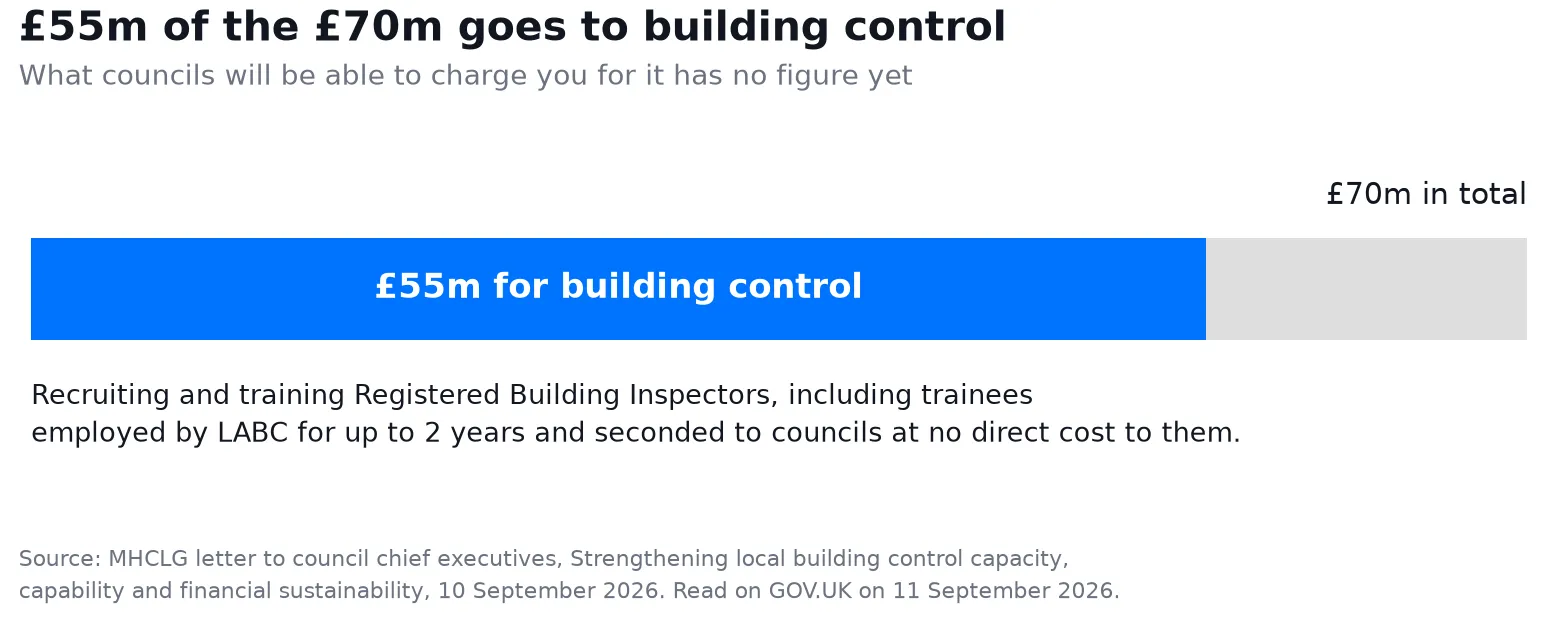
Under the workforce offer, LABC will employ trainees for up to 2 years while they train and are seconded to participating councils. Those councils face no direct cost and can decide whether to keep the trainees afterwards. The offer is time-limited, and the cost-free part is the councils’ place on the programme, not building control for your business or clients.
No amounts, functions or start date are confirmed yet
MHCLG has also begun exploratory work on a data standard to support charging schemes and the annual publication of building control financial statements. That work is still at the discovery stage. The department has committed funding to explore new models of building control delivery too, without saying how much or when.
For your job costing, there is nothing to apply for and no figure to plan around yet. The update to watch is the further detail MHCLG says will follow when it lays the regulations in Parliament, which it expects to do “shortly”.

Trade resources for tradespeople, straight to your inbox.
Occasionally we will send you a newsletter. Free, unsubscribe in one click.
Keep reading
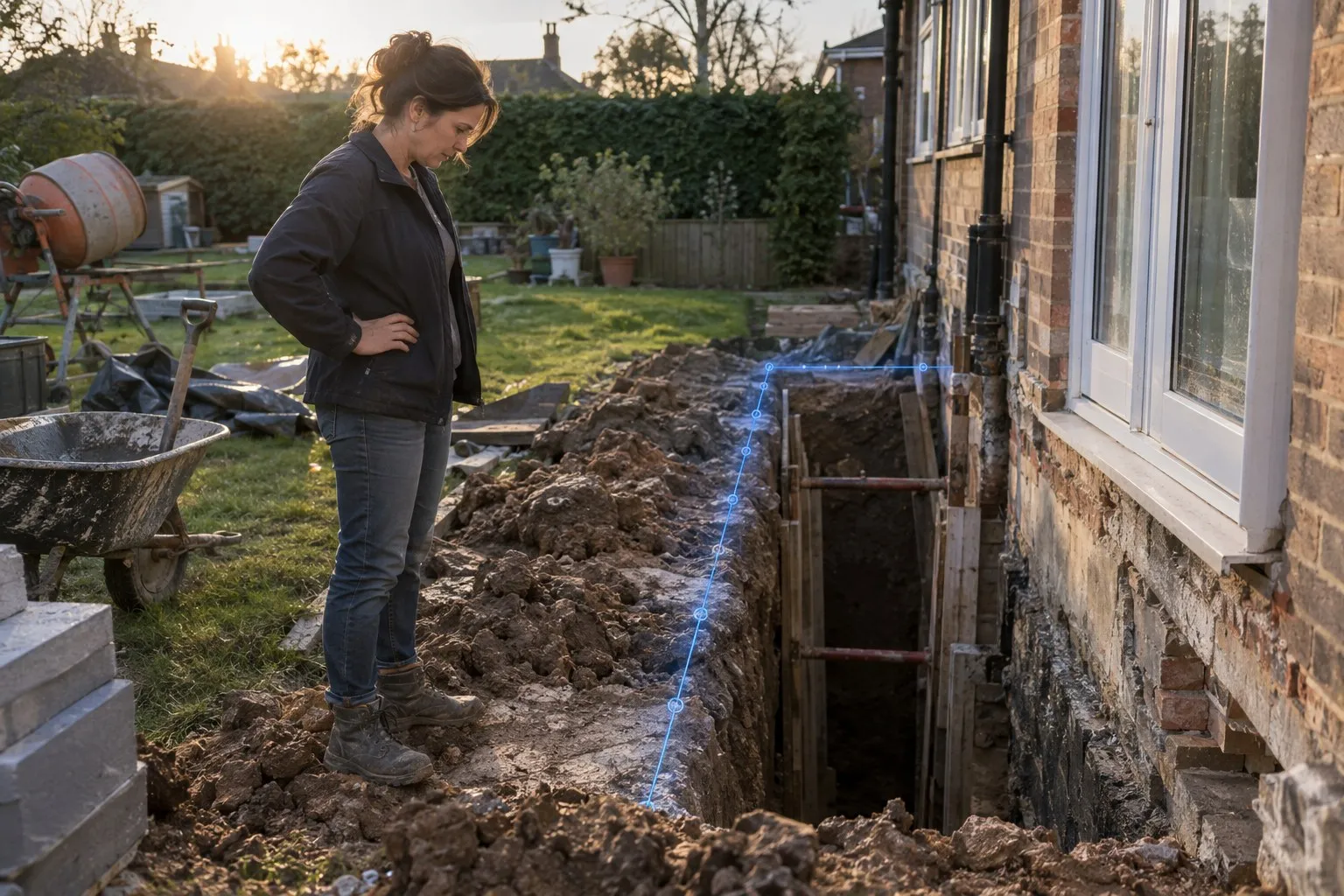
Trench collapse prosecution: director jailed after house extension death
Peter Clifford was jailed for eight years, Construction Management reports. The excavation ran beside a conservatory on a house extension, with inadequate trench support and the home's foundations close by.

Lifting operations planning: a £230,000 fine after a business took over unloading
Smith & Nephew took over unloading from Nippon Express to cut numbers on site during COVID-19. A delivery worker suffered life-changing injuries. HSE found the lift was not properly assessed, planned or supervised.
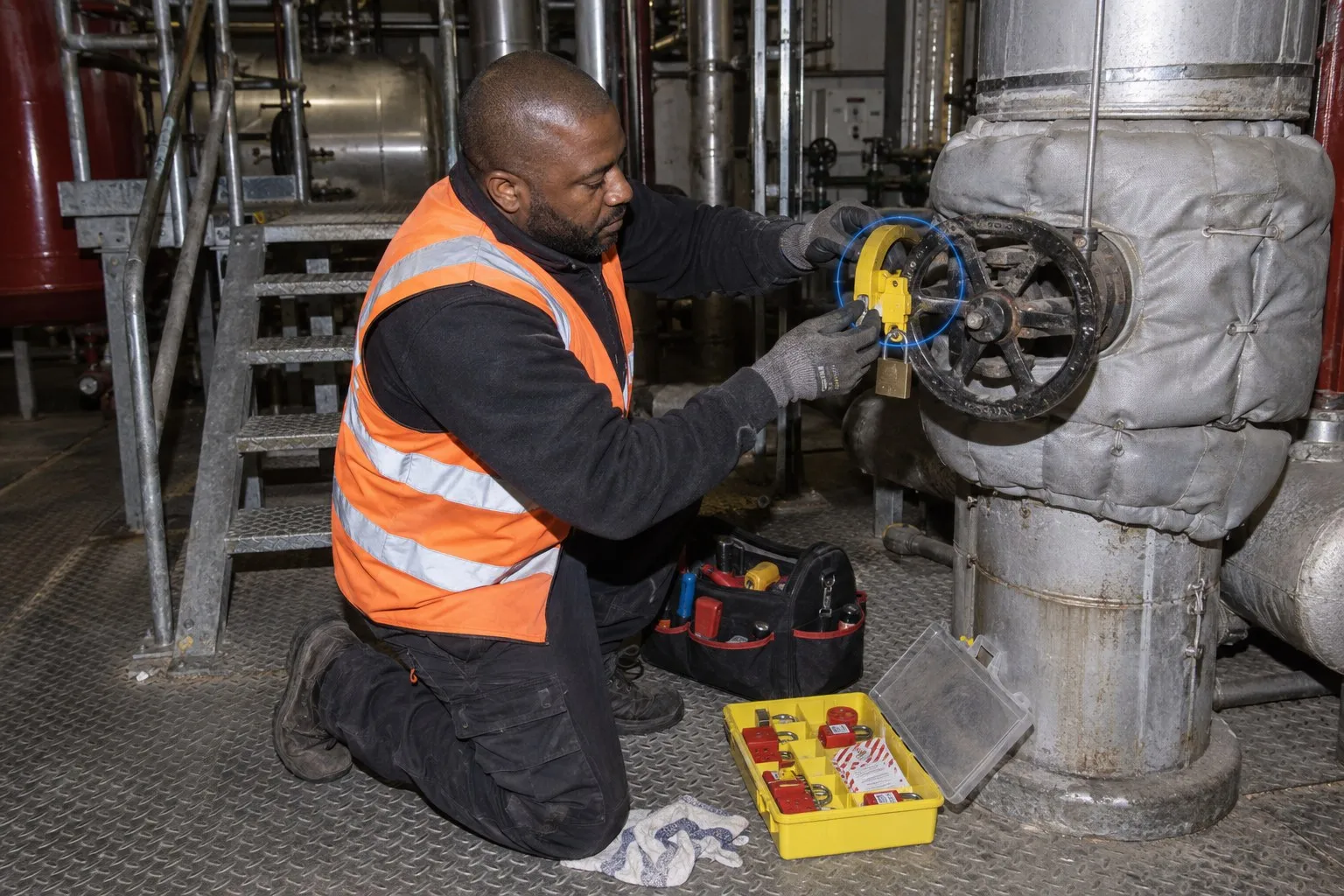
A factory skipped steam pipe isolation and was fined £594,000 after two men were scalded
Two men were replacing a leaking gasket when hot water splashed from the steam pipework. Nobody had proved the pipe was isolated, and HSE found failures in the safe system of work, in supervision, and in the work at height above the boiler.