
Cable support fire safety: BEAMA's free guide on cables that drop in a fire
Electrical Times reports that BEAMA has put out a free guide and technical specification on cable support and containment, aimed at stopping wiring collapsing early in a fire. It is a reference for your electrical team, not a rulebook.
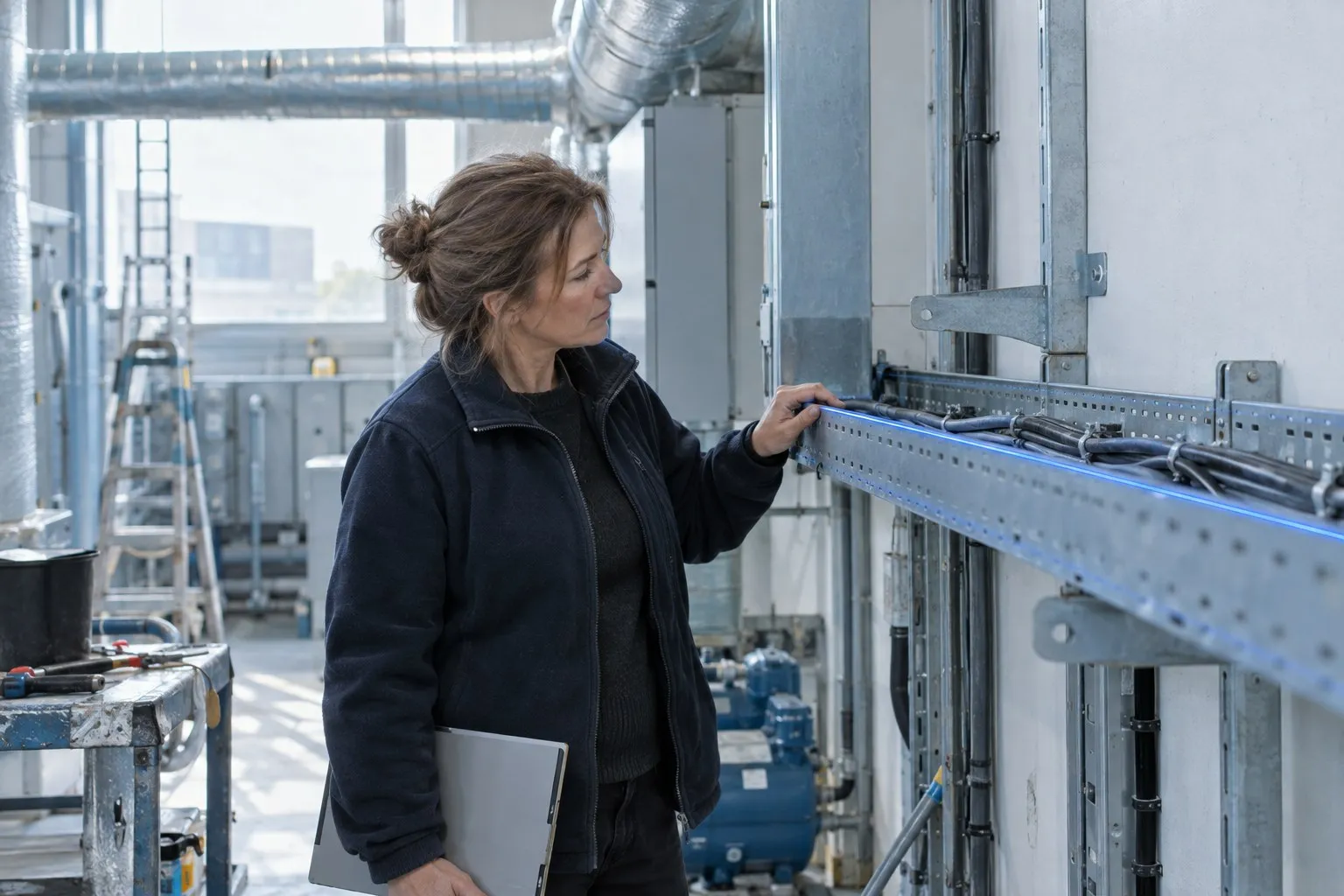
In a fire, cables that are not properly fixed can pull loose and drop across the way out, slowing the people getting clear and the crews going in. Electrical Times reported on 22 September 2026 that BEAMA has published a free guide and a companion technical specification to help stop wiring systems collapsing early when a fire takes hold. If your team fits cable supports, that is the new reference on the table.
Next time you run a tools and technology review, cable support fire safety is something you can check against a named document rather than memory, and it belongs in your health safety training as much as in the electrical file. Electrical Times presents both publications as available to download now, with no new legal duty and no deadline for changing installations already in.
Electrical Times reports the two documents are pitched at Regulation 521.10.202 of BS 7671:2018+A4:2026, the wiring clause Electrical Times says they support. Where your notifiable jobs already run past building control sign-off, that is the detail those checks turn on.
Electrical Times names the guide as Premature Collapse: A guide to the design, installation and inspection of cable management systems, from BEAMA’s Cable Management Products Group, with the companion Prevention of Premature Collapse Technical Specification from its Cable Management Technical Committee. Both are free to download, and Electrical Times frames them for installers, specifiers and manufacturers, not one trade alone.
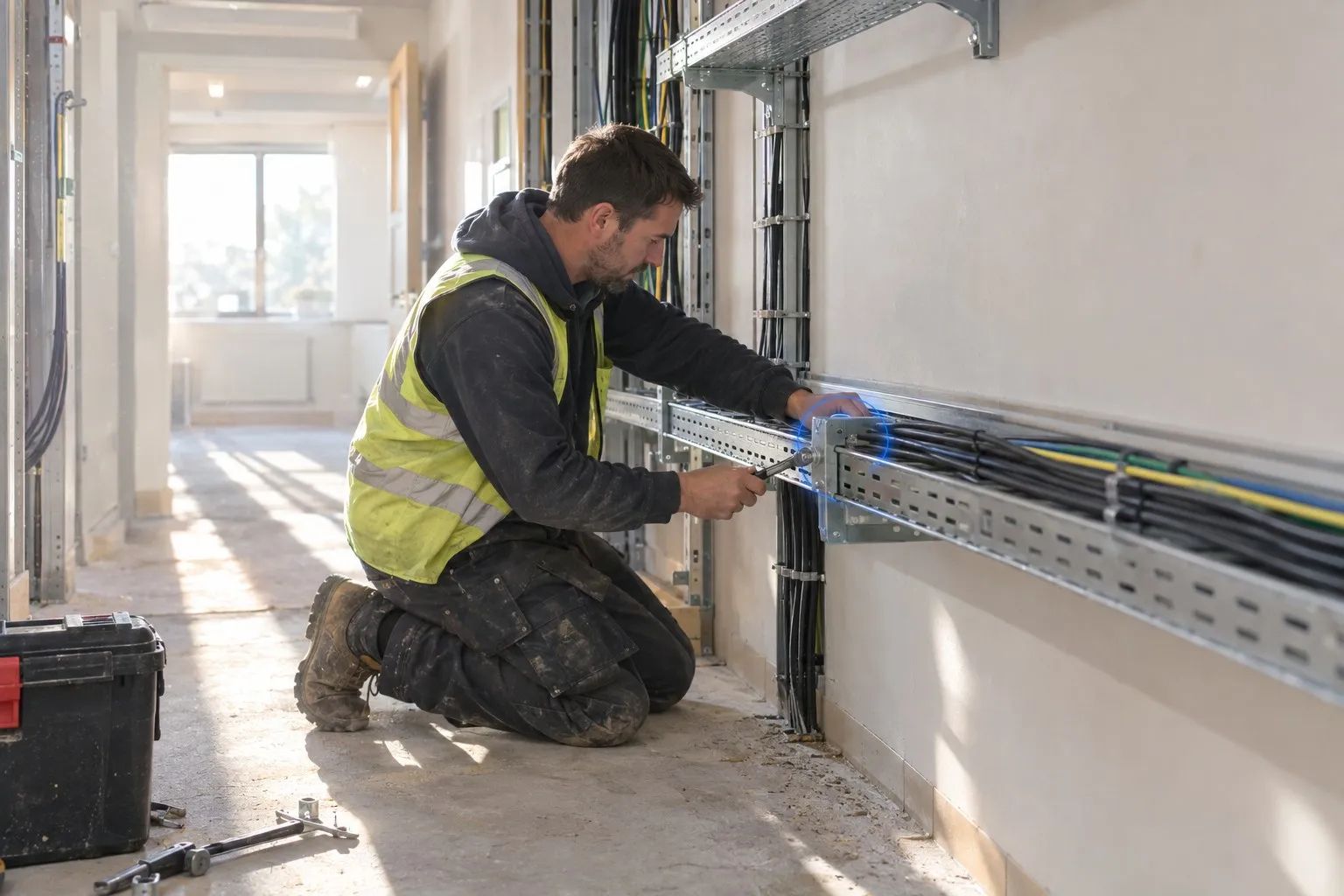
Cable support guidance covers zones, fixings and inspection
The guide maps risk zones and fixing points, and it carries through to inspection and maintenance, not just new installs, so it reaches the systems your team already looks after. For an owner that scope is the useful part: a document to point an apprentice at, and a checklist to hold your own inspections against. Its zoning system uses the cellulosic fire curve to apply indicative fire temperatures across different areas of an installation, Electrical Times reports. It stops short of the numbers, though: Electrical Times gives no temperature values and no worked example for your particular job.
Nick Hayler, CEng MIET, BEAMA’s Head of Building Electrical Systems, is quoted by Electrical Times warning that wiring which is not properly supported becomes a serious hazard in a fire, obstructing escape routes and firefighter access as conditions get worse. That puts the way cables are fixed in the same conversation as how people get out, not just electrical sign-off. For an owner, that is the line to read out when someone asks why the cable route matters as much as the finish.
The guidance will not hand your installer a spacing
It is a reference, not a spec sheet. Electrical Times reports no fixing types, no support spacings and no required resistance times, so it will not hand your installer a bracket spacing on its own. Pair it with the manufacturer’s fixing data and the applicable part of the standard before anyone drills. Electrical Times names BEAMA as the source but not the download page, so you are searching by the titles above. The move that works is to line the guide up against what your team already fits, and act on the gaps.

Trade resources for tradespeople, straight to your inbox.
Occasionally we will send you a newsletter. Free, unsubscribe in one click.
Keep reading
BS 7671 Amendment 4 is now the only current version: live jobs depend on the contract, ECN reports
From 15 October, new installations must follow BS 7671 Amendment 4, Electrical Contracting News reports. Citing SELECT, it says a job designed to the old version may be finished to it if the contract allows. Of the forms, the EICR changes most.

The petrol prices Google Maps now shows: is the cheaper pump worth the detour?
Petrol and diesel prices now sit next to forecourts on Google Maps, in the app your drivers already use for directions. Handy for picking a fuel stop; whether the detour pays is still your call.
Making Tax Digital drops to £30,000 of gross income from April 2027
From 6 April 2027, sole traders and landlords with more than £30,000 of qualifying income keep digital records and send HMRC quarterly updates. The £30,000 is counted before expenses, with trade and rental income added together.